

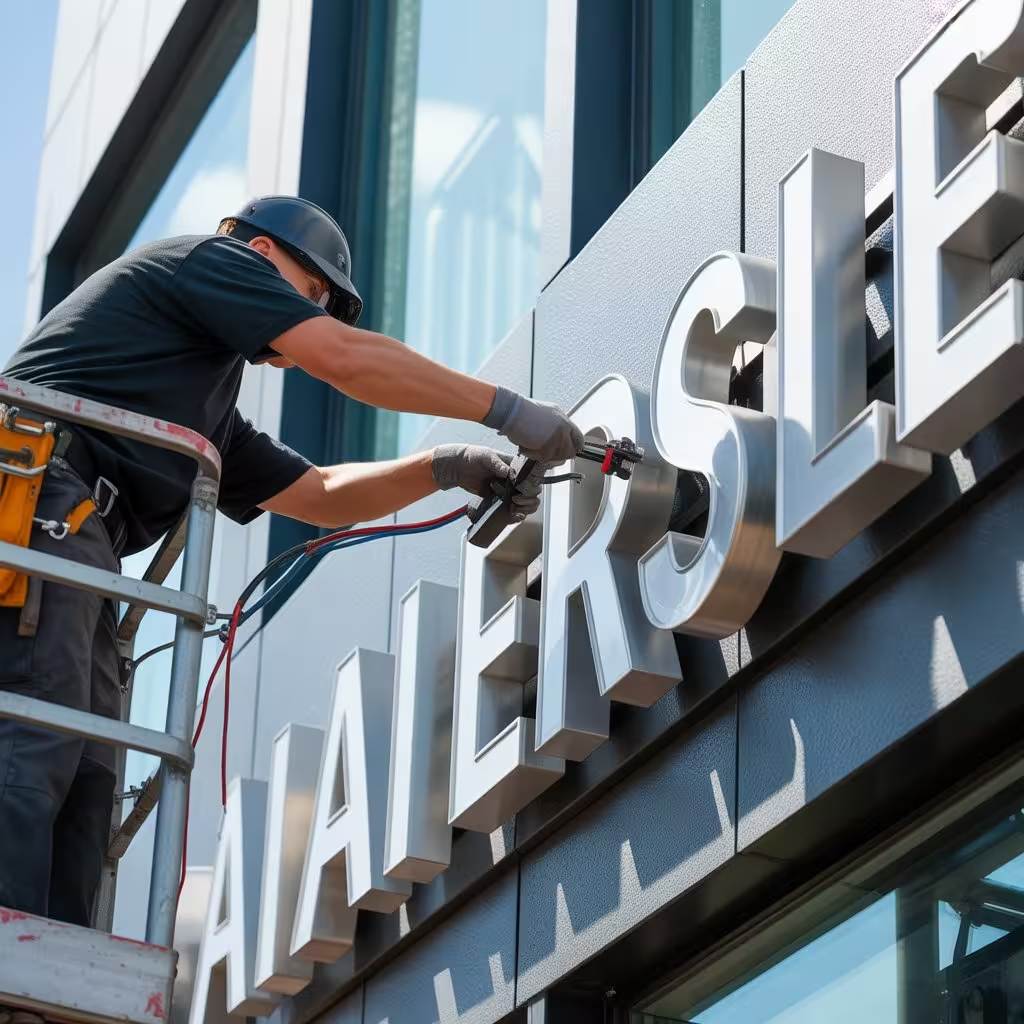
If you are budgeting for a storefront in Dallas, channel letter signsusually land in a wide range because they are custom-built, electrically powered, and often require permitting, electrical coordination, and code-compliant fabrication. The goal is not just a sign that looks good. It is a sign that installs cleanly, passes inspection, holds up in Texas weather, and represents your brand for years.
Below is a practical, Dallas-oriented cost breakdown you can use to plan with confidence, plus the compliance checkpoints that help you avoid the classic surprise costs.
The Realistic Price Range Dallas Businesses Should Expect
For most small to mid-sized businesses, a standard set of channel letters often falls into an all-in range of around $2,500 to $6,500, depending on size, lighting, and installation complexity.
On the broader industry side, many projects still cluster around $4,000 to $6,000 for a basic build, while larger or more complex signs can push far higher (often $2,000 to $20,000+ nationally, depending on specs).
A good working rule for Dallas budgeting is this: if your sign is “normal storefront scale” and access is straightforward, you are usually in the lower-to-mid band. If you add height, custom shapes, halo lighting, tight landlord requirements, or complex electrical routing, costs climb.
Installation-only Ranges And What They Include
Installation by itself is commonly quoted separately and can range roughly $800 to $2,500 depending on height, access, and electrical tie-in needs.
That install line item can include lift rental, labor, mounting hardware, wiring, power supply placement, and coordination with an electrician. If a quote seems unusually low, ask what is excluded, especially lifts, wall patching, and permit handling.
What Drives the Price Up or Down?
Channel letter pricing is not random. It is basically a stack of controlling decisions.
Size, Letter Height, And Overall Square Footage
Bigger letters require more aluminum, acrylic, lighting modules, and labor. If two businesses both want “the same word,” but one chooses 12-inch letters and the other chooses 24-inch letters, the second sign is not a little more expensive. It can be materially more because material and lighting requirements scale up.
Lighting type
- Front-lit (standard LED) is often the most budget-friendly and the easiest to service.
- Halo-lit (reverse channel letters) typically costs more because the fabrication and mounting approach is more complex, and the visual effect depends on careful spacing and wall conditions.
- Combo-lit increases parts and wiring, which raises both fabrication and installation effort.
Lighting also changes power supplies, wire routing, and service access, all of which influence labor.
Mounting methods
Mounting affects both appearance and labor.
- Raceway mount can reduce wall penetrations and speed up installation because wiring is contained in a single enclosure.
- Flush mount looks cleaner on some buildings, but it usually requires more drilling, more patch planning, and more time.
- Backer panel can be a middle ground if the wall surface is challenging or if you want a cleaner installation footprint.
Site conditions
This is where budgets swing the most in Dallas. A single-story retail bay with easy access is very different from a sign on a taller facade that needs special lift access, traffic control considerations, or complicated routing to the electrical source. Even reputable industry guides note that tall buildings, obstacles, and access constraints can increase installation costs.
Materials, Finish, and Customization
Premium paint systems, specialty metal finishes, custom logo shapes, and tighter tolerances all add labor. If your brand requires a very specific color match, it can introduce additional finishing steps. The cost is often worth it, but it should be planned upfront, not discovered mid-fabrication.
Why Permits Matter and What the City Of Dallas Looks For?
Dallas sign projects frequently involve permitting, and that impacts the timeline and cost. The City of Dallas provides sign-related permitting and inspection guidance, and sign rules include constraints that can affect what is allowable in size, height, and placement.
For some sign types and situations, Dallas documentation also references the need for engineering documentation related to wind load requirements, which can add cost when applicable.
Also, Dallas code can include material and construction restrictions in certain contexts, including requirements around how channel letters are constructed in specific areas.
What this means for pricing: permits are not just “paperwork.” If your project needs drawings, landlord approvals, engineering stamps, or revisions due to code constraints, your total cost rises. The upside is that compliance reduces risk and prevents removal or rework later.
UL 48 Compliance And Inspection Readiness
A channel letter sign is an electric sign. Inspectors and jurisdictions often care about UL certification and labeling because it connects directly to safety standards for electric signs (UL 48). UL describes certification programs used for custom-made signs, including channel letters.
There have also been industry notes about UL 48 labeling updates that could complicate inspections if people are not aware of the changes.
Practical takeaway: if your fabricator provides properly listed components and labeling, you reduce the chance of inspection issues that create delays and extra labor.
Sample Budgets for Common Dallas Scenarios
These are planning examples to help you sanity-check quotes. Real pricing varies by brand requirements, landlord standards, and site conditions.
- Small storefront, straightforward access, front-lit letters
Often lands in the $2,500 to $6,500 band for a typical “all-in” project. - Mid-size sign with more letters, premium finish, standard access
Commonly clusters closer to the $4,000 to $6,000 range as specs become “standard industry build,” assuming access is not difficult. - Reverse halo-lit letters on a challenging wall surface or higher facade
Expect a noticeable step up due to fabrication complexity and installation time, plus potential lift requirements. - Large-scale branding or multi-tenant requirements with permitting complexity
This is where projects can move into the higher national ranges seen across the industry, especially when you add custom engineering, complex electrical, and more demanding timelines.
How to Get an Accurate Quote Without Overpaying?
To build trust and avoid surprises, you want a quote that reads like a scope of work, not just a number.
Ask for these items in writing:
- Exact letter height and overall dimensions, including logo sizing.
- Lighting type and LED module spec, plus expected brightness and color temperature.
- Mounting method (raceway vs flush vs backer) and what wall work is included.
- Electrical scope: who provides the final power connection, where the power supplies go, and what is included versus excluded.
- Permitting scope: who pulls the permit, what drawings are included, and whether engineering is needed.
- Compliance proof: confirmation of UL 48 related listing or certification approach and labeling readiness.
- Timeline with milestones: design approval, fabrication start, fabrication completion, install window.
- Warranty terms for LEDs, power supplies, and workmanship.
A trustworthy signage partner will not dodge these questions. They will welcome them because it prevents rework, keeps the schedule predictable, and protects both sides.
Conclusion
Channel letter signs in Dallas are not a one-price product. The final cost is shaped by your letter size, lighting style, mounting method, and the realities of your installation site, plus permitting and electrical requirements.
If you want a quote you can trust, focus less on the cheapest number and more on a clear, itemized scope that covers fabrication, install, permits, and compliance details like UL labeling and inspection readiness.
For any inquiries about letter signs, signage, or branding, please reach out regarding our services. We at Sign and Branding are here to assist you with all your signage and branding needs!
When those pieces are handled correctly, you are not just buying a sign. You are investing in a long-term brand asset that looks professional, performs reliably, and avoids costly delays or rework.
Many Dallas storefront projects commonly fall around $2,500 to $6,500 all-in, with “basic builds” frequently clustering around $4,000 to $6,000 depending on specs and site conditions.
Installation is often quoted separately and may range roughly $800 to $2,500, influenced by height, access, and electrical tie-in complexity.
Many sign installations require city approval, and Dallas provides permitting and inspection guidance that can affect allowable size and placement.
Because channel letters are electric signs, UL 48 related certification and labeling is commonly used to demonstrate safety compliance for custom-made signs, and updates to labeling practices have been noted as a potential inspection friction point if mishandled.
Standard installation typically takes 3 to 6 hours once the permit is issued. However, the total lead time in Dallas, including design, city permit approval (which can take 2–4 weeks), and fabrication, usually totals 6 to 8 weeks.