

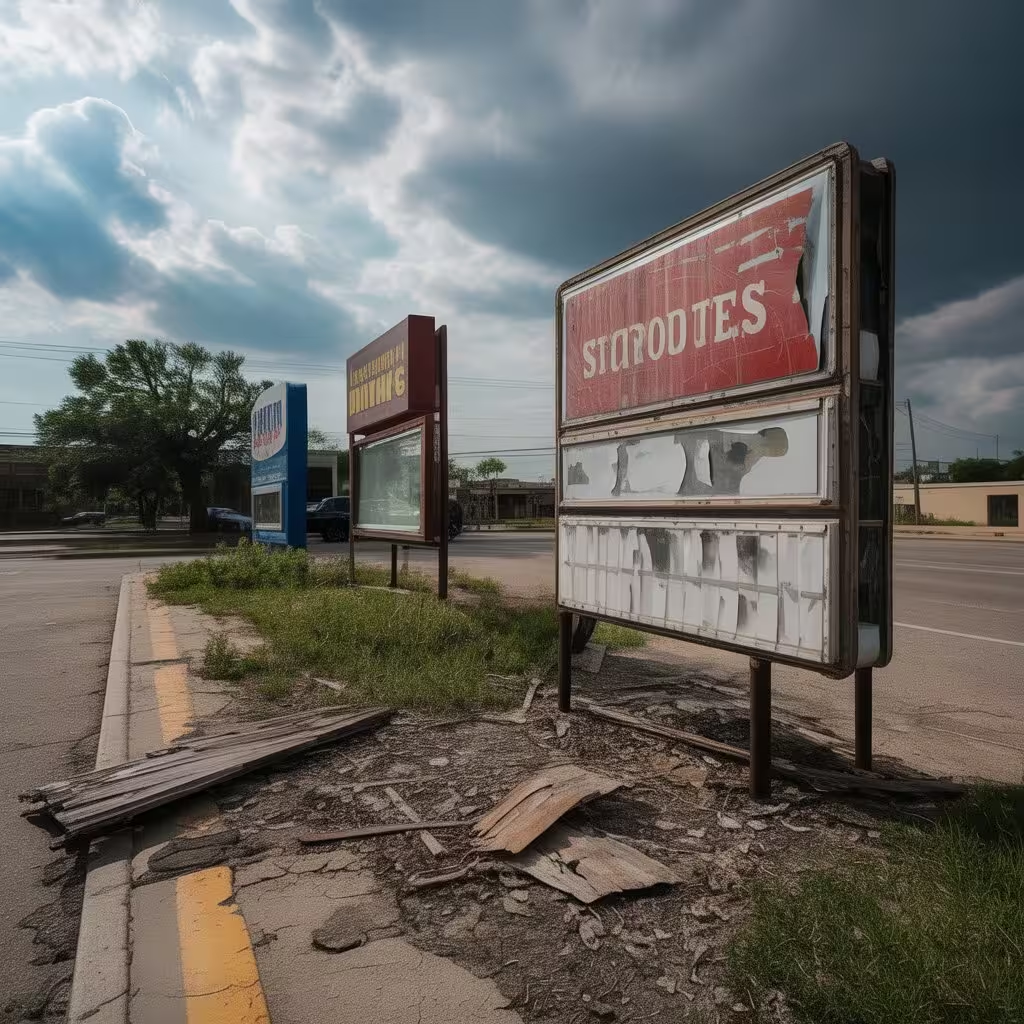
You think you can cheat the Texas sun. You believe that a bargain basement sign looks just as good as the premium version across the street. You are dead wrong.
Buying cheap signage in North Texas is like throwing your cash into a furnace. The Dallas climate destroys weak materials within months.
If you want your brand to look professional, you need to stop thinking about the lowest price and start thinking about survival.
This blog breaks down why your cheap choices will fail and how to build something that actually lasts.
Why Cheap Signs Can’t Withstand Dallas Weather?
Dallas presents a brutal environment for any outdoor structure. The primary enemy is the sun. We see triple-digit temperatures for weeks on end. Cheap signs usually feature calendered vinyl.
This material has a memory of being a flat sheet. When the heat hits it, the vinyl tries to shrink back to its original shape. This causes the edges to curl and peel away from the backing.
Inexpensive plastics also suffer from thermal expansion. Most rookies buy signs made from low-grade corrugated plastic or thin PVC.
These materials expand and contract rapidly as the temperature swings from a 100-degree afternoon to a 60-degree night.
This constant movement cracks the material. Within one summer, your vibrant advertisement becomes a brittle, shattered mess. You cannot outsmart physics with a cheap purchase.
How Do Harsh Elements Affect Your Business Signage?
UV radiation acts like a slow-moving fire. It attacks the chemical bonds in your sign ink. Cheap printers use solvent inks without protective coatings. The sun bleaches these colors until your bright red logo looks like a dusty pink ghost.
This ruins your effective marketing strategies because nobody notices a faded sign.
Rain and humidity add another layer of destruction. Dallas gets heavy downpours that soak into porous materials. If your sign is made of cheap wood or unprotected particleboard, it will swell.
Once the water gets inside, rot begins. The humidity also causes cheap metal components to rust. You might save fifty dollars on a bracket today, but you will pay hundreds later when the rust stains run down your beautiful brick wall.
Wind is the final blow. North Texas experiences high-velocity gusts during storm season. A cheap sign often lacks the internal structure to handle wind loads.
The wind catches the sign like a sail, snapping the mounting points. A flying sign is a liability, not an advertisement.
What Businesses Can Teach Us About Sign Durability?
Successful companies in Deep Ellum or Uptown do not buy the cheapest options. They understand that their storefront represents their quality.
Look at the businesses that have stood for twenty years. They use heavy-duty aluminum, high-grade acrylic, and thick steel frames.
The rookies who try to save money usually disappear within two years. Their signs are starting to look ragged, suggesting the business is struggling.
If you cannot afford a decent sign, customers assume you cannot afford quality ingredients or skilled staff. Durability reflects stability.
A sign that looks brand-new after five years of Dallas sun shows that the business owner cares about details.
Retail signage trends in 2026 show a shift toward high-quality tactile materials because people are tired of the cheap-plastic look.
Essential Tips for Long-Lasting Signage
First, always demand cast vinyl instead of calendered vinyl. Cast vinyl is poured like a liquid and has no memory of a previous shape. It stays flat and sticks better in the heat. Second, insist on a UV laminate.
Think of this as sunblock for your sign. It filters the rays and keeps your colors popping for years.
Third, choose the right substrate. Aluminum is the gold standard for Dallas storefront signs. It does not rust, withstands heat, and remains lightweight. Fourth, check your mounting hardware.
Use stainless steel screws and bolts. They cost more, but they will never leave ugly orange streaks on your building. Fifth, think about the wind. If you are installing a large banner, use a mesh material or wind slits to allow air to pass through.
The True Cost of Poor Choices
The initial price tag is a lie. If you buy a five-hundred-dollar sign that lasts one year, you are paying five hundred dollars annually.
If you buy a $2,000 sign that lasts 10 years, you are paying $200 annually. The math always favors quality.
You also have to consider the cost of your reputation. A peeling, faded sign actively drives customers away. It tells the world you are cheap. You lose more in potential sales than you ever save on manufacturing costs.
Then there is the labor cost of replacing the sign. You have to pay someone to take down the trash and hang the new one. Doing it twice is always more expensive than doing it right once.
What Every Business Owner Needs to Know?
You cannot just hang whatever you want whenever you want. Dallas has strict rules. Installing a business sign without a permit in Dallas is a recipe for disaster. Code enforcement officers patrol the city looking for illegal signage.
If they catch you, the fines start high and get worse every day.
They can force you to remove the sign immediately. This means you lose the money you spent on the sign and the installation. You also lose the permit fee you should have paid in the first place.
Some owners think they can hide their signs, but the city eventually finds them. Always check the zoning requirements for your specific neighborhood. Different areas have different rules about size, height, and lighting.
Do not be the person who spends three thousand dollars on a beautiful sign only to find out it is two feet too tall for the local ordinance.
Best Materials for Long-Lasting Outdoor Signs
Aluminum remains the champion of the Dallas market. It withstands humidity and heat without warping. For dimensional letters, choose acrylic or high-density urethane. These materials handle UV exposure much better than cheap plastics.
If you want a modern look, Dibond is a great choice. It features a plastic core sandwiched between two thin aluminum sheets.
This provides the strength of metal with less weight. For illuminated signs, use high-quality LEDs. Cheap LEDs burn out in the heat or flicker after a few months.
Premium LEDs stay bright and use less power, which helps your bottom line. Always look for materials with a manufacturer’s warranty of at least five years.
How to Ensure Your Signs Last in Dallas’ Harsh Climate?
Wash your signs. Most owners forget that dirt and pollution trap heat and moisture against the surface. A simple cleaning every few months extends the life of the vinyl and the paint. Use a soft cloth and mild soap.
Never use a power washer on high settings because it can blast the graphics right off the backing.
Inspect the mounting points after every major storm. Dallas wind can loosen bolts over time. A quick tightening prevents a total sign failure. Finally, work with a local pro who knows the Dallas code and the Dallas sun.
Someone in a different state does not understand how our weather melts products. A local expert will recommend the appropriate coatings and thicknesses for our specific zip codes.
Stop looking for the shortcut. The Texas sun will find it and destroy it. Invest in quality materials and get your permits in order. Your storefront deserves a sign that matches the strength of your business.
Frequently Asked Questions
Why Does the Dallas Sun Ruin Cheap Signs Within One Summer?
The intense UV radiation in North Texas breaks down the chemical bonds in low-quality inks and plastics. Cheap materials lack protective stabilizers, which leads to rapid deterioration.
Most budget signs use monomeric vinyl, which shrinks at high temperatures. You end up with curled edges and a washed-out look that kills your curb appeal. You cannot expect a bargain product to survive a record-breaking Texas heatwave.
How Does the Wind in North Texas Impact My Outdoor Signage?
Dallas experiences sudden high-velocity gusts that act like a heavy hammer on weak structures. Cheap signs often use thin backings or plastic grommets that tear easily under pressure.
A sturdy sign requires heavy-duty mounting hardware and a solid internal frame to stay in place.
If you use a banner, you must choose a mesh or add wind slits to allow airflow. Failure to do this means the wind will rip your investment off the wall, turning it into a liability.
What Material Works Best for Long-Lasting Storefront Signs in This Climate?
Aluminum stands as the most reliable choice for our weather. It does not rust when it rains, and it withstands the thermal expansion of a hot day without warping. You should pair it with cast vinyl and a UV laminate for the best results.
This combination offers the strongest defense against the elements. Avoid cheap foam boards or thin PVC if you want the sign to last more than a few months in the open air.
Why Do I Need a Permit for A Sign on My Own Property?
The City of Dallas regulates signage to ensure safety and professional standards across all neighborhoods. If you install a sign without a permit, you risk heavy fines and forced removal by code enforcement officers.
A permit proves your sign meets wind load requirements and electrical safety codes. Skipping this step usually costs you more money in the long run when the city forces you to take down your unapproved display.
Is The Extra Cost for Premium Materials Actually Worth It?
Yes, because you avoid the cycle of constant replacement. A cheap sign fails quickly and requires you to pay for new materials and labor every year.
A high-quality sign lasts a decade with minimal care, saving you money on the total cost of ownership. Beyond the cash savings, a premium sign maintains your professional image.
A ragged sign signals a failing business to every potential customer who drives past your door.
Conclusion
Stop wasting money on temporary fixes that melt under the Texas sun. Your business deserves a look that stands the test of time and weather. Invest in quality materials that reflect your commitment to excellence.
Sign Branding Company want to see your storefront thrive with signage that outlasts the harshest Dallas summers. Choose durability today and watch your brand grow for years to come. Let us help you build something truly permanent.
The intense UV radiation in North Texas breaks down the chemical bonds in low-quality inks and plastics. Cheap materials lack protective stabilizers, which leads to rapid deterioration.
Most budget signs use monomeric vinyl, which shrinks at high temperatures. You end up with curled edges and a washed-out look that kills your curb appeal. You cannot expect a bargain product to survive a record-breaking Texas heatwave.
Dallas experiences sudden high-velocity gusts that act like a heavy hammer on weak structures. Cheap signs often use thin backings or plastic grommets that tear easily under pressure.
A sturdy sign requires heavy-duty mounting hardware and a solid internal frame to stay in place.
If you use a banner, you must choose a mesh or add wind slits to allow airflow. Failure to do this means the wind will rip your investment off the wall, turning it into a liability.
Aluminum stands as the most reliable choice for our weather. It does not rust when it rains, and it withstands the thermal expansion of a hot day without warping. You should pair it with cast vinyl and a UV laminate for the best results.
This combination offers the strongest defense against the elements. Avoid cheap foam boards or thin PVC if you want the sign to last more than a few months in the open air.
The City of Dallas regulates signage to ensure safety and professional standards across all neighborhoods. If you install a sign without a permit, you risk heavy fines and forced removal by code enforcement officers.
A permit proves your sign meets wind load requirements and electrical safety codes. Skipping this step usually costs you more money in the long run when the city forces you to take down your unapproved display.
Yes, because you avoid the cycle of constant replacement. A cheap sign fails quickly and requires you to pay for new materials and labor every year.
A high-quality sign lasts a decade with minimal care, saving you money on the total cost of ownership. Beyond the cash savings, a premium sign maintains your professional image.
A ragged sign signals a failing business to every potential customer who drives past your door.