

Table of Contents
- Why Visual Planning Matters Before Installation
- The Challenge of Imagining Your Final Storefront Sign
- How 3D Mockups Transform Your Decision-Making Process
- Light Studies Reveal Real-World Performance and Impact
- Our In-House Design and Visualization Capabilities
- Digital Mockups for Channel Letters and Outdoor Signs
- LED Light Studies for Nighttime Visibility and Branding
- Navigating Fort Worth Permits with Approved Designs
- From Mockup to Manufacturing and Installation
- Quality Assurance and Our 5-Year Warranty
- Getting Started with Your Storefront Sign Project
- Frequently Asked Questions (FAQ)
Why Visual Planning Matters Before Installation
Before a single piece of material gets cut or a hole drilled in your storefront, clarity matters. We’ve seen countless business owners invest in signage only to discover the color reads differently in person than they imagined, or the scale overwhelms the building facade. Visual planning eliminates that regret.
When you invest in a custom storefront sign, you’re making a decision that affects foot traffic, brand perception, and customer experience for years to come. A 3D mockup and light study show you exactly what that investment looks like before fabrication begins. This isn’t guesswork; it’s strategy backed by digital proof.
The difference between a sign that performs and one that doesn’t often comes down to decisions made during the design phase. Visibility, color harmony, lighting intensity, and placement all compound to create either a compelling business landmark or a missed opportunity.
The Challenge of Imagining Your Final Storefront Sign
Most business owners and contractors work from flat renderings or verbal descriptions. You might receive a 2D sketch and have to extrapolate what that means on your actual building. Will the lettering look bold enough from 50 feet away? Does the LED brightness conflict with surrounding signage? How does the color read under both daylight and nighttime conditions?
These questions matter because storefront signage sits at the intersection of brand identity and real estate. Your sign doesn’t exist in a vacuum; it shares visual space with neighboring businesses, street lighting, architectural features, and variable weather conditions. A mockup that only shows the sign itself misses half the story.
We hear from Fort Worth business owners that the biggest frustration in past sign projects was not seeing the final result until installation began. By then, changes were expensive or impossible.
How 3D Mockups Transform Your Decision-Making Process
A 3D mockup places your sign directly on your storefront photograph, showing exact placement, scale, color, and material finish. You see channel letters in stainless steel against brick, or a backlit cabinet sign centered above your entrance. No interpretation required.
Our mockups allow you to:
- Test multiple design variations without production delays
- Evaluate color options under different lighting conditions
- Confirm letter sizing and spacing from pedestrian and vehicular viewpoints
- Identify potential sightline or permitting concerns early
- Make confident decisions before investment in fabrication
For a restaurant owner in Fort Worth, we recently created three distinct mockup variations: one with warm gold LED channel letters, another with matte black aluminum, and a third with a combination approach. The owner could immediately see how each performed against the building’s aesthetic and surrounding context. They selected the third option, which they confirmed enhanced their brand while respecting the neighborhood character.
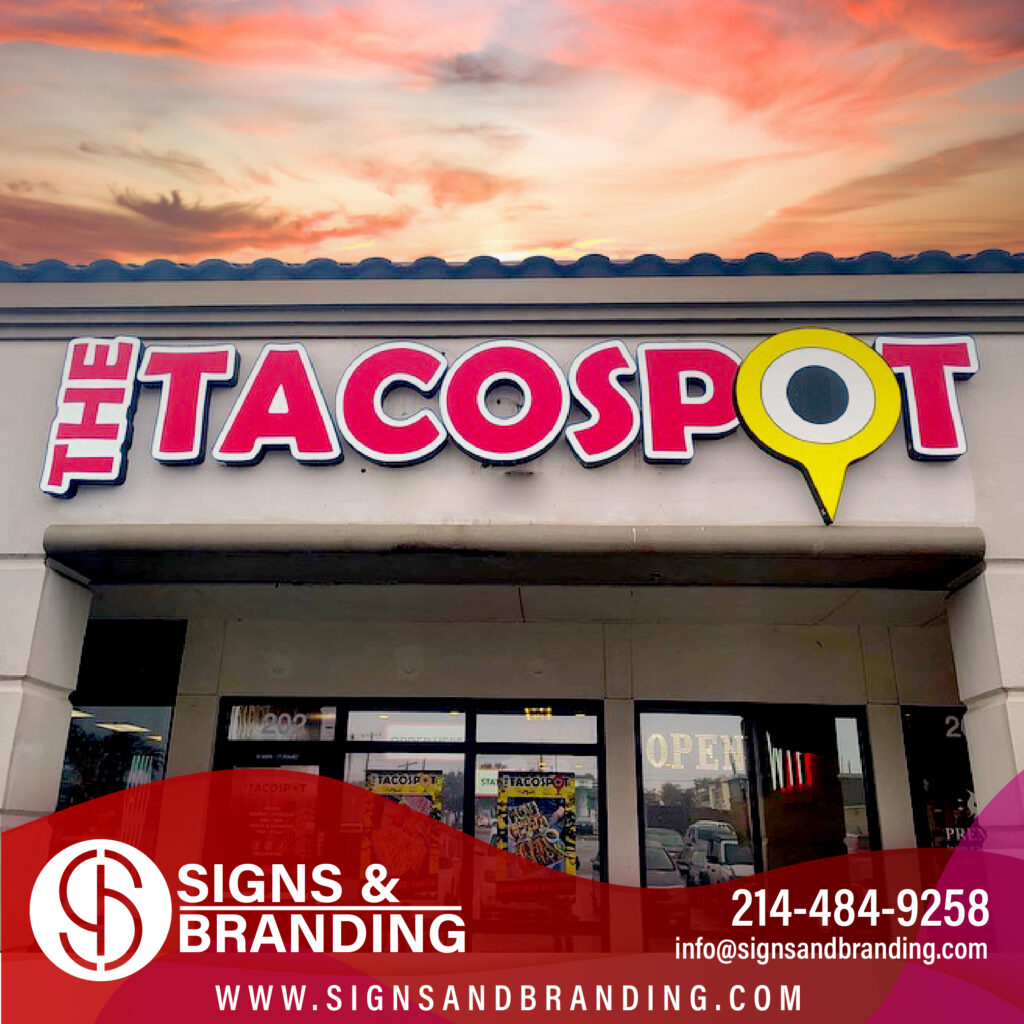
This process typically takes a few days and saves weeks of potential revision cycles after manufacturing begins.
Light Studies Reveal Real-World Performance and Impact
LED brightness, color temperature, and beam angle aren’t abstract specifications; they’re the difference between a sign that attracts customers and one that disappears at night. A light study simulates how your signage will perform under actual darkness, factoring in ambient street lighting and surrounding brightness levels.
We conduct light studies by:
- Modeling the specific LED fixtures you’ve selected
- Accounting for your location’s ambient light conditions
- Simulating visibility from key sightlines (pedestrian, vehicle, distance)
- Testing color temperature consistency across the sign
- Evaluating glare or light spillover on adjacent properties
A commercial property owner on Fort Worth’s west side wanted maximum visibility for a new retail tenant but worried about overwhelming the residential neighborhood behind the building. Our light study showed that standard 3000K warm white LEDs at 80% brightness provided excellent storefront visibility while keeping backscatter minimal. The property owner approved the design with confidence, and the tenant gained a compliant, effective sign.
Without this analysis, they might have oversized the system or chosen overly cool color temperatures that could trigger neighborhood concerns or permitting objections.
Our In-House Design and Visualization Capabilities
We handle design and visualization entirely in-house. That means your designer, fabricator, and installer speak the same language and follow your project from concept through warranty. There’s no handoff to external vendors, no interpretation gaps, no miscommunication about what the mockup promised versus what arrives on the truck.
Our team uses industry-standard 3D modeling software to build photorealistic renderings. We layer your storefront photography, architectural details, and actual material samples into the visualization so you’re seeing your sign in genuine context, not a generic template.
This integrated approach also accelerates revision cycles. If you request a color adjustment or placement shift, we update the mockup and light study on your timeline, not in waiting periods between departments.
Digital Mockups for Channel Letters and Outdoor Signs
Channel letters, cabinet signs, monument signs, and blade signs all benefit from 3D visualization, but each presents unique considerations.
For channel letters, the mockup reveals depth, letter spacing, and how the three-dimensional form interacts with your building’s wall plane and shadows. You see whether a 24-inch letter or 18-inch letter looks more balanced from the street.
Outdoor monument or ground-level signs require mockups that show how landscaping, sidewalk grade, and approach sightlines affect perception. A sign that looks impressive in a rendering at eye level might disappear if view angles or landscaping obstruct it in reality.
Our mockups account for these details. We position your sign using actual GPS coordinates and photo documentation from your site, ensuring the visualization reflects what customers and prospects will actually see.

LED Light Studies for Nighttime Visibility and Branding
LED selection determines whether your sign glows warmly and invitingly or blazes with harsh intensity. It’s a branding decision as much as a technical one.
We evaluate:
- Color temperature options (2700K, 3000K, 4000K, 5000K) and how each reads against your storefront
- Brightness levels that provide visibility without glare or light pollution
- Dimming capabilities for seasonal or marketing adjustments
- Energy efficiency in relation to uptime hours and usage patterns
For a jewelry store in downtown Fort Worth, we simulated both 3000K and 4000K LED options. The 4000K lit the storefront like a showroom; the 3000K created warmer, more elegant ambiance. The owner selected 3000K with a separate accent light in 4000K to highlight the window display. The light study made that distinction clear before a single fixture was ordered.
This prevents costly changes after installation and ensures your LED investment aligns with your brand voice.
Navigating Fort Worth Permits with Approved Designs
Fort Worth requires sign permit applications that include detailed specifications, placement drawings, and photographic evidence of site compatibility. Unapproved designs often get flagged for re-submission, delaying projects by weeks.
Our mockups serve as the foundation for permit applications. We provide the city with photorealistic renderings that demonstrate compliance with setbacks, height restrictions, illumination standards, and neighborhood character guidelines.
When permits are questioned, visual proof carries more weight than descriptions. A mockup showing your proposed sign respects sight triangles and traffic sightlines addresses concerns before they become formal objections.
We handle the permit navigation process for you, using our approved mockups and light studies to move applications through the city efficiently. This is part of our fast storefront sign turnaround approach.
From Mockup to Manufacturing and Installation
Once your mockup and light study are approved and permits are secured, we transition directly to fabrication. The digital files that created your visualization become the manufacturing specifications. This continuity ensures the final sign matches what you approved.
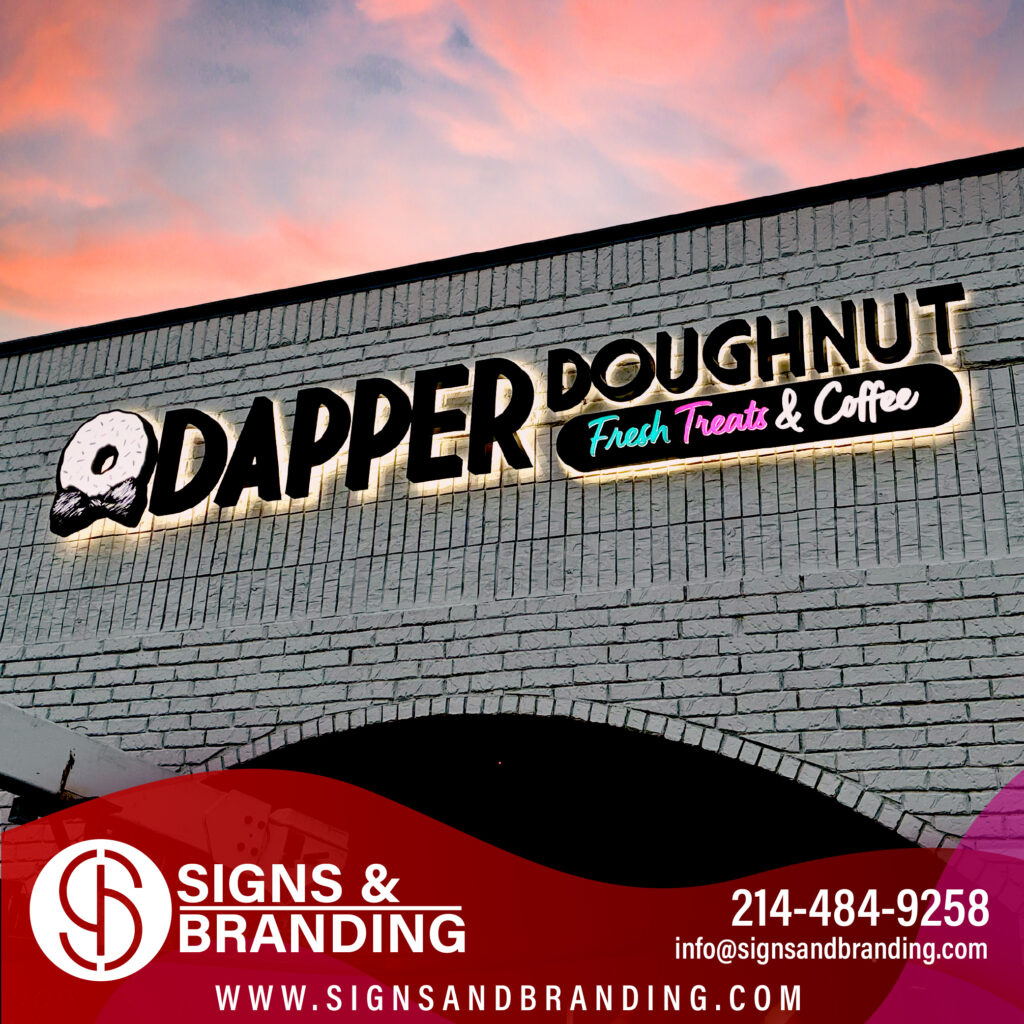
Our in-house fabrication shop builds channel letters, cabinet signs, and structural components using weather-resistant aluminum, stainless steel, and durable acrylic. LED fixture installation happens in-shop before delivery, so integration testing confirms everything performs as modeled.
On-site installation aligns precisely with the mockup’s positioning and orientation. Our licensed, insured installation teams have the equipment and expertise to mount heavy signage safely and securely.
Quality Assurance and Our 5-Year Warranty
Every sign we deliver includes a 5-year quality warranty covering material defects, LED performance, and structural integrity. This commitment reflects our confidence in both design and execution.
Before delivery, we verify that LED brightness, color accuracy, and dimming functions match the light study parameters. We inspect welds, finishes, and fasteners against specifications. We test weatherproofing on outdoor signs, confirming seals and drainage are performing correctly.
Your mockup serves as the benchmark. If your installed sign doesn’t match it, that’s a quality issue we address.
Getting Started with Your Storefront Sign Project
Ready to see your storefront sign in realistic context before committing to fabrication? Contact us with your storefront location, approximate budget, and design direction. We’ll schedule a site visit, capture reference photography, and develop an initial 3D mockup and light study.
Our typical timeline is 2-3 weeks from approval to installation, with mockup and permitting handled in the first week. We’ll walk you through each visualization stage, explain the options, and help you make decisions backed by digital proof rather than imagination.
Reach out to Signs and Branding today. Let’s show you what your storefront sign can be.
Contact us today for a FREE Estimate
Frequently Asked Questions (FAQ)
How long does it take to see a 3D mockup of my storefront sign?
We typically deliver initial 3D mockups within 3-5 business days of our design consultation with you. If you need revisions to colors, materials, or positioning, we can turn those around quickly as well. Our in-house design team works directly with you throughout this process, so you’ll see exactly what your sign will look like before we move forward with fabrication.
What does a light study show that a regular mockup doesn’t?
Our light studies simulate how your sign will actually perform at night by modeling LED brightness, color temperature, and visibility from different distances and angles. This helps you understand whether your lighting choice creates the impact you want for your storefront and how it will appear to customers driving or walking past. We adjust recommendations based on your specific location and surrounding environment in Fort Worth.
Can your mockups help us get city approval faster for our permit?
Yes, we include approved design mockups as part of our permit navigation process. Fort Worth’s permitting department often requires visual documentation of your signage design, and we provide detailed renderings that meet those requirements. Since we handle permits in-house, we know exactly what the city needs to see, which typically speeds up the approval timeline.