

Table of Contents
- 1. Establish a Unified Brand Standard Across All Locations
- 2. Plan Your Timeline and Permit Requirements by District
- 3. Choose Weather-Resistant Materials for Texas Climate
- 4. Coordinate Design Consistency Without Sacrificing Local Appeal
- 5. Leverage LED Lighting to Enhance Every Location
- 6. Partner With In-House Fabrication for Quality Control
- 7. Implement Professional Installation and Warranty Protection
- Frequently Asked Questions (FAQ)
1. Establish a Unified Brand Standard Across All Locations
Rolling out signage across multiple locations in the Dallas-Fort Worth area is a complex undertaking. You’re managing design consistency, navigating different permitting jurisdictions, dealing with Texas weather, and coordinating installation timelines across sites that may be miles apart. One misstep in brand consistency or permit handling can delay your entire rollout by weeks. We’ve guided hundreds of multi-location projects through this process, and we’ve learned what separates smooth deployments from frustrating ones.
This guide walks you through seven concrete practices that will keep your multi-location signage rollout on track, on budget, and aligned with your brand vision across every site.
Before you order a single sign, your brand standards document needs to be bulletproof. This isn’t just about logo placement and color codes. It’s about defining the exact rules for sizing, material finishes, lighting intensity, and spatial relationships so that a customer walking into your Arlington location sees the same visual identity as someone visiting your Frisco store.
Start with a master brand guidelines document that covers:
- Logo dimensions and clear space requirements
- Primary and secondary color specifications (Pantone, RGB, and CMYK values)
- Approved typography for all signage (primary, secondary, and accent fonts)
- Material finish standards (matte, gloss, metallic, LED backlit)
- Mounting height and setback specifications
- Lighting temperature and brightness levels
- Prohibited variations or creative deviations
The common pitfall we see is treating locations as independent projects. When each manager or contractor makes decisions separately, you end up with three different shades of blue and inconsistent messaging that weakens your brand presence. Instead, centralize design approval through one person or team who reviews every concept before fabrication begins.
Your action step: Compile your brand standards into a single master document and distribute it to every stakeholder involved in the rollout. Make it a non-negotiable approval checkpoint.
2. Plan Your Timeline and Permit Requirements by District
Dallas-Fort Worth spans multiple municipalities, and each one has different permitting timelines, sign code requirements, and approval processes. Arlington’s rules differ from those in Plano, which differ from Dallas proper. Missing this reality in your planning is the fastest way to watch your rollout timeline evaporate.
Begin by mapping out every location and its corresponding jurisdiction. Then research or contact each city’s planning or building department to identify:
- Sign permit processing times (typically 5-10 business days, but some cities take longer)
- Maximum allowable sign dimensions and setbacks
- Lighting restrictions (some districts limit brightness or prohibit certain colors)
- Electrical code requirements for LED installations
- Inspection scheduling availability
- Any recent code updates that might affect your design
We navigate this process regularly, and we’ve learned that starting permit applications 6-8 weeks before your target installation date is realistic. Some cities batch inspections on specific days, which means if you miss that window, you’re waiting another two weeks.
Create a timeline grid showing each location, its permit application date, expected approval date, and installation window. Build in a 10-day buffer for unexpected requests or rejections. This approach prevents you from fabricating signage only to discover you can’t install it for another month due to permitting delays.
Your action step: Contact each municipality’s building department this week and request a copy of current sign code requirements and permit timelines. Add these dates to a shared project calendar.
3. Choose Weather-Resistant Materials for Texas Climate
North Texas weather is unforgiving. You face scorching summer heat (often exceeding 100 degrees), severe afternoon thunderstorms, hail, occasional ice, and intense UV exposure. Signs built with standard materials will fade, crack, warp, or corrode within a couple of years. That’s not acceptable when you’re rolling out across multiple locations and expecting consistency.
Weather-resistant materials are non-negotiable for outdoor Dallas signage. Consider these options:
- Aluminum composite panels (ACP): Lightweight, durable, and resistant to warping; ideal for high-temperature environments
- Powder-coated steel: Excellent for structural components; the powder coating prevents rust and UV fading
- Marine-grade acrylic and polycarbonate: UV-stabilized face materials that resist yellowing and cracking
- Stainless steel hardware: Prevents corrosion better than standard fasteners, especially important for long-term consistency
Interior signage can use less heavy-duty materials, but we still recommend fade-resistant options because sunlight through windows will still degrade standard paint and vinyl over time.
The cost difference between standard and weather-resistant materials is typically 10-20%, but you’ll recoup that in longevity. A sign that lasts seven years costs less per year than a sign that lasts three years, even if the initial purchase price is higher.
Your action step: Specify material grades and UV-resistant coatings for both indoor and outdoor signage in your final design package. Don’t assume your vendor is using premium materials; ask explicitly.
4. Coordinate Design Consistency Without Sacrificing Local Appeal
This is the tension every multi-location brand faces: how do you maintain visual consistency while allowing locations enough flexibility to feel local and relevant? The answer lies in a template-based design system, not in rigid, one-size-fits-all signage.
A template approach gives you a core design layout that remains consistent across all locations, while allowing for controlled variables. For example:
- The main logo and color scheme stay fixed
- The storefront header design and typography are standardized
- Local address, phone, or hours can vary within a designated text area
- A secondary “neighborhood badge” or local callout is placed in a consistent zone
- Product imagery or service icons can rotate by location, within approved imagery guidelines
This structure delivers brand recognition without making every location feel like a carbon copy. When someone sees your signs at three different Dallas-area locations, they instantly recognize the brand identity, but each location still feels appropriately placed in its community.
We work with multi-location clients to develop master design files that layer in these controlled variations. Your designer creates the core template once, then applies local customizations to each location’s variant. This approach saves design costs and ensures consistency while reducing approval cycles.
Your action step: Work with your designer to identify which elements are non-negotiable (brand-critical) and which elements can flex based on location needs. Document these as your design template rules.
5. Leverage LED Lighting to Enhance Every Location
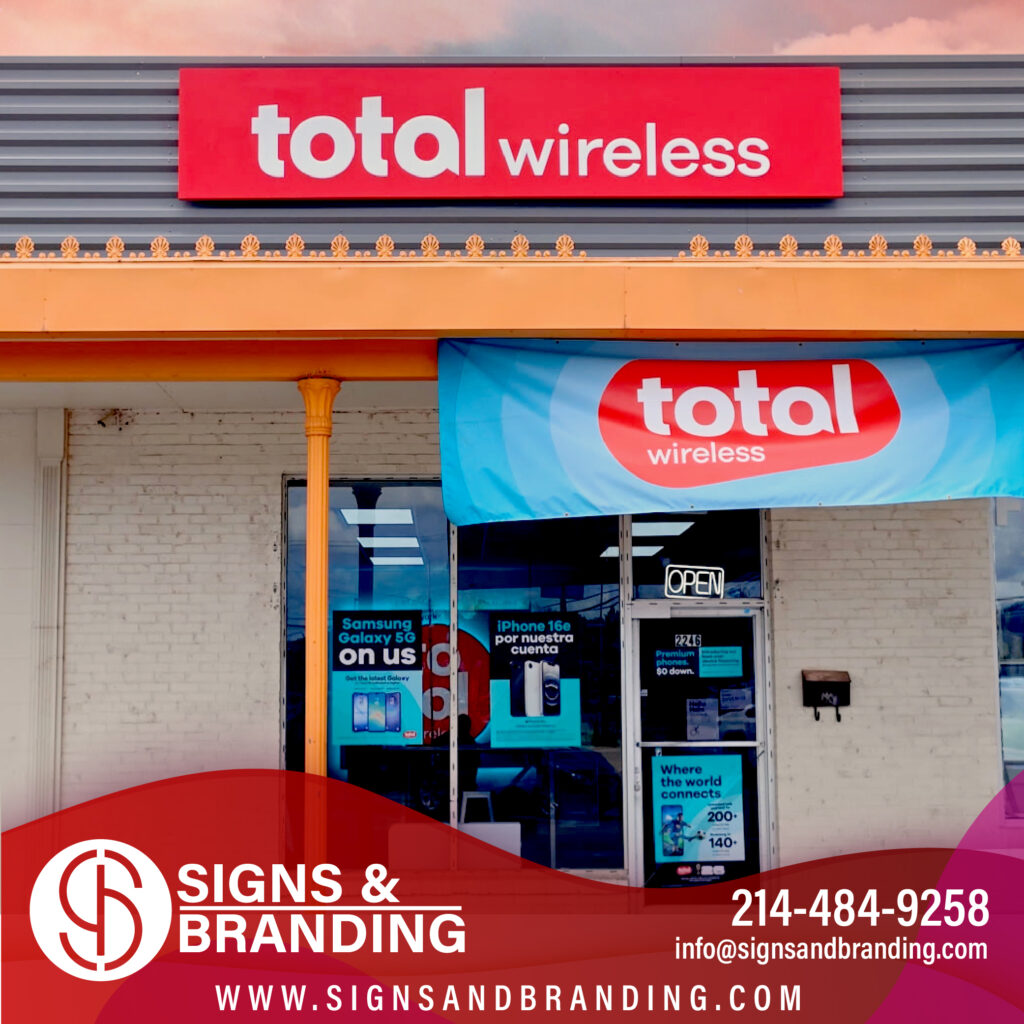
LED lighting transforms signage from a daytime-only asset into a 24/7 brand presence. For multi-location rollouts, strategic LED placement amplifies visibility without requiring you to redesign the base sign concept across all sites.
LED applications for multi-location deployments typically include:
- Halo lighting behind main logos (creates dimensional depth and draws nighttime attention)
- Edge lighting for channel letters or dimensional elements
- Perimeter accent lighting on storefront headers
- Interior-facing signage with integrated LED backlighting
- Parking lot or directional sign lighting for secondary locations
The advantage of planning LED into your rollout upfront is that you can source commercial-grade LEDs at wholesale pricing for volume orders. Rather than retrofitting LED into existing signs or installing through multiple vendors, we provide LED solutions as part of the initial fabrication and installation. This eliminates cost surprises and ensures consistent color temperature and brightness across all locations.
Most LED systems are programmable, allowing you to adjust brightness seasonally or for promotional events. A sign that’s perfectly visible in winter might be too dim in Texas summer glare, so having that flexibility is practical.
Your action step: Decide which sign elements will be lit at each location and request a lighting design rendering before fabrication. Confirm electrical requirements and conduit routing with your installer to avoid surprises.
6. Partner With In-House Fabrication for Quality Control
When you’re deploying signage across multiple locations, quality consistency depends on fabrication. If Site 1’s signs are fabricated by one vendor and Site 2’s by another, color matching alone becomes a nightmare. Material finishes, paint application, LED alignment, and structural precision all vary between shops.
We keep all fabrication in-house specifically for multi-location projects. This means we control every step: material sourcing, paint application, LED installation, final finishing, and quality inspection. When your project involves five or ten locations, that consistency is worth far more than any cost savings from shopping fabrication to the lowest bidder.
In-house fabrication also means faster turnaround. Our typical 2-3 week turnaround becomes predictable when we’re managing the entire workflow. You avoid the delays that come from coordinating between separate design shops, fabrication vendors, and installation crews. We handle design, fabricate your signs, and install them, all under one roof with one quality standard.
Beyond speed and consistency, in-house operations mean we stand behind every sign with confidence. A 5-year warranty covering material defects and workmanship is something we offer because we control the production process and source quality materials.
Your action step: Request a site visit to review the fabrication facility and quality control processes before committing to your multi-location order. See the equipment, meet the team, and confirm that in-house production aligns with your timeline.
7. Implement Professional Installation and Warranty Protection
Professional installation is where many multi-location rollouts falter. It’s tempting to hire the lowest-cost installer at each location or ask your store managers to coordinate installation themselves. This approach inevitably leads to installation variances, safety oversights, and signs that aren’t plumb or properly secured.
Licensed and insured installation crews ensure:
- Proper structural mounting that accounts for local wind loads and weather patterns
- Electrical work that meets code and is safely inspected
- Consistent installation heights and spacing across all locations
- Documentation and photo records of each installation
- Warranty claim support if issues arise
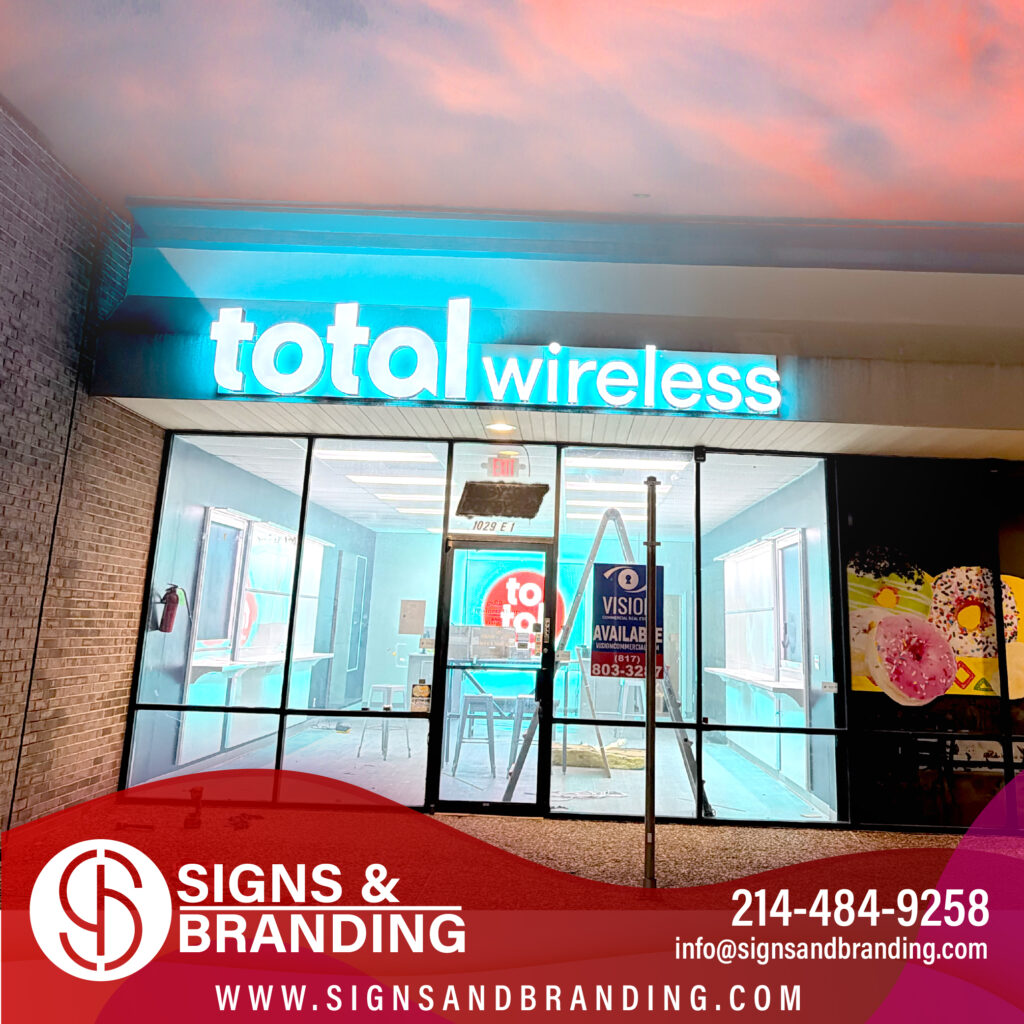
Texas building codes require licensed electricians for any sign with integrated lighting. Cutting corners on installation to save money often violates code and creates liability.
We provide licensed installation crews as part of our full-service model. Beyond just hanging signs, we navigate final inspections with local authorities, ensure all electrical work is compliant, and provide you with inspection sign-offs for every location. This eliminates the administrative burden of coordinating multiple installations and gives you assurance that every site meets code.
The 5-year warranty we provide covers material defects, fabrication issues, and installation workmanship. If a sign fails during that window due to something we controlled, we repair or replace it. For multi-location clients, this warranty protection scales across all sites, giving you unified risk management.
Your action step: Confirm installer licensing, insurance coverage, and warranty terms in writing before your first installation. Request a detailed timeline for completing all locations and a point-of-contact for handling any post-installation issues.
Multi-location signage rollouts succeed when you plan systematically, maintain quality standards throughout fabrication and installation, and partner with a provider who manages the entire process end-to-end. We’ve completed dozens of multi-location deployments across the Dallas-Fort Worth area, and we know how to keep brands visually consistent, timelines realistic, and quality unwavering.
If you’re planning a multi-location rollout, we’re ready to handle your design, fabrication, permitting navigation, and installation. Contact us to discuss your project timeline and get a proposal that covers all your locations.
For further reading: multi-location rollout strategies.
Contact us today for a FREE Estimate
Frequently Asked Questions (FAQ)
How do we handle permit requirements across different Dallas districts for multi-location rollouts?
We navigate all local permitting for you as part of our service. Each Dallas district has different signage codes, and we’re familiar with those variations. Our team submits applications to the correct jurisdictions and manages the approval process, so your project stays on schedule without compliance headaches.
What materials do we recommend for outdoor signs that need to withstand North Texas weather?
We use aluminum composite, powder-coated steel, and UV-resistant vinyl because they hold up to our intense sun, occasional ice storms, and temperature swings. These materials maintain color and structural integrity for years without warping or fading, which is why we back them with our 5-year quality warranty.
Can we coordinate signage design across multiple locations while keeping each site’s local identity intact?
We absolutely can. We develop a master brand template that maintains your core identity, then apply strategic customization for each location’s specific market or customer base. Our in-house design team ensures consistency in messaging and quality while reflecting each site’s unique positioning.