

Table of Contents
- Why Dallas Business Owners Face Unique Outdoor Signage Challenges
- The Real Cost of Inadequate Outdoor Sign Materials
- Our Engineering Approach to Storm and Heat Resistance
- Material Selection for Dallas Climate Conditions
- Structural Design for Wind and Weather Loads
- Protective Coatings and Finish Systems We Specify
- Installation Techniques That Maximize Sign Longevity
- Our 5-Year Quality Warranty Covers Climate Damage
- In-House Manufacturing Ensures Quality Control
- The Complete Design to Installation Process We Manage
- Dallas Permit Requirements and How We Handle Them
- Getting Your Weather-Resistant Sign Installed This Season
Why Dallas Business Owners Face Unique Outdoor Signage Challenges
Dallas weather is unforgiving. Summer temperatures routinely exceed 95 degrees Fahrenheit, and the intense UV radiation accelerates material degradation far faster than in temperate climates. Winter brings occasional ice storms and sudden temperature swings. Occasional hail and severe thunderstorms can strike with little warning, delivering winds that exceed 60 mph. If your signage isn’t engineered for these conditions, you’re not just risking aesthetics—you’re risking safety and operational continuity.
A sign that wasn’t built to handle Dallas extremes won’t just fade or crack. It can fail catastrophically, potentially damaging property below or causing liability issues. We understand these pressures because we’ve worked with dozens of Dallas business owners who inherited poorly designed signage or installed solutions that deteriorated within a few years. The challenge is that standard commercial signage specifications often assume milder climates, leaving Dallas businesses underprotected.
Actionable takeaway: Before ordering any outdoor sign, confirm your vendor understands Dallas-specific climate stressors and designs accordingly.
The Real Cost of Inadequate Outdoor Sign Materials
Many business owners chase the lowest quote without considering what they’re actually getting. A sign installed today for $3,000 that fails in three years becomes a $7,000 problem when you factor in replacement, downtime, and potential property damage or injury claims.
Here’s what inadequate materials actually cost:
- Fading and color loss within 18-24 months (making your brand look neglected)
- Frame rust or corrosion that forces structural failure and unplanned replacement
- Delamination of composite materials under thermal cycling (95-degree days and 55-degree nights)
- Anchor point failure during wind events, potentially creating safety hazards
- Warranty gaps that leave you covering repair costs out of pocket
A business owner in the Dallas Medical District installed a fiberglass composite sign that looked great initially. By year two, the material had begun separating at the seams due to thermal stress. Replacement cost nearly twice the original price, plus they lost revenue from the weeks the storefront looked incomplete during reinstallation.
Our approach eliminates this financial risk through material selection and design that anticipates Dallas’s specific demands. A properly engineered outdoor sign costs more upfront but saves thousands over five, ten, or fifteen years.
Our Engineering Approach to Storm and Heat Resistance
We don’t design one-size-fits-all signage. Every outdoor sign we create starts with a climate-specific engineering assessment. We evaluate your site’s wind exposure, sun orientation, thermal cycling patterns, and local weather history to determine material requirements, structural load capacity, and protective finishes.
This means understanding which surfaces will face intense afternoon sun (and accelerated UV degradation), where water pooling might occur, and what wind gusts your location experiences based on Dallas terrain and elevation. A sign on a downtown high-rise needs different engineering than one at ground level on a side street.
We then select materials, specify attachment methods, and design structural elements with a safety factor that exceeds local building codes. Our fabrication process includes rigorous testing of material bonds, finish adhesion, and connection points before any sign leaves our facility.
Material Selection for Dallas Climate Conditions
We prioritize materials proven to perform in Texas heat and weather extremes. Aluminum is our foundation material for most outdoor applications because it resists corrosion, won’t rust, and maintains structural integrity across the full range of Dallas temperatures. We source aerospace-grade aluminum that meets or exceeds ASTM specifications for alloy composition and surface treatment.
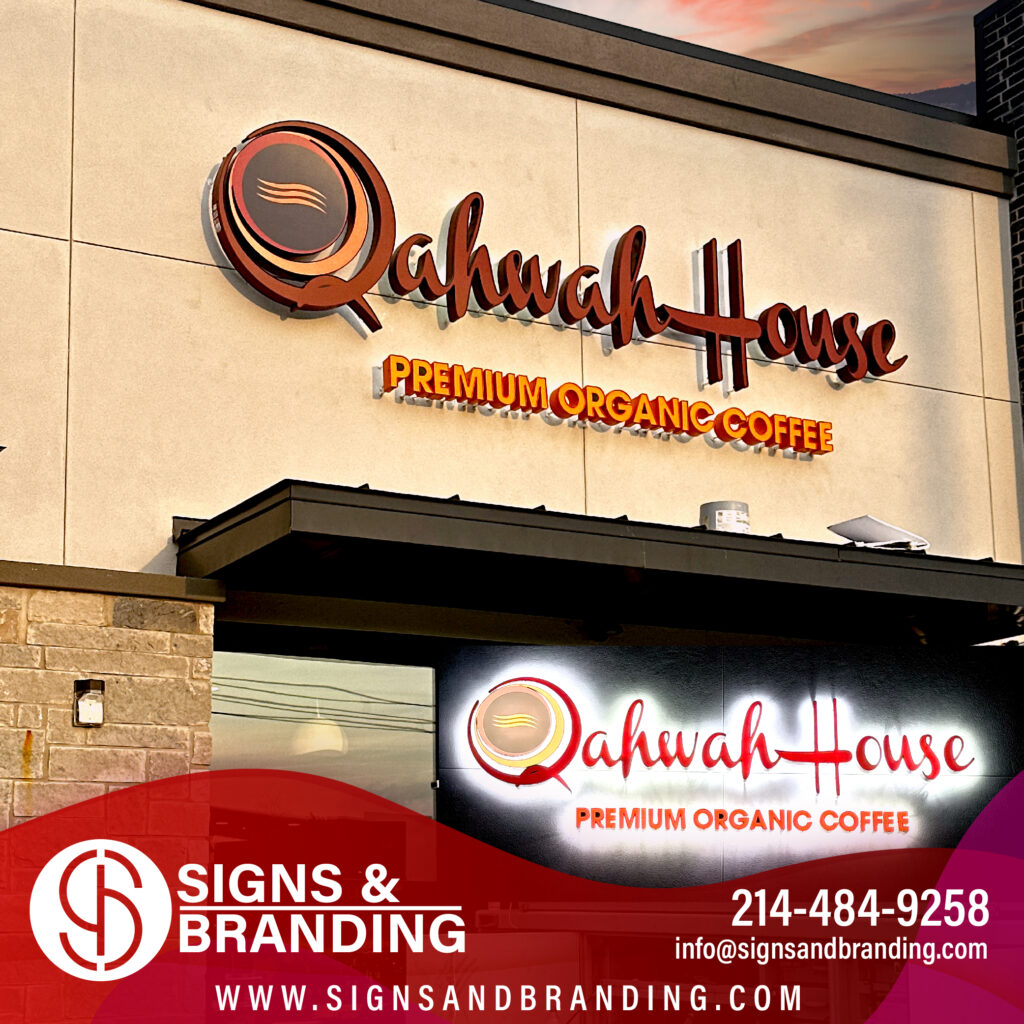
For dimensional signage and lettering, we use high-density polyurethane and acrylic co-extruded materials that resist UV degradation and thermal warping. These composites are engineered specifically for outdoor environments and won’t delaminate under the thermal cycling Dallas delivers.
For painted surfaces, we specify polyester powder coating systems rated for 10+ years in harsh coastal environments (which means Dallas heat is well within their performance envelope). Powder coating creates a harder, more UV-resistant finish than liquid paint and bonds at a molecular level to the substrate.
Materials for Texas storms require careful specification. We avoid materials that trap moisture, fail under temperature variation, or degrade quickly under UV exposure. Every material decision is documented and tied directly to Dallas climate performance data.
Actionable takeaway: Ask your sign vendor which specific materials they’re using and request data sheets showing UV and thermal cycling test results—not just marketing claims.
Structural Design for Wind and Weather Loads
A sign’s engineering must account for wind forces that Dallas experiences. We design all outdoor signs to withstand sustained winds of 70 mph with gusts up to 90 mph, which exceeds typical Dallas storm conditions and includes a safety margin.
This means calculating the wind load based on sign surface area, shape, and mounting height, then designing the frame and anchor points to safely distribute that force into the building structure or ground mount. We use load analysis software to model stress distribution and ensure connection points, fasteners, and the sign’s internal bracing system can handle worst-case scenarios.
Mounting hardware matters as much as material. We specify stainless steel fasteners (never galvanized—they’ll eventually corrode in Dallas humidity), anchor bolts engineered for pullout strength, and mounting systems that distribute loads evenly rather than concentrating stress at a few points.
For large signs or those in high-wind exposure zones, we integrate internal bracing and triangulation that would be invisible to passersby but critical to structural integrity. A poorly braced sign will oscillate in wind, fatiguing materials and connections until failure occurs.
Protective Coatings and Finish Systems We Specify
Materials alone don’t guarantee longevity—the finish system protects them. We apply multi-layer protective coatings that shield aluminum from oxidation, wood from moisture infiltration, and painted surfaces from UV breakdown.
Our typical specification includes:
- Etching primer on aluminum to ensure adhesion and prevent corrosion beneath the topcoat
- Epoxy or polyester base coat that adds chemical and moisture resistance
- UV-stable polyester topcoat in the color you’ve selected, formulated for outdoor durability
- Clear protective topcoat in high-traffic or high-exposure areas for additional UV and abrasion protection
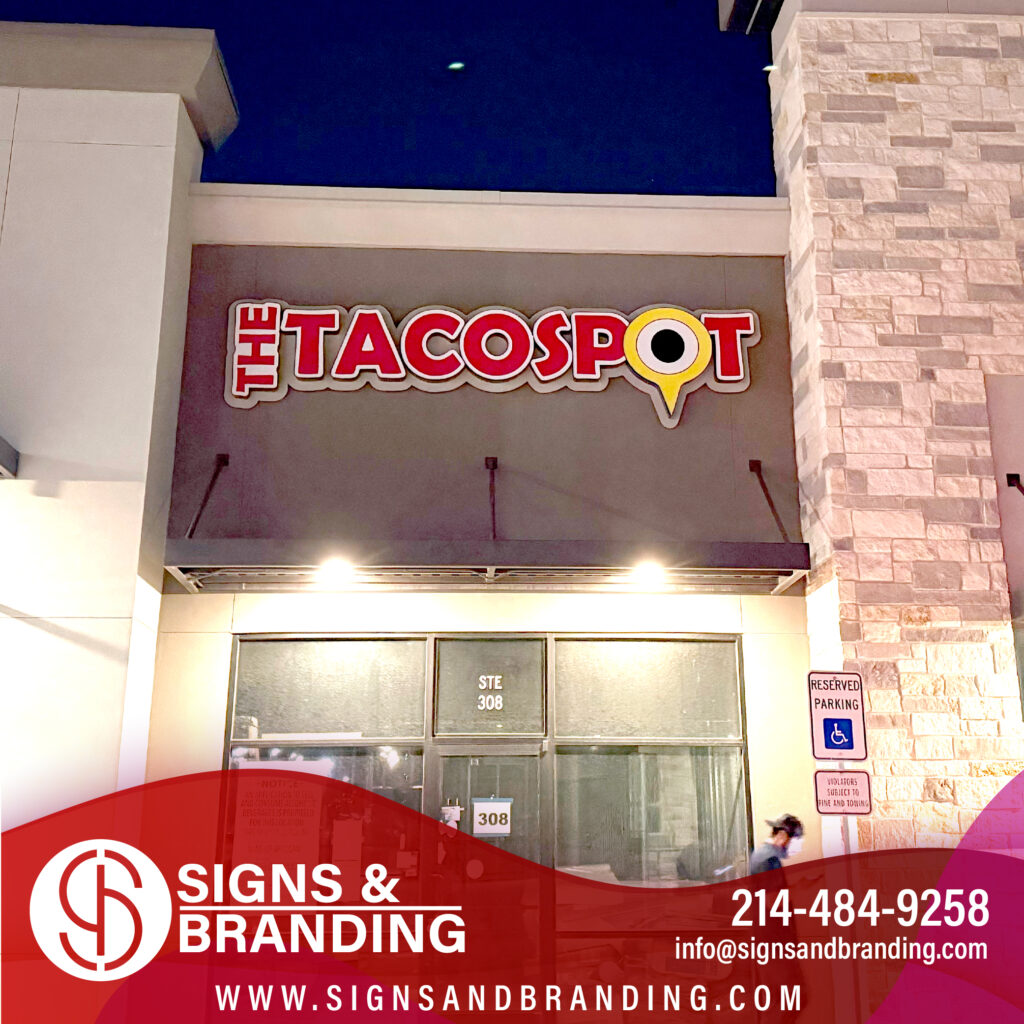
For signage with lettering or dimensional elements, we seal all edges and seams with marine-grade sealant to prevent water ingress. Water penetration is one of the fastest paths to material failure—it causes corrosion, swelling, and delamination from the inside out.
We also specify finishes that resist dirt accumulation and remain cleanable with standard maintenance. A finish that turns chalky or collects algae quickly looks neglected, even if the underlying materials are sound.
Installation Techniques That Maximize Sign Longevity
Even a perfectly engineered sign can fail if it’s installed incorrectly. We handle all installation in-house, which means our installation team understands the design intent and executes it precisely.
Proper installation includes:
- Flashing and water management around penetrations to prevent water from running behind the sign or into the building
- Anchor point preparation that removes paint, rust, or debris to ensure fasteners grip solid material
- Proper fastener sizing and spacing according to structural calculations—not eyeballed or “pretty close”
- Leveling and alignment that ensures loads distribute as designed
- Inspection and torque verification of all fasteners before we call the job complete
We also install with the understanding that signage will be serviced. We leave access points for maintenance and design mounting systems that allow future repairs without structural compromise.
Our 5-Year Quality Warranty Covers Climate Damage
Our 5-year quality warranty covers material defects and workmanship issues, including failure due to Dallas climate stress—rust, corrosion, UV degradation, thermal cycling damage, and coating failure. If you installed a properly specified sign through us and it fails due to material quality or manufacturing defect within five years, we replace it.
This warranty only exists because we’re confident in our material selection and engineering. We wouldn’t offer it if we were using commodity-grade materials or cutting corners on fabrication.
The warranty also motivates us to get the specification right from the beginning. Every sign we fabricate is engineered to perform throughout its warranty period in Dallas conditions, with a safety margin beyond.
In-House Manufacturing Ensures Quality Control
We control every step of the fabrication process, from material receiving through final quality inspection. We don’t outsource production to multiple vendors or overseas facilities where we can’t verify workmanship.
Our in-house shop includes CNC machining, routing, and waterjet cutting equipment that ensures precision. We can hold tight tolerances on fabricated components, which means parts fit together correctly and loads distribute as designed. We also perform destructive testing on material samples to verify coating adhesion, material strength, and bond integrity before production signage leaves our facility.
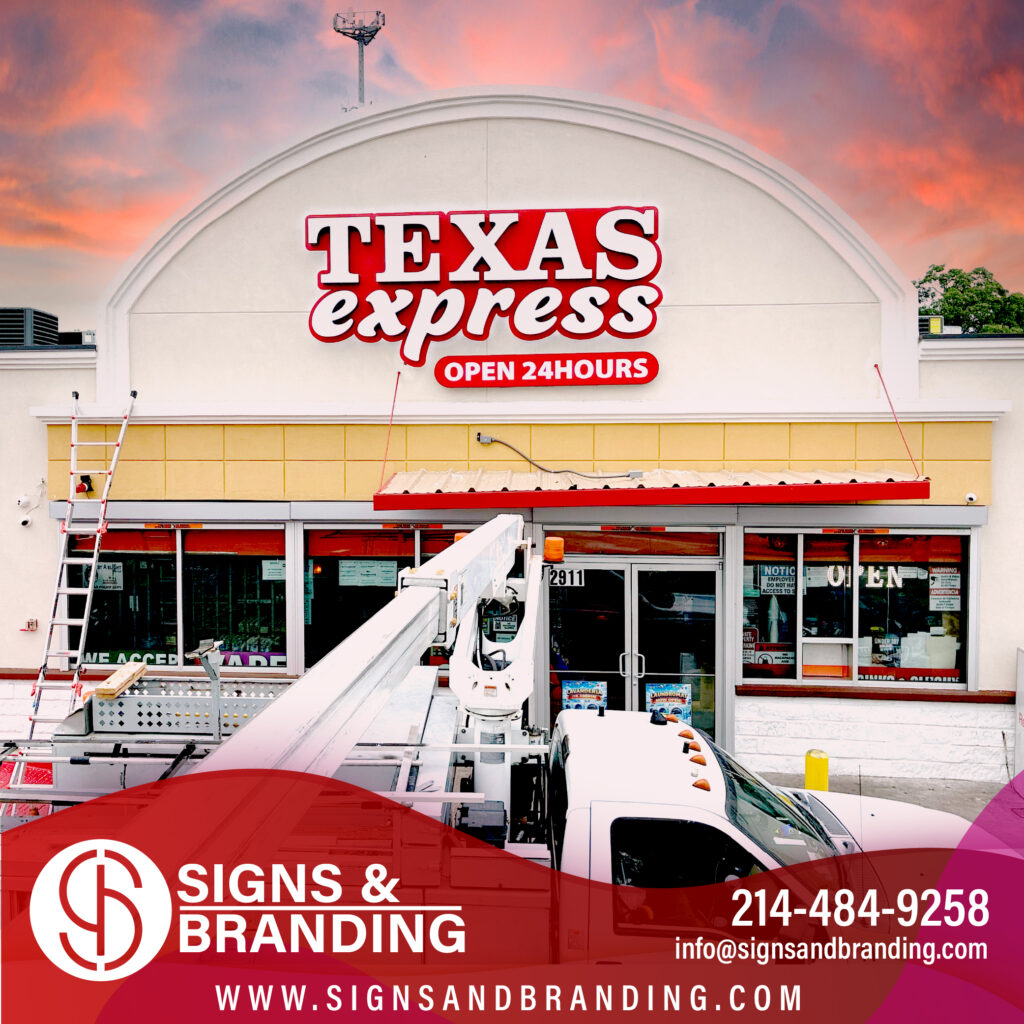
When you work with us, you’re not hoping the fabricator got it right. You’re getting signage built by people with accountability for the final product.
The Complete Design to Installation Process We Manage
We handle everything from initial concept through final installation, which eliminates coordination gaps and ensures your vision is realized as engineered.
Our process includes:
- Site assessment and climate analysis to inform material and structural specifications
- Design consultation to align your brand vision with durable materials and proven techniques
- Permit preparation and submission (detailed below)
- Material and component fabrication in our Dallas facility
- Quality inspection and testing before release for installation
- Licensed installation by our trained team
- Final inspection and warranty documentation
This full-service approach means you’re working with one vendor who understands the complete lifecycle of your signage. There’s no hand-off confusion, no “that’s the installer’s problem” or “that’s the manufacturer’s issue.”
Dallas Permit Requirements and How We Handle Them
Dallas has specific codes governing outdoor signage, including setback requirements, maximum size limitations, setback from property lines, electrical code compliance, and structural engineering review for large or tall signs. Installing without proper permits creates legal liability and can trigger code enforcement action.
We navigate these requirements as part of our service. Our team knows the Dallas City Code signage provisions and works with local authorities to ensure your design complies. For signs that trigger engineering review, we prepare structural calculations and sealed engineering drawings. For electrical signage, we coordinate with licensed electricians and ensure compliance with NEC standards.
Dallas sign permit requirements can create unexpected delays if mishandled. We manage the process to keep your project on schedule.
Actionable takeaway: Never install signage without confirming permits are obtained. The cost of a citation and forced removal far exceeds permit fees.
Getting Your Weather-Resistant Sign Installed This Season
If your current signage is showing age, fading, or damaged, or if you’re opening a new location and need durable outdoor branding from day one, we’re ready to help. We maintain a 2-3 week turnaround from design approval through installation, which means your new sign can be in place quickly.
Contact us to schedule a site assessment and design consultation. We’ll evaluate your location’s climate exposure, discuss your brand vision, and provide a detailed specification and quote for weather-resistant signage engineered for Dallas. We’ll also handle all permit preparation and installation coordination, so you can focus on running your business.
Our 5-year warranty and in-house fabrication give you the confidence that your investment will look professional and perform reliably through Dallas heat, storms, and seasonal extremes.