

Table of Contents
- Why Weather Resistance Matters for Your Dallas Business Signs
- Common Problems With Inadequate Sign Materials
- How Our In-House Manufacturing Ensures Durability
- Material Selection Process for DFW Climate
- Design Considerations for Long-Term Performance
- Our 5-Year Quality Warranty Explained
- Turnaround Time and Installation Timeline
- Permit Navigation Support in Dallas
- Cost Efficiency of Full-Service Manufacturing
- Real Results From Dallas Business Owners
- Getting Started With Your Weather-Resistant Sign Project
Why Weather Resistance Matters for Your Dallas Business Signs
Your storefront sign is working 24/7 to attract customers and communicate your brand. In Dallas, that sign faces intense summer heat exceeding 100 degrees, occasional severe storms, intense UV exposure, and humidity swings that stress inferior materials. A sign that fades, warps, or deteriorates within a year doesn’t just look unprofessional—it damages customer perception and forces you to invest in replacement sooner than necessary.
We’ve built our entire manufacturing operation around one core principle: signs built for DFW weather last. When we select materials and design your sign, we’re thinking about what happens to it in July when the pavement temperature hits 140 degrees, and again in March when a sudden hailstorm rolls through. This isn’t hypothetical—we’ve watched countless business owners replace cheap signs twice in five years because they didn’t account for our climate.
Weather-resistant signage protects your investment and maintains your brand’s visual impact year after year. The difference between a sign that survives our environment and one that doesn’t often comes down to material choice, fabrication quality, and installation expertise.
Actionable step: Before committing to any sign project, ask potential vendors specifically how their materials and manufacturing process handle Dallas summer heat and spring storms. Generic answers are a red flag.
Common Problems With Inadequate Sign Materials
Many business owners discover too late that their sign materials weren’t built for sustained DFW conditions. We see the aftermath regularly when companies reach out to replace signs that failed prematurely.
Vinyl wraps and printed graphics are vulnerable in our climate. Direct sunlight causes them to fade noticeably within 18-24 months, especially reds and oranges. The adhesive can fail as heat cycles cause expansion and contraction, leaving you with peeling corners and bubbled sections. In humid conditions, moisture gets trapped underneath, accelerating the breakdown.
Aluminum signs sound durable until oxidation sets in. Standard aluminum isn’t treated properly for long-term outdoor exposure and begins showing white corrosion within months. The sealants used on budget fabrication crack under UV stress, allowing moisture penetration that leads to internal corrosion you can’t see until it’s too late.
Wood-based materials and MDF composites absorb moisture and warp unpredictably. When our spring rains arrive, these materials swell. When summer heat dries them out, they shrink. This constant movement breaks joints, cracks paint, and eventually compromises structural integrity. We’ve seen wooden business signs literally split apart because they weren’t sealed with the right system for outdoor use.
Plastic and polycarbonate materials become brittle under constant UV exposure. Signage made from lower-grade plastics can yellow, crack, or shatter when exposed to thermal stress cycles typical in Dallas.
Paint and finishes matter enormously. Standard exterior paint simply isn’t formulated for signage applications and fails quickly in our sun-intense environment. The pigments break down, adhesion fails, and color shift becomes visible within months.
Actionable step: Ask your sign vendor about specific UV-resistant paints and clear coat systems they use. If they mention standard exterior paint or can’t explain their finish specification, keep looking.
How Our In-House Manufacturing Ensures Durability
We control every step of the fabrication process from raw material to installation, which means we catch and prevent the failures we just described. Our in-house manufacturing facility uses professional-grade materials specified for commercial outdoor signage, not residential or temporary applications.
When we cut materials, we use precision equipment that minimizes stress points where failures originate. Our welding and joinery processes meet commercial standards, not shortcuts. We don’t route materials through third-party fabricators where quality control gets loose between handoffs.
Our finishing process is where durability really gets built in. We apply multiple-layer clear coat systems specifically formulated for UV protection and weathering resistance. These aren’t standard polyurethane finishes—they’re commercial-grade systems designed to protect the base materials underneath for years.
For materials requiring sealing or edge protection, we use the same techniques that commercial contractors specify for high-traffic installations. We seal aluminum against oxidation, treat wood with marine-grade sealants if applicable, and ensure every edge and joint is protected.
We also inspect every sign before it leaves our facility. This isn’t a cursory glance—we’re checking dimensional accuracy, finish quality, and structural integrity. If something doesn’t meet our standards, we rework it. This adds a bit to our timeline, but that’s why we offer a 5-year warranty with confidence.
Actionable step: When evaluating sign manufacturers, ask about their quality control process and inspection standards. Visit their facility if possible to see how they work. The vendors who are proud of their manufacturing want you to see it.
Material Selection Process for DFW Climate
Our material choices are specifically tailored to what works in Dallas. We’re not applying generic “outdoor signage” recommendations—we’re selecting for our specific climate pattern of intense heat, UV exposure, occasional severe weather, and humidity swings.
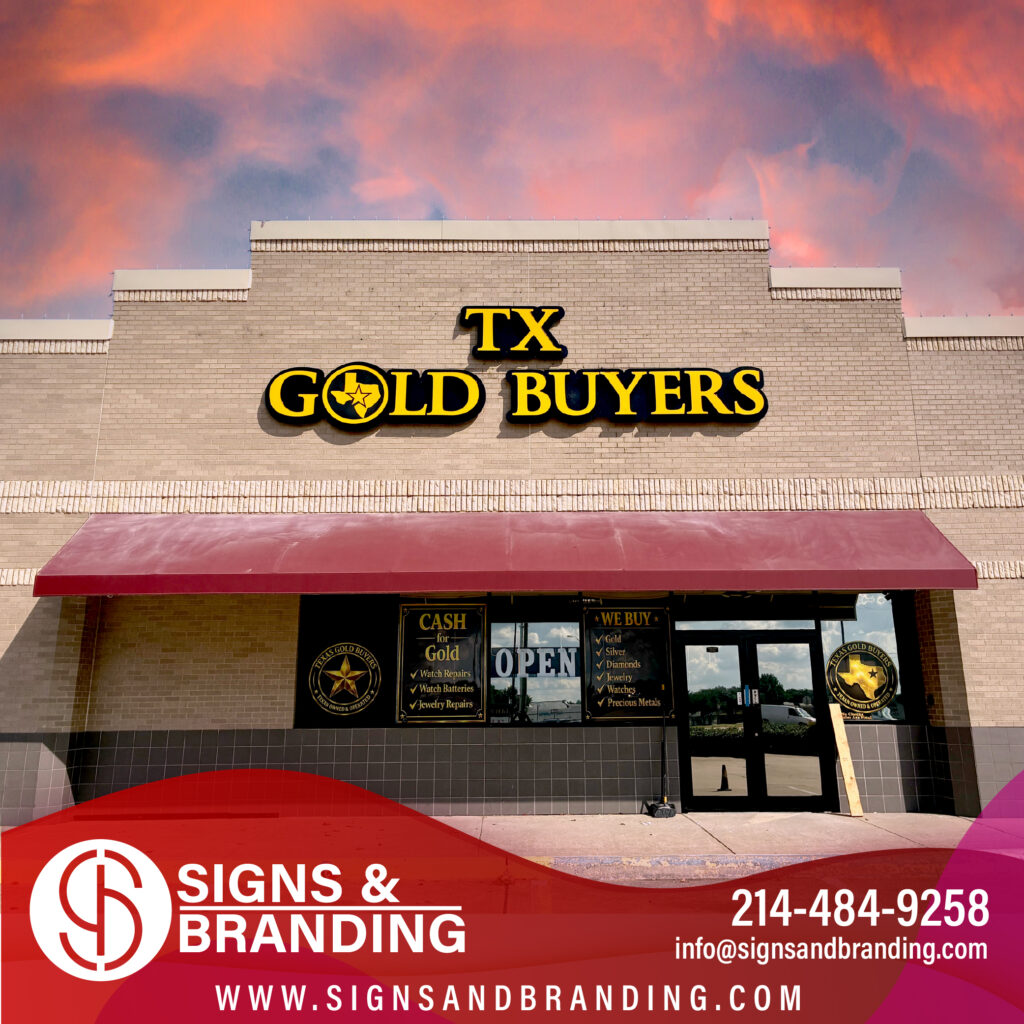
For exterior signage, we prioritize powder-coated aluminum as our base material. When properly powder-coated with a polyester or polyurethane finish, aluminum resists our summer heat without warping and develops superior paint adhesion compared to other finishes. The powder coating bonds chemically to the metal surface, creating a finish that lasts significantly longer than wet paint.
For graphics and lettering, we use UV-resistant vinyl inks and specialized substrates designed for commercial outdoor use. These inks contain inhibitors that slow color degradation under intense sunlight. Standard printing inks simply can’t compete with the durability of materials formulated for signage.
When a project calls for acrylic or polycarbonate components, we specify commercial-grade materials with integrated UV protection, not the standard versions you’d find in hardware stores. This higher-grade material costs more upfront but preserves clarity and resists yellowing for many additional years.
LED and lighting components receive equal attention. We use commercial-grade fixtures rated for outdoor installation and specify electrical work that meets Dallas code requirements. Poor-quality fixtures fail quickly in heat and moisture.
For materials tailored to Texas weather conditions, our team has tested various options across multiple seasons and documented their performance. We apply those lessons directly to every project.
Actionable step: Ask your sign vendor what specific materials they’re using and why they chose them for your climate. “It’s quality material” isn’t enough information. You want specifics about finish type, UV protection, and why it performs better in Dallas conditions than alternatives.
Design Considerations for Long-Term Performance
Great design doesn’t just look good—it’s engineered for durability in our environment. We consider how design choices affect how your sign will perform over five years.
Drainage is non-negotiable. Any horizontal surface on a sign needs to slope slightly so water doesn’t pool. Standing water accelerates corrosion and allows moisture to penetrate joints. This seems obvious but is frequently overlooked in budget designs. We specify drainage paths during the design phase.
Material transitions and joint design matter significantly. Every place where two different materials meet is a potential failure point if the joint isn’t designed correctly. We use appropriate sealants and fastening methods at every transition and design our signs to minimize the number of joints when possible.
Color choice affects durability. Darker colors absorb more heat, which can cause expansion and stress on materials. Lighter colors reflect more solar radiation but show dirt more readily. We help you choose colors that look great and withstand DFW heat appropriately.
Thickness and bracing are designed specifically for Dallas wind conditions. A sign that’s adequate for calm weather might flex excessively or fail under the wind loads we experience during spring thunderstorms. We engineer our structures to handle the wind speeds our area actually experiences.
Typography and graphics should maintain legibility from your sign’s intended viewing distance, and we design accordingly. Large, bold lettering withstands the visual impact of heat shimmer and atmospheric haze better than delicate fonts. During the design phase, we consider not just how your sign looks in our studio but how it will appear from the street in summer conditions.
Maintenance accessibility is part of smart design too. If your sign will need cleaning or touch-ups, we design it so those tasks are practical. A beautifully designed sign that’s impossible to clean becomes an eyesore within a year.
Actionable step: During design discussions with your sign vendor, ask specifically how they’re designing for Dallas weather and maintenance. A designer who only talks about aesthetics isn’t thinking holistically about your sign’s five-year performance.
Our 5-Year Quality Warranty Explained
We back every sign we manufacture and install with a comprehensive 5-year quality warranty. This isn’t marketing language—it reflects our confidence in our materials and workmanship.
The warranty covers defects in materials and fabrication. If a weld fails, if your powder coating delaminates, if LED components fail due to manufacturing defects, or if vinyl graphics separate before their expected lifespan, we’ll repair or replace those components. This applies across all weather conditions during the warranty period.
The warranty covers installation. If improper installation causes premature failure, that’s on us, not you. Our licensed installers follow best practices for your specific sign type and location.
What the warranty doesn’t cover is abuse or extreme negligence. If someone hits your sign with a truck or you ignore a loose fastener until the entire sign comes down, that’s outside warranty scope. Normal wear from exposure to Dallas weather is covered; catastrophic damage from negligence isn’t.
We don’t limit warranty claims to a certain number or require you to jump through bureaucratic hoops. When you contact us about a warranty issue, we inspect it, confirm it’s a valid claim, and fix it. We’ve built our business on the idea that happy customers who trust us to stand behind our work become repeat customers.
Five years is intentionally longer than the “industry standard” you’ll hear quoted elsewhere. It reflects our actual experience with how long quality materials and craftsmanship last in our market.
Actionable step: Ask any sign vendor about their warranty scope and what they actually cover. Get it in writing. A vague warranty with lots of exclusions isn’t much protection.
Turnaround Time and Installation Timeline
We consistently deliver signs within 2-3 weeks from design approval through installation. This speed exists because we control the entire process in-house rather than coordinating with external fabricators.
Your timeline starts with a design consultation. We’ll discuss your vision, requirements, and budget, then develop a initial design. Most clients review and approve a design within 3-5 business days. If revisions are needed, we iterate quickly.
Once you approve the design, fabrication begins immediately. Our manufacturing schedule keeps turnaround times predictable. Depending on your sign’s complexity and our current workload, fabrication typically takes 7-10 business days.
During fabrication, we’ll handle or coordinate your permit applications. If your sign location requires city approval, we submit the paperwork with your design and specifications. Most Dallas permits process within 1-2 weeks, so this happens in parallel with fabrication rather than creating delays.
Installation scheduling comes next. We’ll coordinate with you to find a time that works for your business. Most installations happen within days of fabrication completion. We perform our own installation rather than subcontracting, which means consistent quality and direct accountability.
From first consultation to sign installed and operational, expect roughly 2-3 weeks under normal circumstances. Rush timelines are possible for an expedited fee, and we can discuss that if you have a specific deadline.
Actionable step: When planning your sign project, build in timeline buffers for design approvals and any unexpected permit questions. Communicate your deadline early so we can plan accordingly.
Permit Navigation Support in Dallas
Dallas requires permits for most exterior business signage, and the process confuses many business owners. We handle this complexity as part of our service rather than leaving it to you.
Our team understands Dallas signage code requirements, setback distances, height limitations, lighting restrictions, and the specific requirements for different business types and locations. We’ve navigated hundreds of permits, so we know what the city reviews and what typically requires revisions.
When we submit your permit application, we include specifications and designs that meet code requirements from the start. This reduces the likelihood of rejection or requests for modifications. If the city has questions about your specific installation, we communicate with the permitting office directly.
For businesses in areas with specific sign regulations or architectural guidelines, we’re familiar with those requirements too. If you’re in a district with stricter guidelines, we design accordingly and explain how your sign complies.
You remain in the loop throughout. We’ll explain what the city requires and why, and we’ll keep you updated on permit status. When your permit is approved, you’ll have a copy for your records.
For detailed information about Dallas permits and regulations, we maintain current resources addressing the specific requirements your business likely needs.
Actionable step: Provide your exact location address early in discussions so we can review specific zoning and permitting requirements that might apply to your site. Different Dallas neighborhoods have different rules.
Cost Efficiency of Full-Service Manufacturing
You might assume that in-house manufacturing costs more than coordinating with outside vendors, but the opposite is typically true. Our model reduces costs at multiple points.
We don’t carry overhead for sales offices, layers of management, or excessive administrative staff. Every dollar you invest goes toward materials, fabrication, installation, and warranty support.
By controlling fabrication in-house, we eliminate markup layers that exist when sign companies order from third-party manufacturers. When you contact a vendor that outsources fabrication, their fabrication vendor builds in profit, then the sign company builds in their own markup. We do the work ourselves, which means you pay for materials and labor, not multiple profit margins.
Our standardized processes and equipment efficiency reduce waste. Our team has refined workflows over years, which means we fabricate signs more efficiently than shops running occasional sign jobs alongside other work. That efficiency translates to lower costs for you.

Volume purchasing of materials gives us better material costs than small shops can achieve. We pass those savings to clients rather than treating it as pure margin.
Long-term relationships with trusted suppliers and subcontractors for items we don’t fabricate in-house mean better pricing than businesses negotiating every project individually.
Our warranty is actually cost-efficient too. Because our signs are built to last with quality materials, warranty claims are rare. The cost of our warranty is built into our pricing, but most clients never claim it because our signs perform as expected.
Compare total cost over five years, not just the upfront price. A cheaper sign that needs replacement or extensive repairs in year three costs significantly more than a quality sign from day one.
Actionable step: Get pricing from multiple vendors and ask them to break down what you’re actually paying for. Materials cost, labor cost, profit margin, and warranty scope all matter. The lowest price usually indicates where corners are being cut.
Real Results From Dallas Business Owners
Our clients are Dallas business owners who’ve experienced the difference quality signage makes. Their feedback illustrates how weather-resistant signage impacts both performance and business perception.
A retail shop owner in Uptown had replaced their storefront sign twice in five years before reaching out to us. The signs looked dated and worn despite being relatively new. After we installed a quality powder-coated aluminum sign with UV-resistant graphics, they reported that the sign looked fresh and professional five years later, and customer feedback about the storefront appearance improved noticeably in their first year.
A restaurant in Deep Ellum wanted signage that would withstand both intense summer sun and the inevitable bumps from delivery trucks and loading. We designed a durable exterior sign and an interior menu display system. Three years in, the owner told us the exterior sign looked as good as the day we installed it, and the interior displays were still pristine despite heavy daily use.
A medical office in Frisco needed signage that projected professionalism and reliability. Beyond aesthetics, they needed signs that would last because they’re a long-term business. The exterior monument sign and interior wayfinding system we installed became reference points for how professional their entire practice appears.
A manufacturing business in Addison required large-scale signage visible from the highway. They needed something that could handle the elements and look sharp for years. Our industrial-grade aluminum sign with commercial-grade powder coating is still performing perfectly in their fourth year, looking exactly as it did on day one.
What these clients have in common is that they prioritized quality over budget and asked the right questions about materials and durability. They understood that their sign represents their business to hundreds of potential customers daily, and that investment in quality pays dividends.
Actionable step: Ask potential sign vendors for references from clients who’ve had signage installed 3-5 years ago. Contact those references directly and ask about how their signs are holding up and whether they’re satisfied with their investment.
Getting Started With Your Weather-Resistant Sign Project
Starting the process is straightforward. Contact us with information about your project, your location, and your timeline.
During an initial conversation, we’ll discuss what you’re trying to accomplish with your signage. Are you replacing an older sign, updating your brand appearance, adding new signage to an expansion, or solving a specific visibility problem? Understanding your goal helps us design the right solution.
We’ll ask about your location and get details about your site. The specific address matters because we’ll research zoning requirements, setback distances, and any architectural guidelines that apply. We’ll also assess visibility, lighting conditions, and how the sign will be viewed.
You’ll share your budget range so we can design within realistic parameters. We’re transparent about costs and won’t waste your time designing expensive solutions if you have specific budget constraints. Quality signage comes in different price ranges depending on size, materials, and complexity.
After our initial conversation, we’ll develop a design proposal with specifications and preliminary pricing. This gives you a concrete sense of what’s possible before we dive into permitting or fabrication.
Once you approve the design, we move forward with detailed fabrication planning, permit applications if needed, and scheduling. The timeline from approval to installation is typically 2-3 weeks.
Throughout the process, you’re in direct contact with our team. You’re not dealing with multiple vendors or coordinating with different companies. We handle the entire project.
Start now: Reach out with your address, project description, and timeline. We’ll schedule an initial consultation and move forward from there. A weather-resistant sign that lasts is entirely achievable with the right manufacturer.