

Table of Contents
- 1. Understanding Channel Letter Construction and Materials
- 2. Proper Electrical Integration and Safety Compliance
- 3. Mounting Techniques for Maximum Durability
- 4. LED Technology Selection for Your Business
- 5. Weather Protection and Weatherproofing Methods
- 6. Permit Navigation and Code Requirements
- 7. Professional Installation vs DIY Approach
1. Understanding Channel Letter Construction and Materials
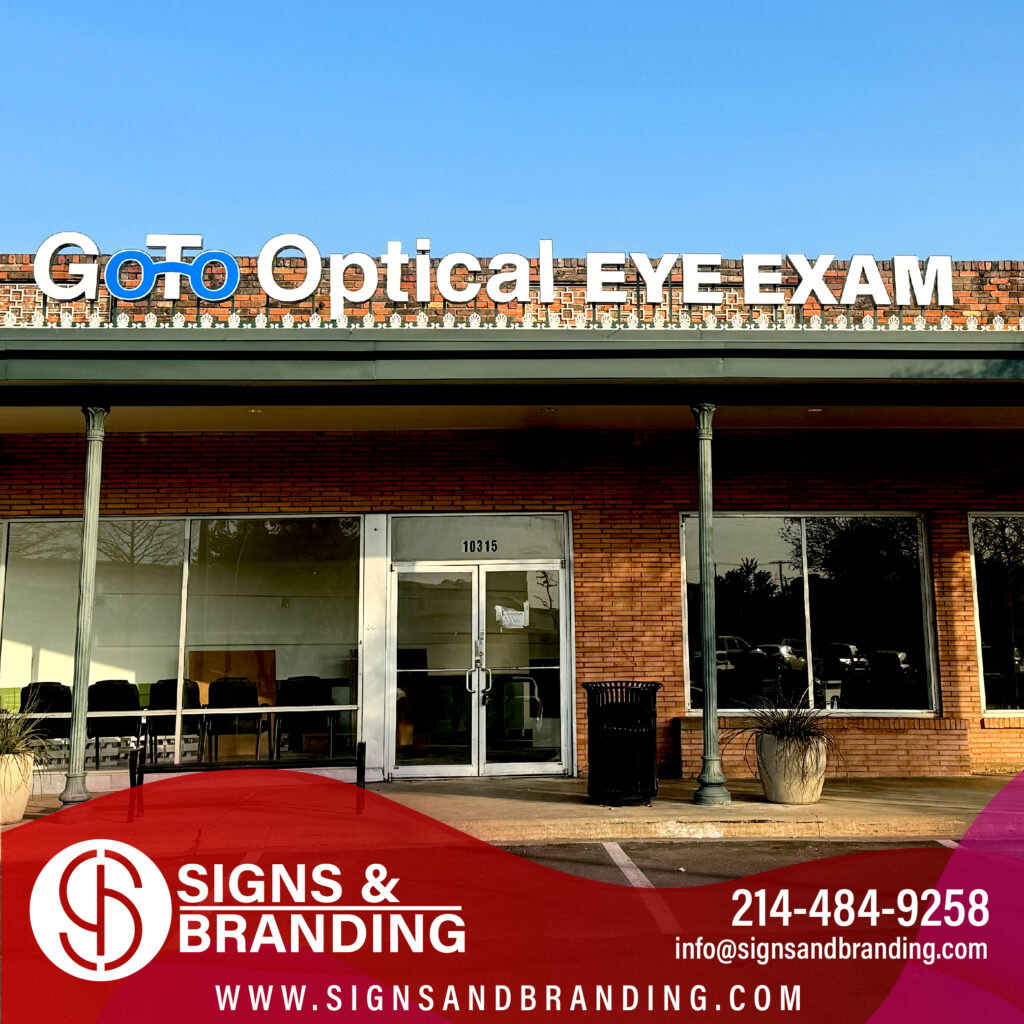
Illuminated channel letter signs are one of the most effective ways to make your Dallas business visible 24/7. Whether you’re upgrading your storefront or installing new signage, getting the installation right matters far more than most business owners realize. A poorly executed installation can mean reduced visibility, safety hazards, costly repairs, and even code violations that force you to take the sign down.
We’ve installed hundreds of channel letter signs across Dallas, and we’ve learned exactly what separates a sign that lasts five years from one that barely makes it through the first Texas summer. This guide covers the seven practices we rely on to ensure every installation performs perfectly from day one.
Channel letters are three-dimensional letters that house electrical components and lighting elements inside a frame. The frame itself is typically aluminum or steel, while the face is acrylic or polycarbonate. The difference between a durable sign and one that fails prematurely often comes down to material quality and construction precision.
When we fabricate channel letter signs, we use marine-grade aluminum that resists oxidation and corrosion. This is non-negotiable in Dallas’s climate, where seasonal temperature swings and occasional hail can stress lower-quality materials. The face material matters equally. We prefer UV-resistant acrylic for most applications because it resists yellowing and maintains clarity under constant sunlight, while polycarbonate works better for exposed locations where impact resistance is critical.
The backing and internal structure also determine longevity. Our letters include reinforced internal bracing that prevents warping from thermal expansion and contraction. Cheap construction shortcuts here lead to letters that look crooked within months.
What to do next: Request material specifications from any sign provider. Ask whether they use marine-grade aluminum and UV-resistant acrylic. If they won’t give you specifics, that’s a red flag.
2. Proper Electrical Integration and Safety Compliance
Electrical work inside channel letters demands precision. Poor electrical integration leads to corrosion, short circuits, flickering, premature component failure, and fire hazards. This isn’t an area where cost-cutting makes sense.
Proper electrical integration includes several critical components. Wiring must be rated for wet locations, since condensation inevitably forms inside channel letters, especially in Texas humidity. We use marine-grade silicone-coated copper wire and route it through conduit inside the letter structure. Power supplies need to be housed in weatherproof enclosures mounted securely to the building or support structure, never left exposed in the elements. All connections must be soldered and sealed with dielectric grease to prevent oxidation at the joint.
Grounding deserves special attention. Channel letter installations near rooflines or tall structures face lightning risk. Proper bonding and grounding pathways protect against electrical surges and direct strikes. Building codes require this, and it’s something we verify at every stage of installation.
What to do next: Ensure your installer provides a detailed electrical diagram showing wire gauge, power supply location, and grounding configuration. Ask for proof of licensed electrical work.
3. Mounting Techniques for Maximum Durability
How channel letters attach to your building determines whether they stay secure through high winds, temperature shifts, and vibration from nearby traffic. Mounting failures are expensive failures—a sign falling from a storefront creates liability and potential injury.
We use structural fasteners rated for the specific mounting surface: expansion anchors into masonry, lag bolts into wood, and threaded inserts into metal. Every fastener is stainless steel or coated to prevent rust staining on the facade. For letters mounting directly to building faces, we space fasteners no more than 16 inches apart and always mount into solid structural material, never drywall or thin cladding.
The mounting method also affects thermal movement. Materials expand and contract with temperature swings. We use slightly oversized holes to accommodate this movement without creating stress concentrations that eventually crack welds or strip threads. Silicone sealant around mounting points prevents water intrusion behind the sign.
Wind load calculations matter more than many installers acknowledge. A 3-foot-tall “O” presents significant surface area. In Dallas, we design for sustained winds of 90 mph and gusts exceeding 110 mph, which is what modern building codes require. This determines bracket sizing and fastener specifications.
What to do next: Ask your installer for wind load calculations and the building permit submitted to the city. These documents prove the installation meets Dallas code requirements.
4. LED Technology Selection for Your Business
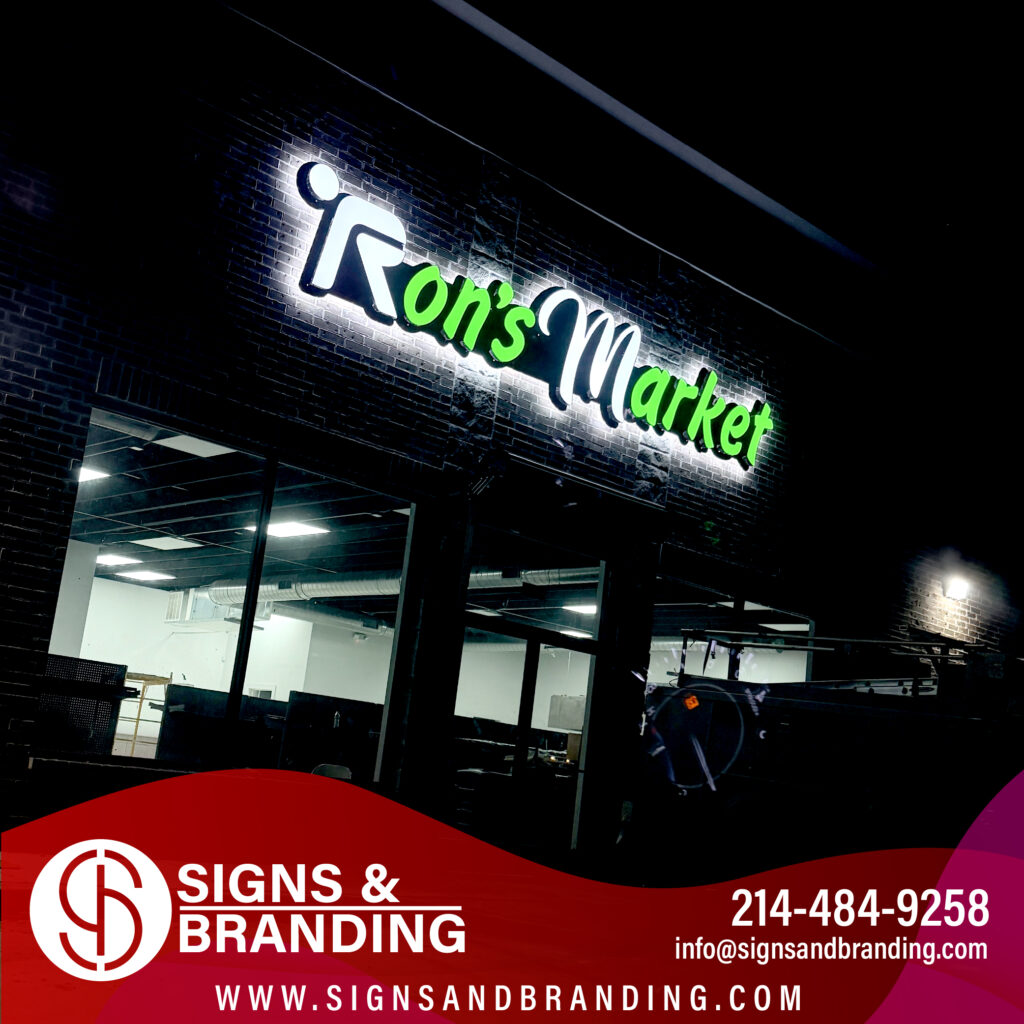
LED technology has transformed channel letter economics. Modern LEDs use a fraction of the power that older neon or fluorescent systems required, and they last far longer. However, not all LEDs perform equally.
We specify LEDs based on three factors: color temperature, brightness (measured in lumens), and driver quality. For retail storefronts, we typically recommend 3000K (warm white) or 4000K (neutral white) LEDs because they enhance product visibility and create an inviting atmosphere. Brightness needs depend on ambient light levels and viewing distance. A sign visible 200 feet away requires different lumen output than one seen from 50 feet.
The driver (power supply for the LED) is where many cheap installations fail. Budget drivers lack proper thermal management and current regulation, causing LEDs to dim or flicker within months. We use industrial-grade drivers with thermal protection and surge suppression. These cost more upfront but last the lifetime of the sign.
LED lifespan matters too. Quality LEDs maintain 70% brightness after 50,000 hours of operation (roughly 10 years of continuous use). Some budget LEDs drop to that level after just 10,000 hours. Over a five-year period, the difference in visibility and energy cost becomes significant.
What to do next: Request the LED lumen output, color temperature, and driver specifications. Compare operating costs by asking for estimated monthly power consumption.
5. Weather Protection and Weatherproofing Methods
Texas weather includes intense sun, occasional hail, sudden downpours, and dust. Channel letters need multiple layers of protection to survive these conditions intact.
Silicone sealants are foundational. We seal every seam where acrylic meets aluminum, where trim pieces meet the letter body, and where fasteners penetrate the structure. Not all silicone performs equally though. We use architectural-grade, UV-resistant silicone rated for expansion and contraction cycles. It remains flexible even after years of sun exposure, preventing cracking that invites water intrusion.
Drainage pathways are equally critical. Any water that enters the letter must have a way out. We design letters with angled bottoms and small drain holes sealed with waterproof membranes that allow water to exit but prevent insect entry. Without proper drainage, condensation and rain accumulation corrode internal electrical components.
Protective coatings on metal components add another layer. We apply powder-coated finishes to brackets and internal bracing, which creates a barrier against oxidation. For aluminum faces, clear anodizing provides protection while maintaining the material’s appearance.
What to do next: Ask whether your installation includes architectural-grade silicone sealants and how drainage is handled. Request information about protective coatings used on internal components.
6. Permit Navigation and Code Requirements
Dallas has specific signage codes covering everything from height and setback requirements to electrical safety standards and lighting brightness. Many business owners view permits as bureaucratic obstacles, but they exist to prevent hazardous installations and ensure community standards are maintained.
We handle permit applications as part of our service, which simplifies the process considerably. The application requires detailed drawings showing mounting location, dimensions, electrical specifications, and structural calculations. The city reviews these documents to verify compliance with zoning codes, building codes, and electrical codes.

Common code issues we see include inadequate setback from property lines, insufficient structural support, improper electrical grounding, and lighting that creates glare on adjacent properties. Addressing these upfront during permit review prevents costly rework after installation. Storefront permit regulations vary by Dallas district, so a provider familiar with local code variations saves months of back-and-forth.
What to do next: Verify that your sign provider has Dallas City Hall experience and can walk you through the permitting process. Ask for examples of recently approved permits in your area.
7. Professional Installation vs DIY Approach
Some business owners consider installing channel letters themselves to save money. This rarely ends well, and the savings typically evaporate in emergency repairs or code violations.
Professional installation ensures proper sequencing and precision. Mounting must happen before electrical work to avoid damaging wiring. Grounding must be installed before the sign is powered on. All connections require proper crimping and sealing, not just twisting wires together. The actual installation involves working at heights, handling heavy materials, and coordinating multiple trades, which creates significant liability if something goes wrong.
Beyond technical competence, professional installers carry insurance that protects you if something fails. They also obtain the required permits and can verify that the final installation passes city inspection. If a cheaply installed sign fails and causes property damage or injury, you could face personal liability.
We bring in-house design, fabrication, and installation capabilities under one roof. This means no coordination gaps between teams, no finger-pointing if something doesn’t fit, and consistent quality control throughout the process. Our five-year warranty backs every installation we complete, which gives you protection and peace of mind.
What to do next: Get quotes from multiple providers, but weight the comparison toward warranty terms, permit handling, and installed experience rather than price alone. A bargain sign that requires repairs within two years costs far more than a properly installed sign from the start.
Channel letter signs represent a significant investment in your Dallas business’s visibility and brand presence. The difference between an installation that looks sharp and performs reliably for years versus one that develops problems within months comes down to material selection, electrical rigor, structural precision, and weatherproofing attention. We handle all of these elements in-house, which gives us accountability for the final result and the ability to stand behind our work with a genuine warranty.
If you’re ready to move forward with a professional illuminated channel letter installation, we’d like to discuss your project. Our typical 2-3 week turnaround means your new sign can be operational quickly, and our licensed team handles permitting, fabrication, and installation start to finish. Reach out to us at https://signsandbranding.com/ to schedule a consultation.