

Table of Contents
- Why Dallas Business Owners Need Durable Outdoor Signs
- The North Texas Weather Challenge for Signage
- Aluminum Composite Materials for Long-Lasting Performance
- Vinyl and Acrylic Solutions for High-Visibility Applications
- Polycarbonate Materials for Impact and Weather Protection
- Digital LED Signs Built for Extreme Temperature Swings
- Our In-House Manufacturing Advantage for Custom Solutions
- Quality Warranty and Weather Performance Guarantees
- Installation Considerations for Maximum Material Durability
- Professional Design That Accounts for Environmental Factors
- Getting Started with Your Weather-Resistant Signage Project
Why Dallas Business Owners Need Durable Outdoor Signs
Your storefront sign is working 24/7 in one of the toughest climates in the country. It’s the first impression customers get, and if it’s faded, peeling, or weathered, that impression erodes your credibility faster than you’d expect. A quality outdoor sign tells potential customers that you invest in your business, while a deteriorating one sends the opposite message.
We’ve seen business owners overlook signage durability and pay for it twice: once with a cheap installation that fails in three years, and again with an emergency replacement that costs more and damages their brand in between. Dallas’s outdoor signage faces relentless sun exposure, temperature swings that can exceed 80 degrees in a single day, and occasional severe weather. The right material choice protects your investment and keeps your message sharp.
Choosing weather-resistant materials upfront means your sign maintains its visual impact, color fidelity, and structural integrity for years. You avoid costly repairs, downtime, and the frustration of having your brand look neglected when you know it shouldn’t.
Actionable takeaway: Request material samples from your sign provider before committing. Ask specifically how each material performs in direct sunlight and temperature extremes.
The North Texas Weather Challenge for Signage
North Texas presents a unique set of environmental pressures that many business owners underestimate. Our summer heat regularly exceeds 95 degrees, and winter can dip below freezing, sometimes within the same week. This thermal cycling causes materials to expand and contract repeatedly, creating stress at joints and seams.
UV radiation is relentless here. Dallas receives an average of 220 sunny days per year, exposing outdoor signs to intense ultraviolet light that breaks down paint, fades inks, and degrades certain plastics rapidly. Add in occasional hail, severe wind events, and humidity spikes, and you’re asking your signage to perform in conditions that would destroy lesser materials.
Moisture also plays a role many overlook. Even in our relatively dry climate, morning dew, moisture from nearby HVAC systems, and occasional heavy rains can infiltrate sign cavities if the materials and sealing aren’t properly matched. This leads to corrosion of metal components, water-logged foam, and separation between layers.
Actionable takeaway: When evaluating outdoor signage, specifically ask vendors about sealing methods and how they prevent water infiltration at mounting points and letter edges.
Aluminum Composite Materials for Long-Lasting Performance
Aluminum composite panels (ACM) are a cornerstone material for high-quality outdoor signs in Dallas. They consist of a polyethylene or mineral core sandwiched between layers of aluminum, creating a lightweight yet rigid substrate that resists warping under temperature stress.
What makes ACM compelling for North Texas is its stability. The aluminum exterior provides excellent UV protection and won’t degrade from sun exposure the way wood or certain plastics will. The core material is formulated to resist moisture absorption, so thermal cycling doesn’t cause the material to swell or shrink unpredictably. We use premium ACM panels rated for outdoor commercial use because they withstand our climate’s extremes without compromising structural integrity.
These panels accept a variety of finishing options: digital printing, vinyl lamination, or traditional paint and powder coat. The surface can be shaped into 3D letters, routed for dimensional detail, and installed either directly to walls or as cabinet substrates for larger monument signs. With proper installation and sealing, aluminum composite signs easily last 10+ years in Dallas’s environment.
Actionable takeaway: Specify that your ACM panels are commercially rated for exterior use, not interior-grade materials that may fail faster under UV exposure.
Vinyl and Acrylic Solutions for High-Visibility Applications
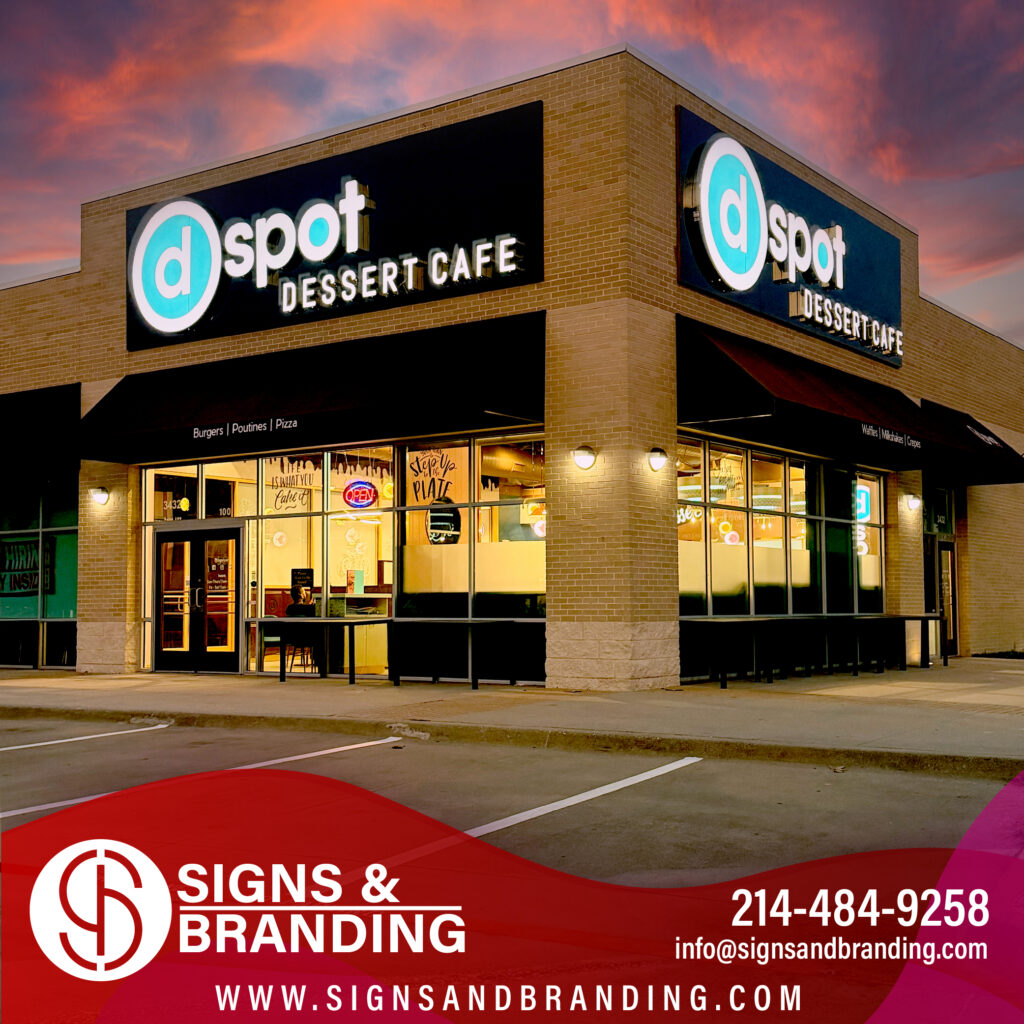
Cast vinyl and extruded acrylic are ideal when you need transparent, translucent, or colored materials that maintain light transmission or vibrant color intensity. Acrylic is particularly popular for backlit signage because it diffuses light evenly and resists yellowing better than standard polycarbonate.
Vinyl works well for dimensional letters, dimensional graphics, and color-blocked designs. High-quality cast vinyl formulated for outdoor commercial use resists shrinkage, cracking, and color fading far better than budget vinyl alternatives. We choose premium vinyl stocks that include UV inhibitors and are rated for 5+ years in direct sunlight without significant color shift.
The challenge with acrylic in Texas heat is expansion. Clear acrylic can expand and contract noticeably as temperatures swing, so it must be mounted with allowance for movement. When acrylic isn’t properly spaced or when it’s constrained too tightly, thermal stress can cause cracking at mounting points or separation from substrates.
Vinyl letters and faces can warp if not properly supported internally. We reinforce vinyl applications with aluminum frames or structural backing when they exceed certain size thresholds, ensuring they maintain their shape even on 115-degree afternoons.
Actionable takeaway: If choosing acrylic for your sign, confirm that your installer provides thermal relief spacing at all mounting points to prevent stress fractures.
Polycarbonate Materials for Impact and Weather Protection
Polycarbonate is sometimes chosen for its impact resistance and shatter-proof properties. It’s tougher than acrylic and won’t break in hail or from accidental impact. However, polycarbonate has a significant limitation in North Texas: it yellows more readily under intense UV exposure than acrylic or high-quality vinyl.
Unless specifically UV-stabilized, standard polycarbonate can develop a noticeable amber tint within 2-3 years in our climate. We use UV-stabilized polycarbonate when impact protection is a priority, but we always recommend confirming the UV rating with your supplier.
Where polycarbonate excels is in protective panels for delicate sign faces, digital display covers, and applications where the sign might experience physical contact or weather impact. Its flexibility also makes it useful for curved applications or canopy-mounted signage that experiences wind load.
For most Dallas businesses, we recommend polycarbonate as a protective component rather than a primary sign face material. It pairs well with aluminum composite bases and vinyl graphics, providing an impact-resistant cover layer.
Actionable takeaway: If your sign location is prone to hail or potential impact (parking lot, pedestrian area), specify UV-stabilized polycarbonate rated for 10+ years of outdoor use.
Digital LED Signs Built for Extreme Temperature Swings
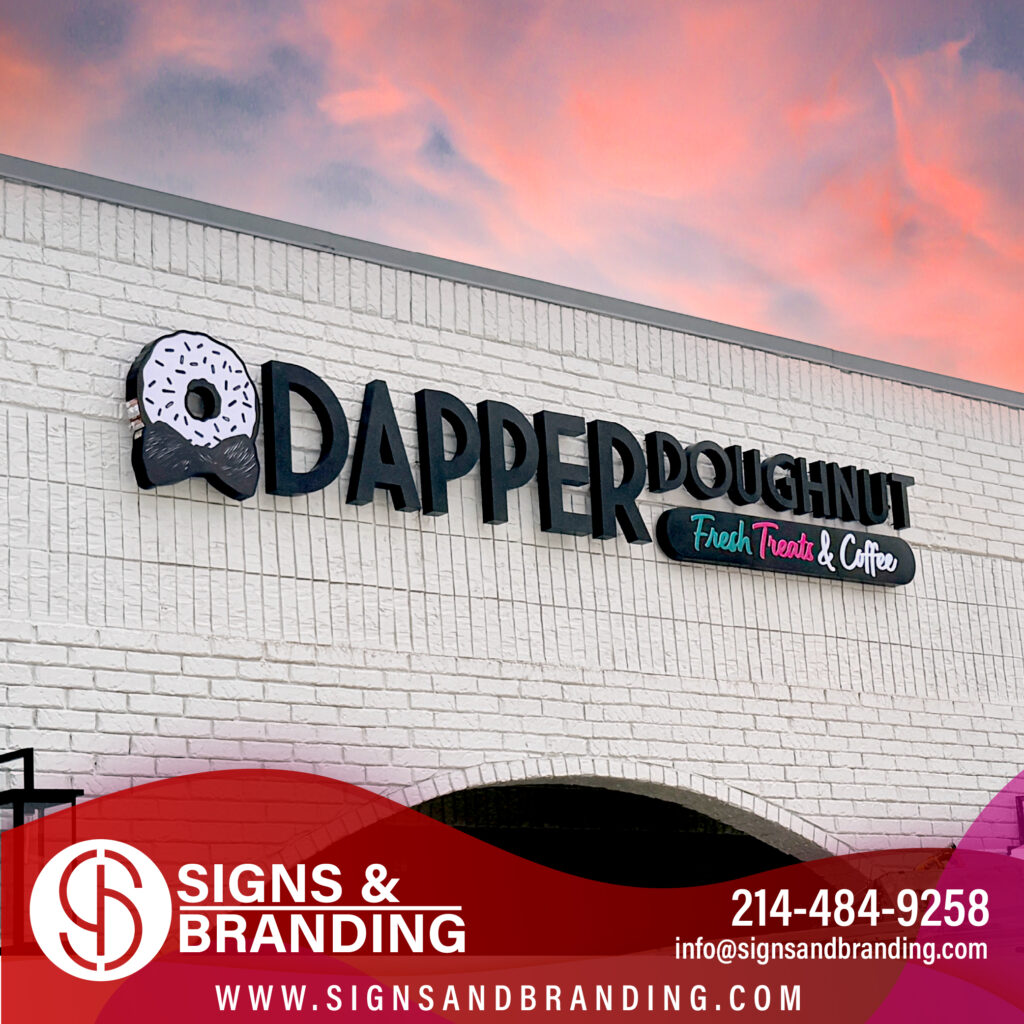
Digital LED signage introduces complexity beyond static materials because electronic components must function reliably across Dallas’s temperature extremes. Our digital signs are built with components rated for -20 to 120 degrees Fahrenheit, ensuring the display remains functional whether it’s the coldest December morning or the hottest August afternoon.
The cabinet housing for LED modules must be sealed against moisture while still allowing adequate ventilation to prevent heat buildup. We use powder-coated aluminum frames with silicone gaskets and drain holes positioned to shed water without allowing moisture ingress. The power supplies and control boards are housed in weatherproof enclosures with active cooling or thermostat-controlled ventilation.
LED pixels themselves are extremely durable and don’t fade like traditional signage. However, the supporting electronics require quality installation and protection from direct water exposure. We ensure all cable connections are sealed, junction boxes are weather-rated, and electrical work complies with Dallas municipal codes for outdoor installations.
Our warranty on digital LED signage specifically covers performance across full temperature ranges, and we’ve built in redundancy for critical components so a single failure doesn’t darken your sign.
Actionable takeaway: When budgeting for digital LED signage, factor in annual maintenance checks to clean pixel covers, inspect seals, and verify all cooling systems are functioning properly.
Our In-House Manufacturing Advantage for Custom Solutions
We don’t outsource our sign fabrication. Our Dallas facility handles design, material selection, cutting, shaping, printing, and assembly under one roof. This means we control every variable that affects material durability, and we can customize materials and sealing methods specifically for your location and application.
When you bring us a project, our design team evaluates your site’s specific exposure: sun direction, prevailing wind patterns, local weather history, and proximity to moisture sources. Based on that analysis, we recommend material combinations optimized for your exact circumstances. You’re not getting a standard solution; you’re getting a custom configuration.
In-house manufacturing also means faster turnarounds, 2-3 weeks from approval to installation, because we’re not waiting on external suppliers or managing third-party quality inconsistencies. We know exactly how our materials perform in Dallas’s climate because we’ve been installing them here for years.
Actionable takeaway: Ask your sign provider where their fabrication happens. In-house shops can quickly address design tweaks and ensure material consistency across all components.
Quality Warranty and Weather Performance Guarantees
We back our weather-resistant signage with a comprehensive 5-year quality warranty that covers material degradation, coating failure, color fading beyond acceptable industry standards, and structural defects. This warranty assumes professional installation and reasonable maintenance, but it specifically covers weathering failures that result from North Texas climate exposure.
Our warranty doesn’t just cover defects in manufacturing. We’re confident enough in our material selections that we warranty performance against the environmental stresses you’ll actually face: UV fading, thermal cycling, moisture infiltration, and wind load effects. If your sign’s vinyl shows unacceptable color shift, if aluminum shows corrosion, or if seams begin separating due to material failure, we address it.
This warranty is valuable because it reflects our confidence in material choices and installation quality. Cheaper signage providers often skip warranties altogether or offer limited coverage because they know their products won’t hold up.
Actionable takeaway: Always request a detailed warranty document before signing. It should specify which materials and components are covered, the duration, and what constitutes a warranty claim.
Installation Considerations for Maximum Material Durability
Material quality is only part of the equation. Installation technique directly impacts how long your sign lasts in Dallas weather. Proper sealing at all penetration points, correct fastener selection, and appropriate spacing for thermal expansion are critical.
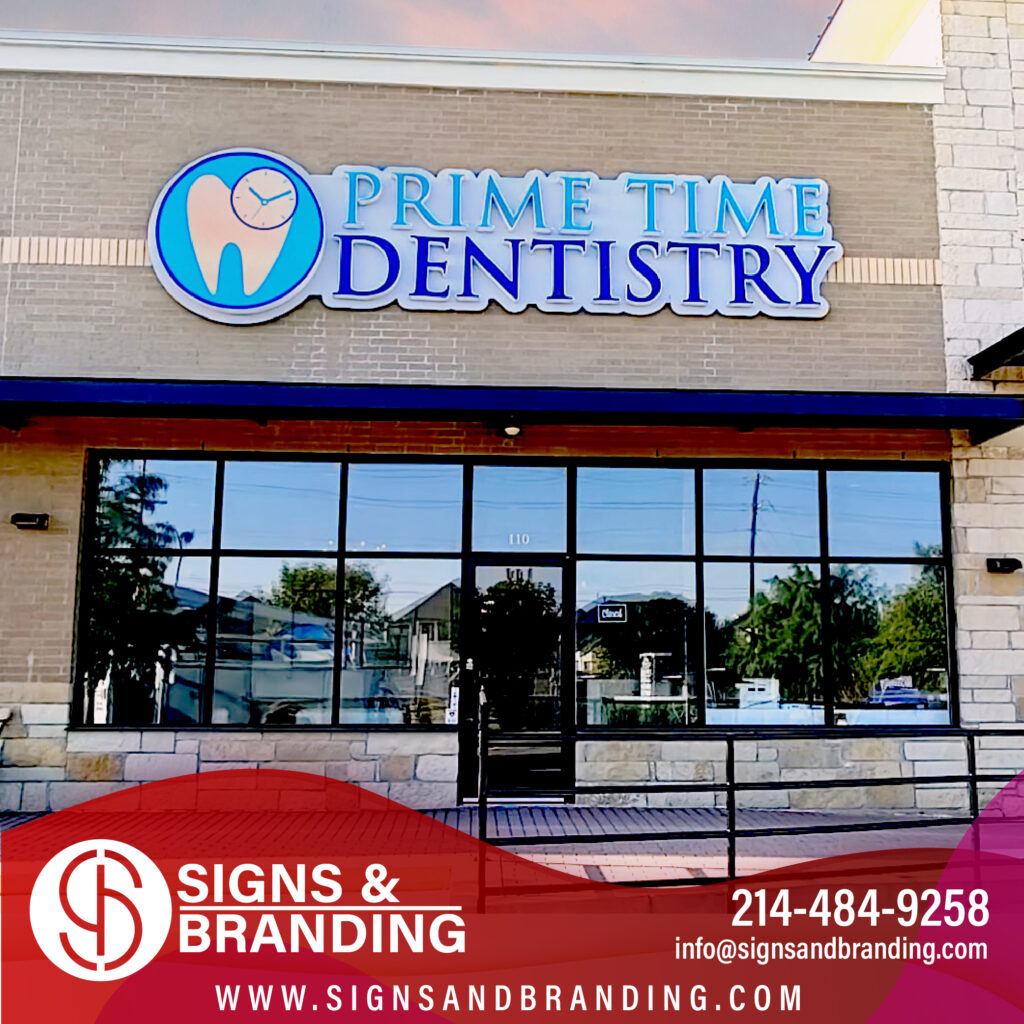
We use stainless steel fasteners and hardware, never galvanized materials that can corrode and discolor under our moisture conditions. All mounting points are sealed with exterior-grade silicone caulk that remains flexible through temperature swings and doesn’t crack or shrink away from seams.
For larger signs, we design frames with integrated drainage systems so water that enters the structure can exit cleanly. We also build in thermal relief spacing for materials that expand significantly, and we use expansion joints where dissimilar materials meet, preventing stress concentration that could lead to cracking.
Wind load is another installation consideration. Dallas occasionally experiences severe wind events, and your sign structure must be engineered to handle peak gusts. We calculate load requirements based on sign size, shape, and mounting method, ensuring all brackets and fasteners are properly sized.
Actionable takeaway: If you’re comparing installation quotes, ask each contractor to explain their sealing method, fastener materials, and how they account for thermal expansion. These details matter more than the price difference.
Professional Design That Accounts for Environmental Factors
Your sign’s design should work with Dallas’s environment, not against it. This means considering sun angles, shadow patterns, visibility from your target traffic patterns, and how colors will read under our intense sunlight and evening glare.
We design with material characteristics in mind. Certain colors fade faster in direct sun than others, so we might recommend a different palette for a south-facing sign. We design seams and joints to shed water naturally rather than pooling it. For backlit signage, we optimize letter spacing and material thickness for even light distribution across extreme temperature ranges.
Dark backgrounds absorb more solar heat, which accelerates material expansion and can cause differential stress between layers. We might recommend a lighter background not just for aesthetics but for material longevity. Similarly, complex shapes with multiple crevices collect water and debris; simplified designs often perform better environmentally while remaining visually impactful.
Design that accounts for environmental factors isn’t just about durability. It’s about ensuring your sign looks professional and readable under Dallas’s full range of conditions: bright afternoon sun, evening shadow, wet pavement after storms, and the dust that settles during dry spells.
Actionable takeaway: During design review, specifically ask your designer how your sign will look and perform under north-facing shade, direct afternoon sun, and wet conditions.
Getting Started with Your Weather-Resistant Signage Project
Start by scheduling a site consultation. We evaluate your location’s exposure, lighting conditions, traffic patterns, and any local environmental factors unique to your property. This assessment informs every material recommendation that follows.
Bring reference images of signage styles you’re attracted to, but be open to material substitutions our team suggests based on site conditions. A design that works beautifully in another Dallas location might need material adjustments if your building faces west or sits in a wind tunnel.
We’ll provide material samples, mockups, and detailed warranties before fabrication begins. Our timeline is 2-3 weeks from approval to installation, which means you can have weather-resistant signage protecting your brand without extended delay.
Ready to get started? Contact us with details about your project, and we’ll schedule a consultation to evaluate your site and discuss material options tailored to North Texas conditions.
For further reading: Best sign materials for Texas heat.