

Table of Contents
- Why Poor Wayfinding Costs Your Dallas Business Revenue
- The Hidden Impact of Confusing Customer Navigation
- How Wayfinding Signs Guide Customers Through Your Space
- Strategic Placement Strategies for Maximum Effectiveness
- Design Elements That Make Wayfinding Signs Work
- Our In-House Design and Installation Process
- Durable Materials Built for Dallas Weather
- LED-Enhanced Wayfinding for Modern Businesses
- From Concept to Installation: Our 2-3 Week Timeline
- Navigating Permits and Compliance in Dallas
- Real Results: How Wayfinding Improves Customer Satisfaction
- Getting Started with Your Custom Wayfinding Solution
- Frequently Asked Questions (FAQ)
Why Poor Wayfinding Costs Your Dallas Business Revenue
A customer walks into your storefront, looks around for the restroom, can’t find it, and leaves frustrated. Another pulls into your office complex but can’t locate which suite is yours and drives away. These moments happen more often than you’d think, and they directly impact your bottom line.
Poor wayfinding creates friction in the customer experience. When people can’t easily navigate your space, they don’t spend as much time browsing. They skip departments or services they didn’t know existed. Worse, they form negative impressions that influence whether they return or refer others. For retail locations, restaurants, medical offices, and corporate headquarters, unclear navigation isn’t just inconvenient; it’s lost revenue.
We’ve worked with dozens of Dallas businesses that didn’t realize how much their directional signage problem was affecting customer flow. Once they invested in professional wayfinding signs, foot traffic increased, dwell time improved, and customer complaints dropped significantly. The cost of proper signage pays for itself within months through improved sales and reduced customer service issues.
Your action step: Walk through your business as a first-time visitor. Can you easily find restrooms, exits, departments, or key services without asking? If you hesitate, your customers are hesitating too.
The Hidden Impact of Confusing Customer Navigation
Customers forming negative impressions happens quietly and quickly. Someone enters your space, takes 30 seconds to figure out where to go, and that moment colors their entire visit. They’re already slightly frustrated before they even reach your main counter or showroom.
In healthcare settings, unclear wayfinding increases staff workload. Receptionists spend extra time giving directions. Patients become stressed, which impacts their perception of care quality. In retail environments, customers miss product categories they would have purchased if they’d known where to look. In office buildings, visitors struggle to find conference rooms or suite numbers, reflecting poorly on your company’s professionalism.
The psychological impact extends beyond the immediate visit. Confusion signals disorganization or lack of care about the customer experience. Studies show people associate poor navigation with lower-quality businesses overall. Meanwhile, clear, professional wayfinding subtly communicates that you’ve thought about their needs and invested in their experience.
What to do: Survey a few regular customers or ask new visitors about their navigation experience. Their honest feedback often reveals pain points you’ve become blind to over time.
How Wayfinding Signs Guide Customers Through Your Space
Effective wayfinding signs work by creating a visual hierarchy that guides people intuitively through your space. Unlike generic signage, wayfinding combines directional cues, distance indicators, and clear language to reduce decision fatigue at every turn.
The best systems use multiple sign types working together. Entrance signs orient visitors immediately. Corridor signs guide them deeper into the building. Departmental or category signs mark destinations. Exit signs ensure safe egress. Restroom and amenity signs answer common questions. Each sign type serves a specific navigation function, and together they create a complete information ecosystem.
Distance matters too. When customers see “Conference Room A – 50 feet ahead,” they know whether to continue straight or prepare to turn. When a retail environment displays “Electronics Department – Second Floor,” shoppers don’t waste time searching the wrong level. Clear distances reduce confusion and expedite the navigation experience.
Our in-house design team creates wayfinding systems that match your brand while maximizing clarity. We consider sight lines, walking patterns, and the information customers need at each decision point.
Strategic Placement Strategies for Maximum Effectiveness
Placement determines whether customers even see your wayfinding signs. Signs installed too high, too small, or in corners customers don’t scan get ignored, defeating the entire purpose.
Strategic placement follows customer flow patterns. For entrances, place orientation signs immediately visible upon entry, at eye level around 5-6 feet high. At major decision points (hallway intersections, stairwells, floor transitions), position directional signs so they’re visible before customers pass the decision point. Inside departments or retail sections, place category signs at shelf or section heights where shoppers naturally look.
Outdoor wayfinding should account for vehicle traffic and pedestrian sightlines. Parking lot signs need visibility from multiple angles. Building address signs should be readable from the street at normal driving speeds. Monument signs work best at property entrances where visitors naturally slow down.
Lighting and contrast matter significantly. Signs installed in shadowed areas or with poor color contrast become invisible. We design placement strategies that account for natural light patterns and direct attention to critical information.
Next step: Map your customer flow. Where do first-time visitors pause or look confused? Those decision points need wayfinding.
Design Elements That Make Wayfinding Signs Work
Clean design isn’t aesthetic preference; it’s functional necessity. Wayfinding signs that look professional with minimal text and clear visual hierarchy actually work better than cluttered alternatives.
Effective designs use sans-serif fonts for readability, limit text to essential information only, and employ consistent color coding across your system. If all directional signs share the same background color and font, customers start recognizing the pattern without reading every word. If all department signs use the same design template with different colors for each category, navigation becomes intuitive.
Symbols and icons enhance comprehension, especially for universally recognized directions like restroom, elevator, or exit. When combined with clear text, icons reduce confusion regardless of customer language background or reading speed.
Contrast is critical. Dark text on light backgrounds or light text on dark backgrounds ensures legibility from multiple distances and angles. We test readability during the design phase to confirm visibility in your actual lighting conditions.
Brand consistency matters for professional impact. Your wayfinding signs should align with your existing brand colors, logo style, and overall aesthetic. A cohesive visual identity reinforces customer trust and brand recognition throughout the navigation experience.
Our In-House Design and Installation Process
We handle your entire wayfinding project from concept through installation, eliminating the coordination headaches of working with multiple vendors. Our design team starts by understanding your space, customer base, and navigation challenges through site visits and detailed consultation.
We create detailed mockups showing sign placement, sizing, materials, and lighting options. You’ll see exactly how wayfinding looks in your environment before we begin fabrication. This collaborative approach catches issues early and ensures the final result matches your vision.
Our fabrication happens in-house, giving us control over quality and timeline. Once approved, we custom-build all signs to your exact specifications. Our installation team handles mounting, leveling, and all technical work according to your building’s requirements.
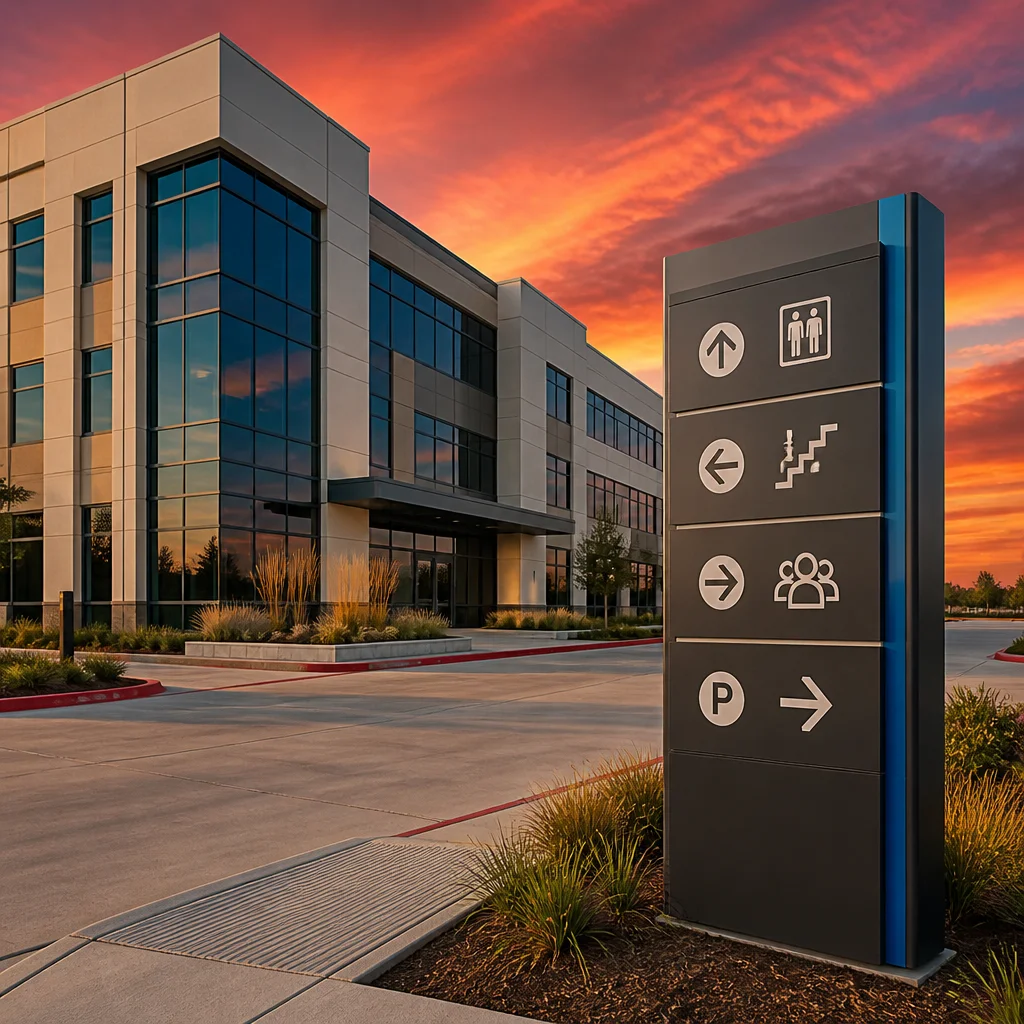
This integrated approach means faster turnarounds, better quality control, and seamless communication throughout the project. You’re working with one team that owns every aspect of your success.
Durable Materials Built for Dallas Weather
Dallas heat, UV exposure, and occasional severe weather demand signage materials built to last. We specify weather-resistant materials engineered for long-term outdoor durability. For outdoor wayfinding, we use UV-stabilized plastics, powder-coated metals, and marine-grade hardware that resists rust and corrosion.
Interior signs benefit from materials that maintain appearance and readability for years. We avoid materials prone to yellowing or fading under artificial lighting. All lettering is permanently adhered or fabricated from solid material rather than printed, so details remain sharp indefinitely.
Our 5-year quality warranty backs this durability commitment. If your wayfinding signs fade, crack, or fail prematurely, we repair or replace them at no additional cost.
LED-Enhanced Wayfinding for Modern Businesses
LED lighting transforms wayfinding visibility and impact. Backlit directional signs glow at night, ensuring after-hours navigation and adding professional presence to your exterior. LED panels can even display dynamic wayfinding information, showing which departments are open or directing customers to special events.
For high-traffic commercial spaces, LED backlighting makes wayfinding more noticeable and legible during evening hours. This is particularly valuable for office buildings, medical facilities, and retail locations that remain open late.
We provide commercial LEDs at wholesale pricing and handle all electrical installation professionally. Our in-house installation team coordinates lighting integration with your sign fabrication, ensuring professional appearance and reliable long-term performance.
From Concept to Installation: Our 2-3 Week Timeline
We’ve streamlined our process to deliver wayfinding systems in 2-3 weeks without compromising quality. This speed is possible because we control design, fabrication, and installation entirely in-house. There’s no waiting for external vendors or coordinating handoffs between separate companies.
Our clear 2-3 week project timeline accounts for design consultation, fabrication, permitting, and installation. We sequence work efficiently so design and permits proceed while fabrication begins, maximizing schedule efficiency.
For larger multi-location wayfinding projects, we can often accelerate timelines further. Our capacity and in-house resources mean your project stays on track without excuses or delays.
Navigating Permits and Compliance in Dallas
Dallas building codes and signage regulations require compliance for public safety and municipal requirements. Our team handles permits and installation in Dallas, managing applications and securing approvals on your behalf.
Different sign types require different permits. Interior wayfinding often qualifies as minor modifications, while exterior directional signs may need detailed site plans and architectural review. We navigate these requirements efficiently, using our ongoing relationships with Dallas permitting offices to expedite approvals.
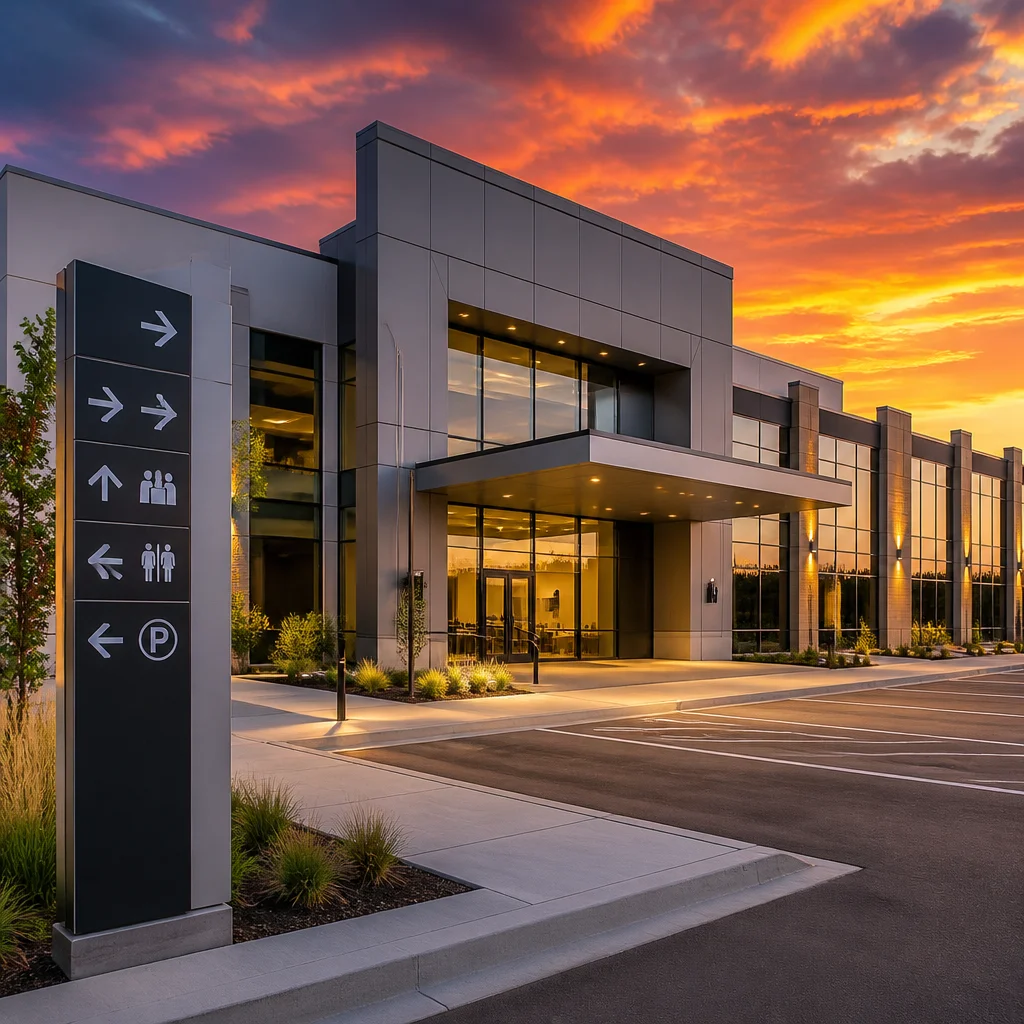
Your role is simple: approve the design and let us handle the administrative work. This expertise prevents costly mistakes and delays that plague businesses attempting DIY permitting.
Real Results: How Wayfinding Improves Customer Satisfaction
Businesses that implement professional wayfinding report measurable improvements in customer satisfaction scores. Complaints about directions or navigation virtually disappear. Customer surveys consistently rate wayfinding as a positive differentiator from competitors.
In retail environments, clear wayfinding increases dwell time and average transaction value. When customers spend more time in your space, they discover products and services they might otherwise miss. In medical offices, improved navigation reduces patient stress and speeds appointment processes. In corporate offices, professional wayfinding enhances client impressions and reduces staff interruptions for directions.
Perhaps most importantly, customers return more frequently to spaces where navigation feels effortless. That seamless experience is often subconscious; they don’t think “wow, great wayfinding,” but they do notice the friction is gone.
Getting Started with Your Custom Wayfinding Solution
Contact us for a consultation visit to your Dallas location. We’ll assess your current navigation challenges, discuss your goals, and recommend a wayfinding system tailored to your space and customer base. You’ll receive a detailed proposal with mockups, timeline, and investment details.
Our team’s expertise in design, materials, installation, and Dallas compliance means you’re partnering with specialists who understand the complete picture. We’re not just installing signs; we’re solving customer navigation problems strategically.
Reach out today to explore how professional wayfinding can improve customer flow, satisfaction, and ultimately, your bottom line.
Contact us today for a FREE Estimate
Frequently Asked Questions (FAQ)
What’s included in your wayfinding signage design process?
We start by mapping your space and understanding your customer flow, then our in-house design team creates custom layouts that match your brand identity. We handle all the technical details, including permit requirements specific to Dallas, so you don’t have to navigate city regulations on your own. Our team collaborates with you throughout the process to ensure the final design guides customers exactly where they need to go.
How long does it take to have wayfinding signs installed at my location?
We typically complete projects in 2 to 3 weeks from approval to installation. This timeline includes our in-house fabrication of durable, weather-resistant materials built to withstand Dallas heat and humidity, plus our licensed installation team handling everything on-site. We’ll give you a specific schedule once we finalize your design and confirm any permit requirements.
Can you add LED lighting to wayfinding signs for better visibility?
Yes, we offer LED-enhanced wayfinding solutions that improve visibility, especially for nighttime navigation or interior spaces with lower lighting. Our commercial LED options are available at wholesale pricing, and we handle the complete installation to ensure seamless integration with your signage. LED lighting also helps your wayfinding signs stand out as modern, professional elements of your business environment.