

Table of Contents
- The Challenge of Brand Consistency Across Multiple Locations
- Why Visual Branding Matters for Multi-Location Businesses
- Understanding Your Current Branding Gaps
- Developing a Cohesive Signage Strategy
- Our Full-Service Design and Fabrication Process
- Ensuring Quality Standards Across All Installations
- Managing City Permits and Compliance for Multiple Sites
- The Advantage of In-House Manufacturing and Installation
- Real-World Results: Dallas Multi-Location Success Stories
- Protecting Your Investment with Warranty Coverage
- Taking the Next Step Toward Unified Branding
- Frequently Asked Questions (FAQ)
The Challenge of Brand Consistency Across Multiple Locations
Running multiple locations means your brand gets multiplied, too. But without careful coordination, each storefront can start looking like it belongs to a different company. Inconsistent signage, varying colors, misaligned messaging, and quality differences erode the trust you’ve built and confuse customers who expect to see the same polished brand everywhere.
We work with Dallas business owners every day who face exactly this problem. Growing to a second or third location forces difficult questions: How do you keep every storefront looking identical? Who manages design changes? How do you handle permits across different neighborhoods? What happens when one location’s sign degrades faster than another?
This guide walks you through the strategy and execution needed to maintain unified branding across all your Dallas locations, and shows why a single partner approach to design, fabrication, and installation actually simplifies everything.
Multi-location businesses juggle competing priorities. Your store manager in Dallas’s Deep Ellum neighborhood might have different ideas about signage than your Uptown location manager. One site might need permits approved faster. Materials weather differently depending on sun exposure and humidity. Installation timelines slip when you coordinate with multiple vendors.
Without a central system, you end up with:
- Design drift: Color variations between locations; logos sized differently; font inconsistencies
- Quality variance: Some locations get premium finishes while others settle for adequate ones
- Installation inconsistency: Different mounting techniques or orientations affect how the brand appears
- Permit confusion: Each location needs local approval, and miscommunication leads to delays or code violations
- Maintenance problems: No unified approach to repairs, replacements, or seasonal updates
The real cost isn’t just the rework. It’s the customer experience damage when someone visits two of your locations and doesn’t immediately recognize them as the same brand. That mental friction weakens loyalty and makes your marketing dollars work harder than they should.
Why Visual Branding Matters for Multi-Location Businesses
Customers form 90% of their first impression within seconds, and signage is often their first touchpoint. For multi-location businesses, that moment repeats across every storefront, every warehouse entrance, every office building your brand occupies.
Consistent visual branding does several things simultaneously:
- Builds recognition: A customer who sees your sign in Oak Lawn should immediately recognize your sign in Frisco. That instant familiarity is a form of trust.
- Reinforces positioning: If one location looks premium and another looks budget, customers question what your actual value proposition is.
- Supports marketing: Every location becomes a reinforcement point for your advertising. Consistency amplifies the effect.
- Attracts talent: Employees and job candidates notice when a company presents itself professionally and uniformly. It signals stability and competence.
- Simplifies operations: Staff across locations know what to expect and how locations should look, reducing decision-making friction.
For a multi-location Dallas business, this translates to measurable outcomes. Customers are more likely to visit additional locations. Staff turnover often drops when the brand feels coherent and professional. And your cost per acquisition decreases because you’re reinforcing one clear message instead of fighting multiple brand interpretations.
Understanding Your Current Branding Gaps
Before you design new signage for multiple locations, audit what you have now. This takes an afternoon but reveals where the real problems live.
Visit each location. Take photos in consistent lighting. Note colors, sizes, materials, condition, and mounting style. Compare against your brand guidelines (or create ones if you don’t have them). Ask yourself:
- Does the logo appear the same size relative to the storefront at each location?
- Are colors consistent, or do some look faded or mismatched?
- Is the typeface identical, or have substitutions crept in?
- Do materials and finish quality match, or does one location look cheaper?
- Are mounting heights and angles consistent?
- Do any signs show wear, peeling, or weather damage?
Document findings in a simple spreadsheet: Location, Current Sign(s), Issues, Priority. This becomes your roadmap.
Many Dallas business owners discover that their oldest location has signs that no longer match brand standards. A renovation five years ago updated the logo, but three locations still run outdated versions. Or permit restrictions in one neighborhood forced a smaller sign, creating visual imbalance compared to other locations.
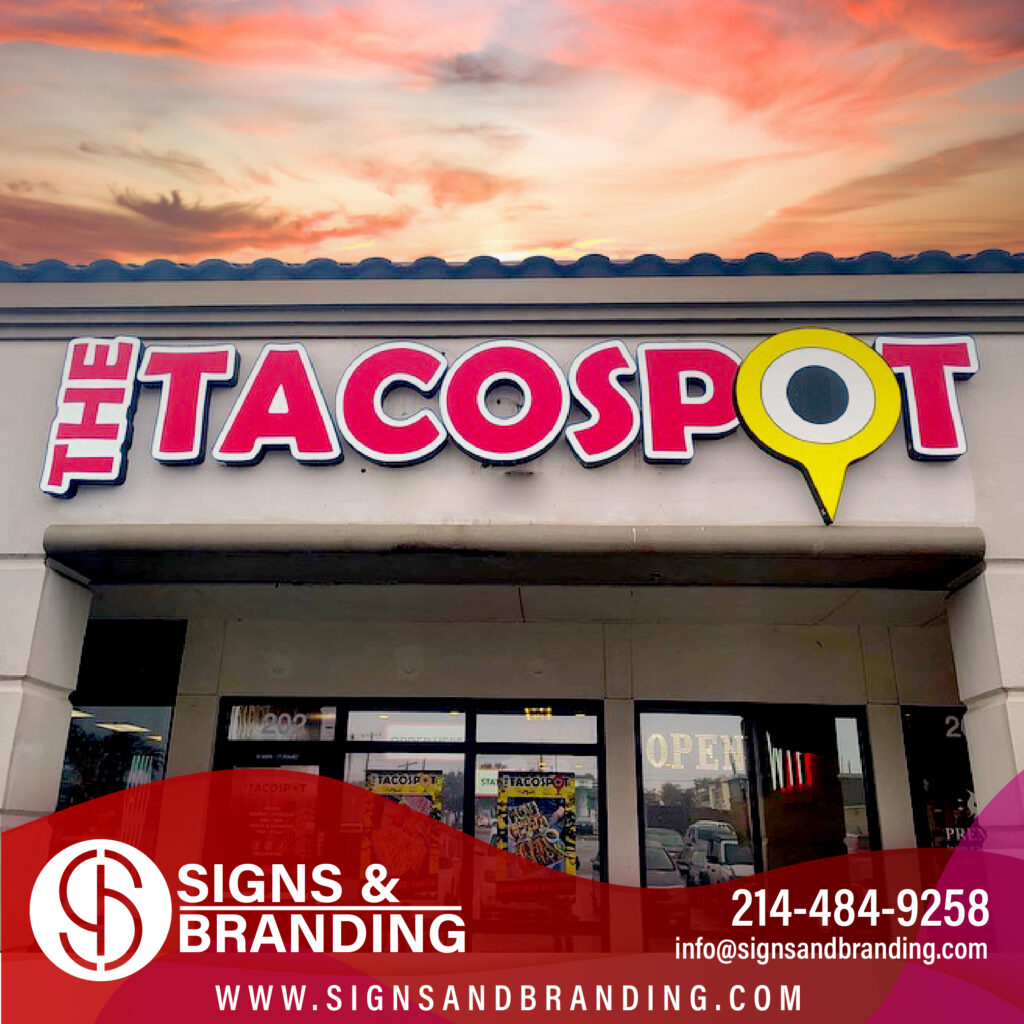
The audit usually uncovers low-cost fixes alongside bigger projects. Sometimes it’s just repainting a faded awning. Sometimes it’s replacing all exterior signs to match new brand guidelines. Either way, you can’t fix what you don’t measure.
Developing a Cohesive Signage Strategy
A cohesive strategy starts with clear guidelines and a realistic rollout plan.
First, establish visual standards. Define exact Pantone colors, logo sizing rules, approved typefaces, material specifications, and mounting standards. These become your reference for every location, every vendor, every installation. If you’re working with us, we’ll help translate your brand guidelines into manufacturing specifications that hold across all projects.
Second, create a phased implementation plan. Don’t try to update every location simultaneously. Identify which locations are highest traffic or most visible to your target market. Start there. Update one every two to three weeks, which also lets you test any refinements before rolling out to remaining locations.
Third, assign a single point of contact to oversee the process. This person approves designs, coordinates timelines, and ensures consistency across all locations. Without this accountability, someone always ends up making independent decisions that break your standards.
Fourth, factor in local requirements. Dallas permits vary by neighborhood. Uptown has different signage codes than Deep Ellum. Your strategy needs to account for these constraints upfront, not discover them mid-project.
Our Full-Service Design and Fabrication Process
We handle the entire journey from concept to installation, which keeps your branding tight across all locations.
Here’s how we work:
Phase 1: Strategy and Design – We review your current signage, your brand guidelines, and your business goals across all locations. We create design concepts showing how each location’s signage will appear. You approve once, then we maintain that exact design across every location.
Phase 2: Permitting and Code Compliance – We navigate Dallas permit requirements for each neighborhood. Different locations might need different approaches, but we ensure everything stays within your approved design while meeting local codes.
Phase 3: In-House Fabrication – We manufacture every sign in our facility. This matters because every piece is made to the same specifications, same materials, same finish quality. There’s no variation between location one and location ten because they all come from the same production line.
Phase 4: Scheduled Installation – We coordinate installation across all your locations on a timeline that works for your business. All installers follow the same mounting standards, so signage appears uniform regardless of which location we’re working on.
This integrated approach eliminates the communication gaps that happen when you’re coordinating separate designers, fabricators, and installers. One vendor, one standard, one vision across all locations.
Ensuring Quality Standards Across All Installations
Quality consistency is where multi-location projects usually break down. Manufacturer A delivers material that looks slightly different than Manufacturer B. Installer X mounts a sign at a slightly different angle than Installer Y. Paint fades differently on south-facing versus north-facing walls.
We eliminate these variables through several practices:
Material sourcing: We use the same weather-resistant materials for every location. Our Dallas facility stocks inventory specifically chosen for local climate performance. UV-resistant coatings, corrosion-resistant hardware, and humidity-tolerant substrates all perform consistently across Dallas’s heat and occasional freeze cycles.
Manufacturing consistency: Every sign is inspected before it leaves our production facility. Color matching, finish quality, dimensions, and hardware meet identical standards for location one and location twenty.
Installation protocols: Our licensed installers follow documented procedures for every installation. Mounting height, angle, fastening method, and finishing details are specified in writing. This removes guesswork and ensures your brand appears identical everywhere.
Ongoing maintenance: We recommend and often handle maintenance for all locations. Regular cleaning, inspection, and minor repairs happen on a consistent schedule, preventing one location from looking worn while others remain fresh.
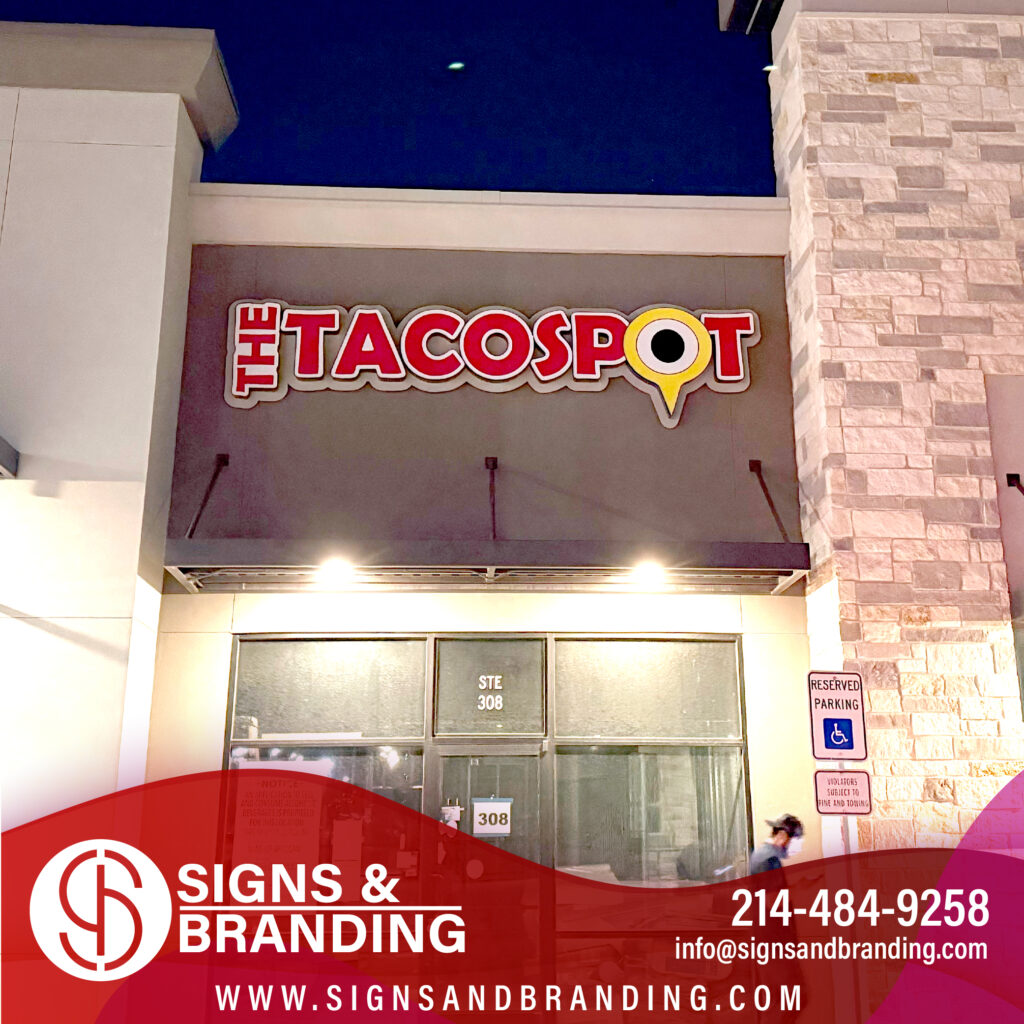
Quality isn’t just about appearance. It’s also about durability. A sign that lasts eight years in one location should last eight years in all locations if materials and installation standards are truly consistent.
Managing City Permits and Compliance for Multiple Sites
This is the part most multi-location business owners underestimate. Permit requirements in Dallas vary significantly by neighborhood and zoning district.
Our process simplifies this:
Pre-design research: We review zoning codes, sign ordinances, and historical approvals for each location before we design anything. This ensures we’re proposing signage that can actually be approved.
Individual applications: We submit permits to the appropriate city departments for each location. We communicate with building departments, HOAs, and property managers as needed.
Timeline coordination: Permits sometimes take weeks. We sequence submissions strategically so all approvals come together, allowing us to schedule fabrication and installation efficiently.
Compliance documentation: We maintain records showing what was approved for each location, keeping you protected if questions arise later.
Different Dallas neighborhoods have different constraints. Some areas limit sign height or require historic-appropriate designs. Others have setback requirements or lighting restrictions. We know these rules and design within them from the start, avoiding rejections and delays.
The Advantage of In-House Manufacturing and Installation
Working with one partner who handles both manufacturing and installation creates advantages that show up across multi-location projects:
Accountability: We’re responsible for every aspect from design through installation. There’s no finger-pointing between different vendors. If something’s wrong, we fix it.
Speed: We control the entire timeline. Typical turnaround is 2-3 weeks from approval to installation. We don’t depend on external vendors’ schedules.
Consistency: Manufacturing in-house means every sign meets identical quality standards. Installation by our team means every location looks exactly as designed.
Cost efficiency: We don’t mark up materials or subcontractor work. The cost you see is the cost you pay, with no middleman premiums.
Quality warranty: We stand behind our work. Every sign comes with a 5-year quality warranty covering materials and workmanship across all locations.
For a multi-location project, this integrated approach saves time, reduces surprise costs, and guarantees the consistent quality that makes your brand work harder for you.
Real-World Results: Dallas Multi-Location Success Stories
We’ve helped Dallas businesses refresh signage across multiple locations. Here’s how it typically works:
A regional retail chain had five locations with outdated signage. Their brand had evolved, but their physical presence hadn’t. We designed a unified approach that reflected their new positioning while respecting existing architectural styles at each location. One location was historic, requiring subtle design adaptations. Another was modern and contemporary. Our strategy accommodated both while maintaining clear brand recognition.
Manufacturing in-house allowed us to complete all five locations in six weeks. Each sign shipped to the exact specifications of its location. Installation was coordinated over two weeks, minimizing disruption to their operations. Result: consistent brand appearance across all five locations, zero customer confusion, and staff who now understood that every location represents the company in the same way.
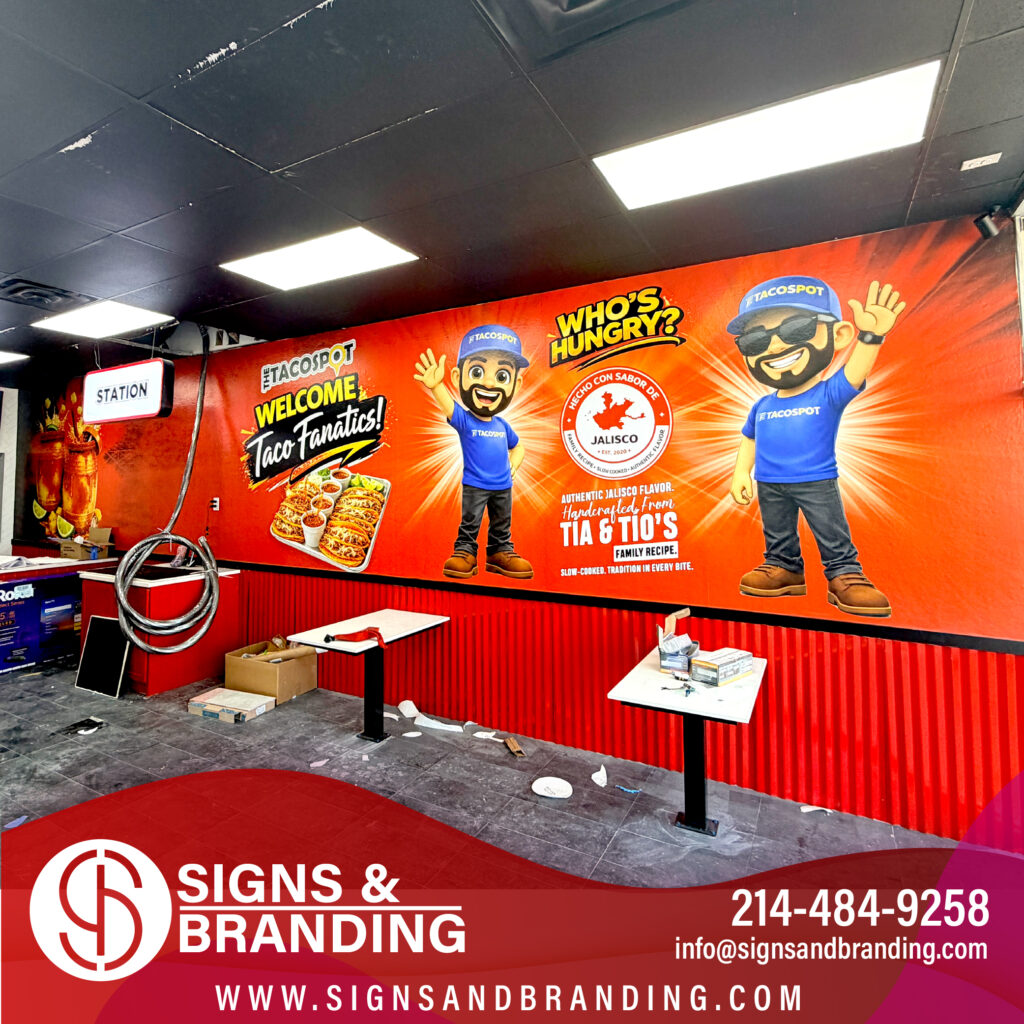
Another example: a professional services firm expanding from two locations to four. Rather than design each location independently, we created a cohesive strategy upfront. Every location got signage that reflected their individual address and lease terms, but maintained identical visual language, colors, and quality standards. Clients visiting different offices saw the same professional brand at every touchpoint.
Protecting Your Investment with Warranty Coverage
Signage is a long-term investment. A high-quality exterior sign should last years, not months. But multi-location businesses need assurance that all locations are equally protected.
Our 5-year quality warranty covers all locations equally. Materials and workmanship are backed across your entire portfolio of signs. If a color fades, a fastener fails, or a finish degrades, we address it. This protection is the same whether it’s your first location or your tenth.
Warranty also includes documentation. We maintain records of what was installed where, when, and under what conditions. This matters if you ever need to make an insurance claim or resolve a dispute with a property manager.
Beyond warranty, we can discuss maintenance agreements that keep all your locations looking fresh. Regular cleaning and inspection services happen on a schedule that works for you, ensuring wear develops uniformly (or doesn’t develop at all).
Taking the Next Step Toward Unified Branding
Consistent branding across multiple Dallas locations is achievable. It requires strategy, clear standards, and a single partner willing to stay accountable across all your projects.
Here’s what we recommend:
First: Audit your current signage at each location. Document what you have, what’s working, and what needs updating.
Second: Define or refine your brand guidelines. Make sure everyone on your team understands what your brand is supposed to look like.
Third: Contact us for a consultation. We’ll review your locations, your brand, and your goals. We’ll walk you through our streamlined permits and installation process and show you exactly how we’d approach your project.
Fourth: Let us create a design proposal showing how your brand will appear across all locations. See the unified vision before you commit to anything.
We’re a full-service sign company in Dallas with in-house design, fabrication, and installation. We’ve helped dozens of multi-location businesses stop looking fragmented and start looking like the professional, cohesive brand they actually are. Let us show you how we can do the same for you.
Contact us today for a FREE Estimate
Frequently Asked Questions (FAQ)
How do we handle signage design for businesses with multiple locations?
We start by meeting with you to understand your brand guidelines and vision for each location. Our in-house design team creates templates that maintain your brand identity while adapting to each site’s unique layout and local requirements. We coordinate all designs before fabrication to ensure consistency across your entire Dallas footprint, and we manage any necessary revisions until you’re satisfied with the final product.
What’s our typical timeline for completing signs across multiple locations?
We work with a standard 2-3 week turnaround from design approval to installation-ready product. For multi-location projects, we coordinate fabrication and scheduling so we can install all your signs efficiently without disrupting your business operations. We’ll provide you with a detailed timeline upfront that accounts for permit approvals and your preferred installation dates.
Do we offer warranty protection on signs installed at multiple locations?
Yes, we back all our work with a 5-year quality warranty that covers every sign we fabricate and install for you, regardless of how many locations you have. This warranty protects your investment across your entire business and gives you peace of mind knowing we stand behind the durability and performance of our materials and craftsmanship.