

Table of Contents
- The Challenge of Multi-Location Sign Consistency
- Why Unified Signage Matters for Your Brand
- Streamlining Design Across Multiple Locations
- Coordinating Permits and Compliance Across Cities
- Our In-House Manufacturing Advantage for Rollouts
- Synchronized Installation Timeline Management
- Quality Control and Warranty Protection
- Cost Efficiency Through Bulk Production
- Maintaining Brand Standards at Each Location
- From Planning to Completion: Our Process
- Getting Started With Your Multi-Location Project
- Frequently Asked Questions (FAQ)
The Challenge of Multi-Location Sign Consistency
Growing your business into multiple locations is exciting, but it introduces a new complexity: keeping your brand visually consistent while navigating different city requirements and installation timelines. When you’re opening a second location in Arlington or Mansfield alongside your original Dallas storefront, the signage strategy becomes more than just ordering more of the same sign. It’s about coordinating design, permits, manufacturing, and installation across jurisdictions.
We work with multi-location business owners regularly, and we’ve learned that the difference between a seamless rollout and a logistical headache comes down to planning and having a partner who understands both the creative and regulatory sides of signage. This guide walks you through managing consistent sign rollouts so your brand looks unified from storefront to storefront.
Expanding to a second or third location creates several overlapping challenges. Each city has different sign codes, permit timelines, and inspection procedures. Meanwhile, your design team needs to adapt layouts for different building facades or interior spaces while keeping your core brand identity intact.
Weather and environmental factors also vary across locations. A sign that performs beautifully on your Dallas storefront might face different UV exposure or wind loads in Arlington. Installation crews have different availability, and coordinating multiple jobs simultaneously without delays requires careful sequencing.
The most common mistake we see is treating each location’s signage as a separate project. This leads to inconsistent finishes, mismatched typography, or colors that drift slightly from one sign to the next. Your customers notice these gaps, even if they can’t articulate why a second location feels less polished than the first.
Our takeaway: unified signage starts with a single master design document and a manufacturer who can execute it consistently across all fabrication runs.
Why Unified Signage Matters for Your Brand
Your signage is often the first physical interaction a customer has with your brand. When someone visits your Arlington location after shopping at your Dallas storefront, they should immediately recognize the same visual language. Consistency builds trust and reinforces your brand identity.
Unified signage also strengthens recall. A customer driving through Mansfield who sees your sign will connect it instantly to the locations they already know, rather than wondering if it’s a related business or a competitor. This is especially valuable in suburban markets where businesses cluster along commercial corridors.
From a business perspective, standardized design and materials reduce per-unit costs and simplify maintenance. If you need to replace a damaged panel or refresh weathered paint, you’re ordering from a consistent specification rather than hunting for historical records or trying to match something custom-made years ago.
Unified signage across locations also makes your business look larger and more established than a single-location operation. It signals investment and professionalism to customers and vendors alike.
Streamlining Design Across Multiple Locations
Start with a comprehensive brand guidelines document that covers typography, color palettes, spacing, and imagery. This becomes your north star for every sign we fabricate, regardless of location or format.
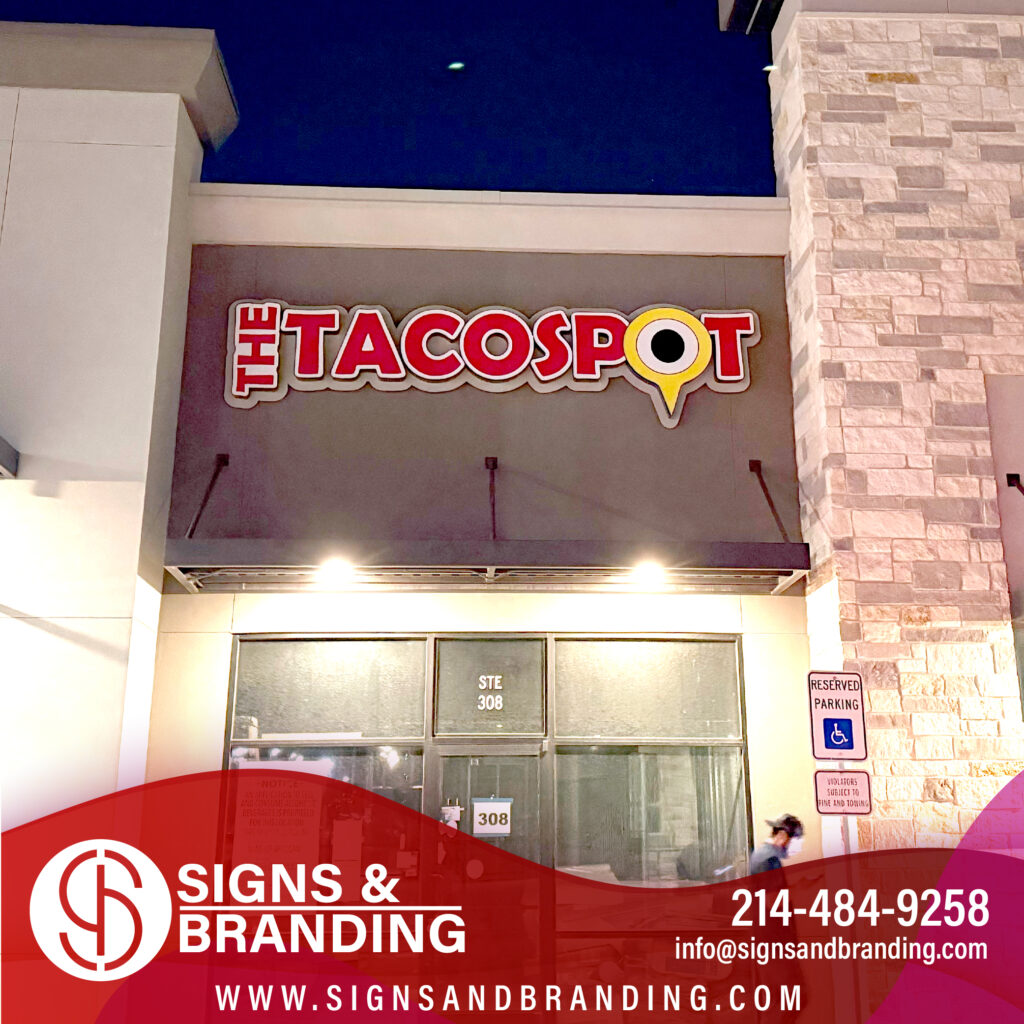
When we design for your first new location, we build in flexibility for architectural differences. A Mansfield strip mall facade might require a different sign proportions than your original Dallas storefront, but we maintain the same fonts, color values, and logo treatment. This keeps the design recognizable while fitting the physical constraints of each space.
Work with your design team to create modular components whenever possible. If your brand uses a horizontal logo bar plus a secondary text element, that framework works across storefront signs, interior wayfinding, window graphics, and parking lot identifiers. Modularity simplifies fabrication and reduces custom work, which saves time and cost.
We also recommend photographing or documenting your existing signage in detailed specifications. Send us measurements, material samples, color references, and installation photos of your original signs. This prevents guesswork and ensures new locations match precisely.
Your action step: compile a one-page design spec sheet with your logo artwork files, approved color codes (Pantone or RGB), font names, and any sizing ratios or spacing rules your brand uses. Share this with us before we begin design work for additional locations.
Coordinating Permits and Compliance Across Cities
Arlington and Mansfield have different sign codes. Arlington typically allows taller and larger signage on commercial buildings, while Mansfield has stricter height and setback requirements. Both cities require specific permits before installation, and inspection timelines vary.
We handle permit navigation for you, but you’ll need to provide property ownership or lease documentation and building details. Each city application can take two to four weeks, depending on their current workload and whether inspectors request revisions.
The key to smooth permitting is submitting applications early and building buffer time into your project timeline. We don’t recommend scheduling installation until permits are approved. Missing an inspection date can delay your opening by weeks.
Some business owners try to save money by replicating Arlington permits for a Mansfield location without reviewing local codes. This almost always results in rejection and resubmission delays. Each city has unique requirements around illumination, materials, and setback distances.
We manage this complexity for you with our streamlined permits and installation process, which includes city-specific research and submission handling.
Our In-House Manufacturing Advantage for Rollouts
Managing consistent sign rollouts requires a manufacturer who maintains the same standards and equipment across every fabrication run. Because we handle design, manufacturing, and installation in-house, we eliminate the coordination failures that happen when you’re working with separate vendors.
When we fabricate signs for your first location, we document every specification: exact material batches, finish techniques, coating applications, and hardware. When we manufacture signs for Arlington and Mansfield, we pull from the same material inventory and use identical equipment settings. This consistency is difficult to achieve when juggling multiple vendors, each with their own workflows.
Our in-house setup also means we can handle rush modifications without delays. If your Arlington location needs a sign size adjusted due to building constraints, we adjust the design and fabricate it within our standard 2-3 week timeline. Outsourced manufacturers typically add extra weeks for changes.
We also maintain quality control across all production. Every sign receives the same inspection standards, finish testing, and pre-installation review, regardless of which location it’s destined for.
Synchronized Installation Timeline Management
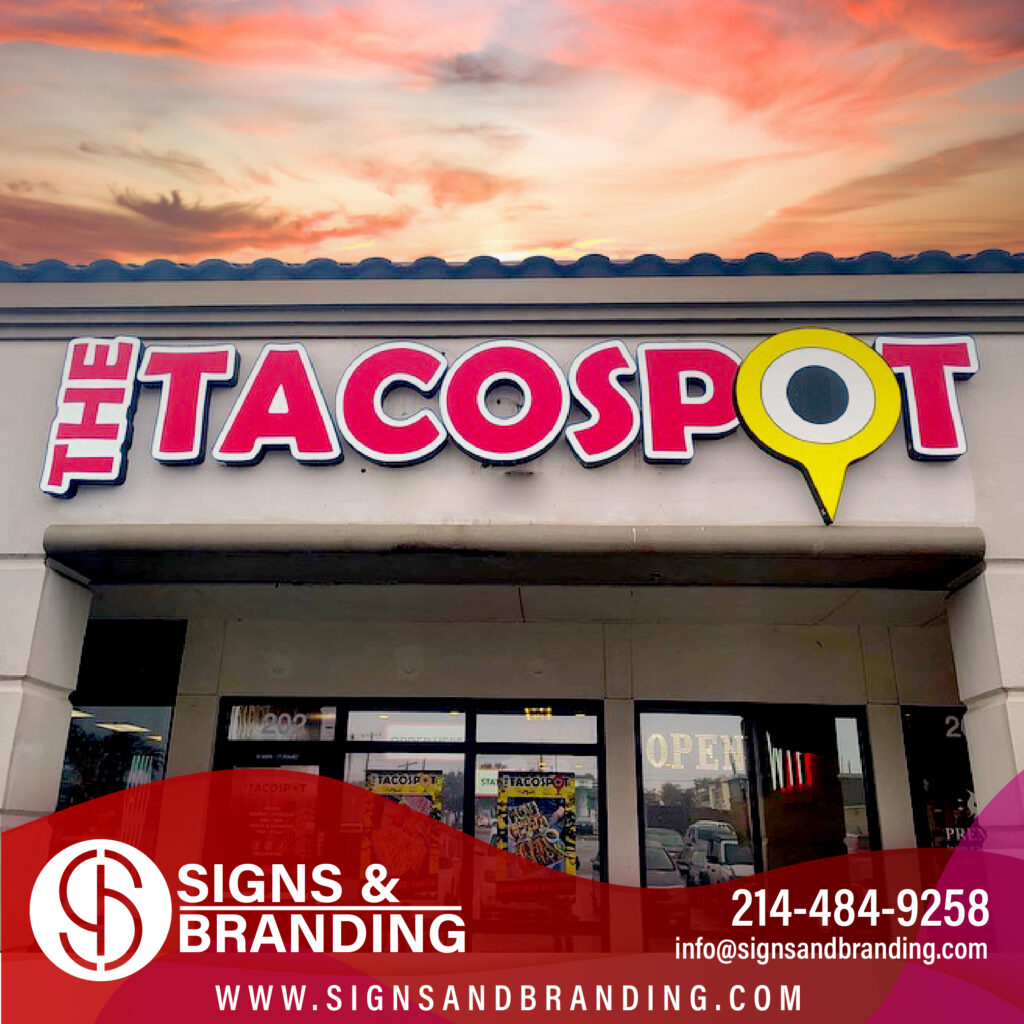
Coordinating installation across multiple locations requires careful sequencing. You don’t want your Arlington location delayed because crews are still working in Dallas, nor do you want unfinished work affecting your opening date.
We build a master project timeline that sequences installation based on permit approval dates, crew availability, and your preferred opening schedule. Typically, we recommend installing the secondary location signs first if there’s a tight window, then completing the original location if it needs refresh or updates.
Weather factors into scheduling too. Exterior installation in summer heat or winter rain can affect cure times for certain finishes. We plan installation windows that account for seasonal conditions at each location.
Communication is critical here. We provide you with firm installation dates two weeks in advance and confirm final access details with each property manager. Last-minute schedule changes usually push timelines back significantly, so locking dates early prevents compounding delays.
Quality Control and Warranty Protection
Every sign we manufacture carries our 5-year quality warranty, which covers material defects, finish degradation, and structural integrity across all locations. This warranty gives you consistency in coverage and recourse if something fails prematurely.
We conduct pre-installation inspection on every sign, checking for color accuracy, finish uniformity, and structural alignment. If a sign doesn’t meet our standards, it doesn’t leave our facility. This prevents quality issues from reaching your customers.
After installation, we perform a final walk-through at each location to verify proper mounting, alignment, and electrical connections (for illuminated signs). We document everything photographically and provide you with a warranty registration that covers all your locations under one agreement.
This unified warranty approach simplifies your record-keeping and ensures consistent service if maintenance becomes necessary.
Cost Efficiency Through Bulk Production
Coordinating multiple locations at once unlocks economies of scale. When we’re fabricating three or four signs using the same design template and materials, we reduce per-unit costs compared to individual orders spaced months apart.
Bulk material purchasing also lets us negotiate better pricing on hardware, substrate materials, and specialty finishes. These savings pass directly to you. A business opening two new locations simultaneously typically sees 8-15% cost reduction per sign compared to staggered orders.
Additionally, bundling permits and coordination into one project reduces administrative overhead and design revisions, further lowering your total project cost.
Maintaining Brand Standards at Each Location
Assign one person internally as the brand custodian for all multi-location signage decisions. This person approves designs, reviews permit submissions, and confirms installation before we close out the project. Having one decision-maker prevents conflicting feedback and reduces revision cycles.
Document approval signatures and design approvals in writing. When you’re managing multiple locations, paper trails prevent misunderstandings about what was approved and when.

After installation, conduct a brand audit six months later. Visit all locations, photograph your signage in consistent lighting and angles, and compare them side by side. This catches any drift in color or finish before it becomes a bigger issue.
From Planning to Completion: Our Process
Here’s how we move from initial conversation to your fully installed, permitted, and warranted signage across Arlington and Mansfield:
- Discovery call and site assessment: You meet with us to discuss your brand guidelines, location details, and timeline.
- Design phase (1-2 weeks): We create digital mockups for each location, accounting for architectural differences.
- Permit preparation and submission (2-4 weeks): We research city codes, prepare applications, and submit on your behalf.
- Design approval and permit approval: You sign off on final designs while we track permit progress with each city.
- Manufacturing (2-3 weeks after permit approval): We fabricate all signs in-house using consistent specifications.
- Installation scheduling and execution (1-2 weeks): We coordinate crews for synchronized installation across locations.
- Final inspection and warranty registration: We conduct walk-throughs and register your warranty.
The total timeline typically runs 8-12 weeks from kickoff to completion for a two-location rollout, depending on permit turnaround times in each city.
Getting Started With Your Multi-Location Project
If you’re opening a second or third location and want unified, professional signage that matches your original brand, we’re ready to help. Start by gathering your current location’s design specifications, your lease or property documentation for new locations, and your target opening dates.
Contact us for a no-obligation consultation. We’ll review your locations, identify any design or permit considerations specific to Arlington or Mansfield, and provide you with a timeline and cost estimate for your complete signage rollout. Our goal is to make this process straightforward so you can focus on launching your new locations confidently.
Contact us today for a FREE Estimate
Frequently Asked Questions (FAQ)
How do we handle design consistency when you have multiple locations in different cities?
We manage all design work in-house, which means we maintain complete control over your brand standards across Arlington, Mansfield, and beyond. Our design team creates master templates that ensure your signage looks unified while allowing for location-specific details like addresses or local branding elements. We document all specifications so every installation matches your approved standards perfectly.
What’s our process for managing permits across multiple cities?
We navigate the permit requirements for both Arlington and Mansfield on your behalf, since we know how each city’s regulations differ. Our licensed team handles all submissions and compliance documentation, so you don’t have to coordinate with separate municipalities. This streamlined approach typically keeps your entire rollout on schedule without delays from permit confusion.
Can we guarantee that all your locations receive signs on the same timeline?
We coordinate installation schedules to roll out your signage across multiple locations simultaneously or in your preferred sequence. Our in-house manufacturing and installation teams work from a unified project plan, so we control every phase from fabrication through final installation. We provide you with a clear timeline upfront and stick to it across all your locations.