

Table of Contents
- Why McKinney Shopping Center Tenants Face Unique Signage Challenges
- Insurance Requirements for Commercial Signage in McKinney
- Understanding Your Shopping Center’s Signage Covenants
- Documentation You Need Before Installation Begins
- Permit Requirements Specific to McKinney Retail Locations
- How Our In-House Design Team Handles Your Insurance and Compliance
- Quality Warranties That Protect Your Investment
- Our Licensed Installation Process Meets All Documentation Standards
- Timeline: From Documentation Review to Final Installation
- Why Full-Service Providers Streamline Your Signage Process
- Next Steps: Getting Your McKinney Signage Project Started
- Frequently Asked Questions (FAQ)
Why McKinney Shopping Center Tenants Face Unique Signage Challenges
If you operate a retail business in a McKinney shopping center, you know that securing prime tenant space is just the beginning. Getting your storefront sign installed involves navigating insurance requirements, landlord covenants, city permits, and compliance documentation that can feel overwhelming. We work with Dallas-area retailers regularly, and we’ve found that shopping center tenants often underestimate how much coordination is required before a single screw goes into the wall.
This guide walks you through every requirement you’ll encounter and shows you how streamlining the process saves months of back-and-forth.
Shopping centers operate under strict management structures that differ significantly from standalone retail locations. Your landlord maintains control over the center’s visual appearance, structural integrity, and liability exposure, which means they enforce signage rules more rigorously than a typical city permit office.
McKinney shopping centers typically occupy property zoned for commercial use with specific setback distances from public roads, height restrictions based on surrounding structures, and architectural guidelines meant to preserve the center’s unified aesthetic. When you add signage to this mix, you’re not just complying with city regulations; you’re also satisfying the property management company’s design standards and insurance requirements.
The coordination burden falls on you. You’ll need approvals from the city, the shopping center management, and potentially a property owner’s association. Each entity has its own timeline, and delays in one department cascade to the others. Without a partner familiar with these layers, your three-week project easily stretches to three months.
What to do next: Before contacting any sign vendor, request a copy of your lease’s signage addendum and the shopping center’s design guidelines from property management.
Insurance Requirements for Commercial Signage in McKinney
Every sign installation carries liability risk. A poorly secured outdoor sign can become a hazard in high winds. Faulty electrical work on an illuminated sign can create fire risk. The shopping center’s property insurance policy typically requires tenants to carry adequate signage liability coverage or name the landlord as an additional insured on the tenant’s policy.
McKinney shopping centers routinely request a Certificate of Insurance (COI) before installation begins. This document proves you carry general liability coverage that extends to signage work. The center’s minimum requirement is usually $1 million in general liability, though some larger centers request $2 million.
Beyond the COI, the shopping center may require that the sign contractor be licensed and insured. This is where many small business owners stumble. They hire an unlicensed handyman or sign person, only to learn that the work won’t pass the landlord’s inspection because the contractor lacks the required licenses and insurance credentials.
Your lease likely contains a clause stating that the landlord is not responsible for any damage caused by your signage. This shifts liability squarely to you, making adequate insurance non-negotiable. If your sign falls during a storm and damages a neighboring tenant’s storefront, you’re on the hook financially.
What to do next: Contact your business insurance broker and confirm that your general liability policy covers signage installation and that you can add the shopping center management company as an additional insured.
Understanding Your Shopping Center’s Signage Covenants
Signage covenants are legally binding restrictions that govern the size, placement, materials, colors, and style of signs within a shopping center. These covenants exist to maintain property values and create a cohesive tenant experience. They’re separate from city zoning laws and often stricter.
A typical McKinney shopping center covenant might specify:
- Maximum sign dimensions (e.g., 48 inches high by 96 inches wide)
- Prohibited colors or materials (e.g., no vinyl-wrapped signs, no neon)
- Setback distance from the property line (e.g., signs must be at least 10 feet from the street)
- Illumination standards (e.g., internal lighting only, no flashing lights)
- Design approval process (e.g., landlord architectural review required)
These restrictions aren’t arbitrary. They’re designed to prevent one tenant’s oversized, garish sign from diminishing the appeal of the entire center. However, they can severely limit your design options.
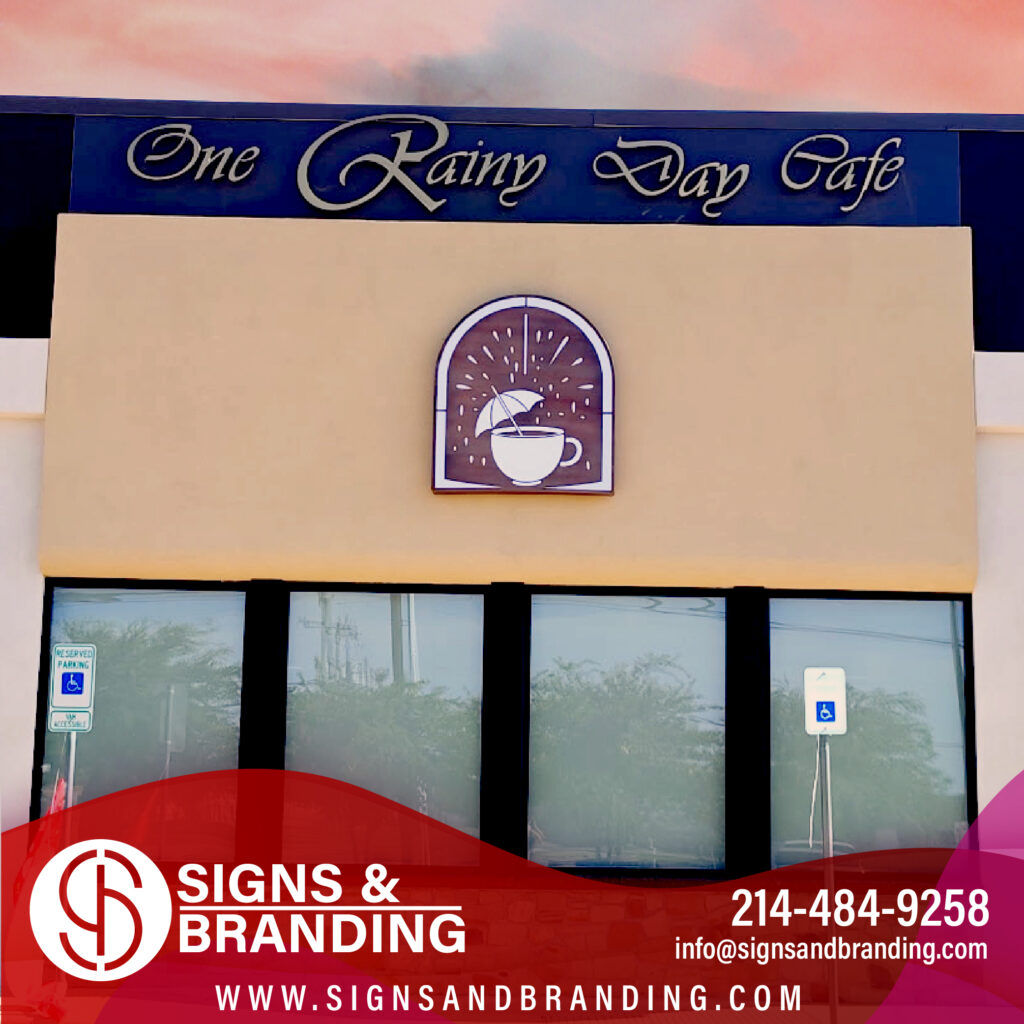
We frequently encounter situations where a business owner’s initial sign concept violates one or more covenants. Rather than starting over, we work backward from the restrictions to find a design that meets your branding goals within the allowed parameters. A custom interior sign behind glass, for example, may sidestep outdoor dimension restrictions while maintaining high visibility.
What to do next: Request the signage covenants document from your lease or property management. If it’s not attached to your lease, it may be in a separate “Tenant Manual” or “Design Guidelines” document.
Documentation You Need Before Installation Begins
Before we can design your sign, you’ll need to gather several documents from your landlord, your insurance broker, and the city. Having these ready accelerates the entire process.
Required documentation typically includes:
- Lease with signage addendum: Outlines your rights and obligations regarding exterior signage.
- Shopping center design guidelines: Details permitted styles, colors, materials, and dimensions.
- Certificate of Insurance: Proof that you carry adequate liability coverage naming the center as additional insured.
- Property survey or floor plan: Shows your storefront’s exact dimensions and location within the center.
- Proof of tenancy: Sometimes the city requires this before issuing a permit.
- Business license: Confirms your business is properly registered in McKinney.
- Site plan or elevation drawing: Shows how your sign will be positioned relative to the building and street.
We help our clients compile this checklist early and flag missing items before design work begins. A missing Certificate of Insurance, for instance, can hold up your project for weeks if discovered late.
What to do next: Create a folder (digital or physical) and request each document from the appropriate party right now. Don’t wait until design work is underway.
Permit Requirements Specific to McKinney Retail Locations
McKinney enforces a comprehensive sign permit system. Any sign over 32 square feet or any illuminated sign requires a city sign permit, regardless of whether your shopping center approves it. The permit process ensures your sign meets electrical codes, wind load standards, and setback requirements.
The McKinney sign permit application requires:
- A detailed site plan showing the sign’s location relative to the building entrance, parking lot, and property line.
- Electrical plans if your sign is illuminated (showing circuit protection, grounding, and wiring specifications).
- Wind load calculations if your sign is large or mounted to an exposed face.
- Proof that the shopping center management approves the design.
- Proof that your contractor is licensed and insured.
Processing time typically ranges from 5 to 10 business days, though more complex designs may require structural engineer review, which adds another 2 to 3 weeks. This is why we recommend starting the permit process as soon as your design is finalized.
McKinney also requires that signage meet the International Building Code (IBC) standards. Any sign mounted to the building exterior must be engineered to withstand local wind speeds and lateral loads. Our design team calculates these requirements during the design phase so your sign passes inspection on the first submission.
What to do next: Begin your permit process only after the shopping center has given written approval of your sign design.
How Our In-House Design Team Handles Your Insurance and Compliance
We approach every McKinney shopping center project with compliance as a foundational design principle, not an afterthought. Our in-house design team reviews your lease covenants, the center’s design guidelines, and McKinney’s sign code before sketching the first concept. This ensures every proposal we present is feasible within the regulatory environment.
When we design your sign, we simultaneously prepare the site plan, electrical plan (if applicable), and wind load calculations needed for the permit application. This front-loads the technical work and compresses your permitting timeline significantly. Many sign vendors hand off the design to an electrician or engineer after the sale; we keep everything coordinated in-house.
We also work directly with your property management company on behalf of your business. We submit the design for their review, incorporate their feedback, and handle back-and-forth revisions. This eliminates miscommunication and accelerates approvals.
Your Certificate of Insurance and contractor licensing requirements are built into our process. We provide you with our current COI (naming the shopping center as additional insured), our business licenses, and our liability policy details. You simply forward these to your landlord as proof that your sign contractor is properly insured.
What to do next: When you contact us with your project, have your lease, design guidelines, and site photos ready so our team can begin compliance review immediately.

Quality Warranties That Protect Your Investment
A McKinney shopping center sign is a visible asset that reflects your brand and can last 10 to 15 years if built and maintained correctly. We back our work with a five-year quality warranty covering materials, fabrication defects, and installation workmanship.
Our warranty includes:
- Material performance: UV-resistant vinyl, weather-sealed metal frames, and sealed electrical components.
- Fabrication defects: Misaligned lettering, incorrect color matching, or structural flaws discovered within one year of installation.
- Installation workmanship: Secure mounting, proper sealing, and compliance with building codes.
The warranty is transferable to subsequent owners if you sell your business, which preserves your storefront’s long-term value. We also recommend annual maintenance inspections, especially for illuminated signs exposed to Dallas weather. Regular cleaning and minor touch-ups extend the life of your investment well beyond the warranty period.
What to do next: Request our warranty documentation in writing before signing a contract, and confirm that it covers the specific materials and installation method we propose for your sign.
Our Licensed Installation Process Meets All Documentation Standards
Our installation team consists of licensed, insured technicians trained on the specific requirements of McKinney shopping centers. We coordinate with your property management company before the installation date to confirm access, parking, and any center-wide restrictions (e.g., no work during peak shopping hours).
During installation, we maintain detailed records:
- Photographic documentation of the site before, during, and after work.
- Signed completion certificates confirming the sign is installed per the approved design and building code.
- Electrical inspection reports for illuminated signs (obtained from the city inspector).
- Final warranty documentation and maintenance guidelines provided to you.
These records become part of your tenant file with the shopping center and satisfy any future ownership or insurance audits. We also provide you with a copy of the city’s final sign permit approval, confirming that your sign has been inspected and meets all local codes.
What to do next: Schedule your installation during a time that minimizes disruption to the shopping center and your business operations. We typically complete a standard storefront sign installation within one business day.
Timeline: From Documentation Review to Final Installation
A well-organized McKinney shopping center sign project follows a predictable timeline:
Week 1: Submit all documentation (lease, COI, design guidelines, site survey) to our team. We conduct a compliance review and provide a preliminary design concept.
Week 2: Finalize design based on your feedback and covenant compliance. Submit design to shopping center management for approval.
Week 3: Incorporate any landlord feedback and submit the finalized design to the city for sign permit application.
Weeks 4-5: City review and approval (typically 5-10 business days; longer if structural engineering is required).
Week 6: Begin fabrication of sign components in our Dallas facility.
Weeks 7-8: Complete fabrication and prepare for installation.
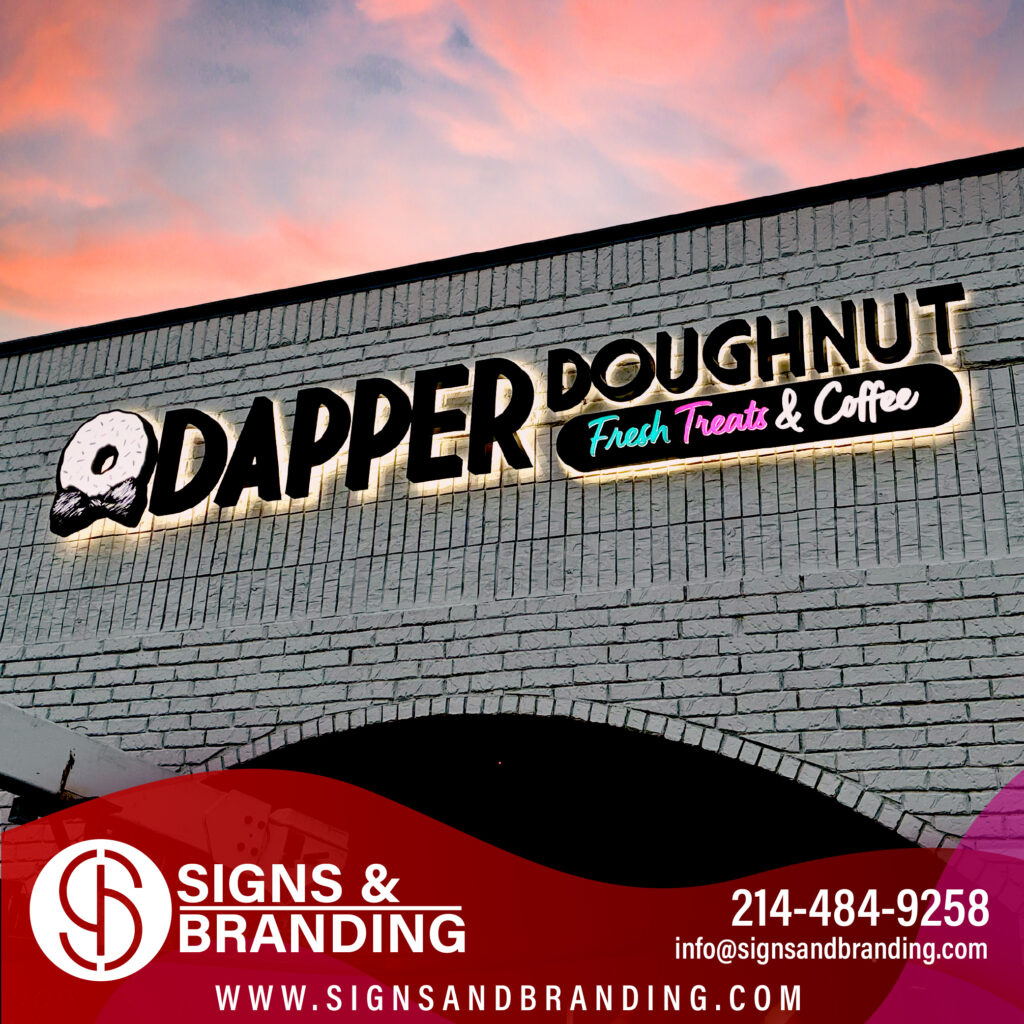
Week 9: Licensed installation on-site at your shopping center, followed by city inspection if required.
This timeline assumes no major delays or revisions. If the shopping center or city requests substantial design changes, you’ll add 2 to 3 weeks. If documentation is incomplete at the start, you can add another 1 to 2 weeks.
What to do next: Block out nine weeks on your business calendar and plan your storefront refresh or grand opening around this timeline.
Why Full-Service Providers Streamline Your Signage Process
A fragmented signage process involves juggling phone calls across your property management company, the city, an electrician, a structural engineer, and a sign installer. Each party works independently, and delays cascade through the chain.
We handle the entire process in-house: design, engineering calculations, permit application coordination, fabrication, and installation. Our clients interact with a single point of contact who manages all compliance requirements and keeps the project on schedule.
This integrated approach cuts typical sign project timelines in half and eliminates the miscommunication that derails many DIY efforts. Because we’re based in Dallas and work with McKinney shopping centers regularly, we understand the local approval workflows and know which inspectors prioritize which details.
What to do next: Request references from other Dallas business owners who’ve worked with us on shopping center signage projects.
Next Steps: Getting Your McKinney Signage Project Started
You’re ready to move forward when you’ve gathered your documentation, confirmed your design budget, and set a target timeline for installation. Contact us with your lease, shopping center design guidelines, and a brief description of your signage goals. We’ll schedule a compliance review meeting (in person or by phone) to assess your project’s complexity and provide a realistic timeline and investment estimate.
During that meeting, we’ll answer your insurance and documentation questions directly and outline exactly what our team will handle on your behalf. There’s no obligation, and we’re happy to address concerns about the permit process or shopping center approval.
Your storefront sign represents your business to every customer who visits McKinney shopping center. The right partner ensures it’s not only beautiful and on-brand but also fully compliant and backed by a five-year warranty. That’s the difference between a sign installation and a strategic storefront investment.
For further reading: Storefront sign permits guide.
Contact us today for a FREE Estimate
Frequently Asked Questions (FAQ)
What documentation do we need from you before we start designing your McKinney shopping center sign?
We’ll need your lease agreement or tenant guidelines, proof of liability insurance, and written approval from your shopping center management. Our team reviews these documents upfront to confirm your sign meets both center covenants and city requirements, which prevents costly delays during the permitting phase.
Does your 5-year warranty cover signage damage from McKinney weather conditions?
Our warranty covers manufacturing defects and material failure, including weather-related wear from Dallas climate exposure. However, damage from storms, accidents, or improper maintenance falls outside coverage. We always discuss specific protection options when we review your final design and installation location.
How do we handle the permit process for retail signs in McKinney?
We navigate the permit application and city approval directly on your behalf. Our licensed team knows McKinney’s specific requirements, submits all necessary documentation, and typically obtain approval within our standard 2-3 week turnaround. You’ll receive copies of your final permits before we schedule installation.