

Table of Contents
- Why Multi-Location Sign Management Becomes Complex for Growing Businesses
- The Cost and Time Burden of Uncoordinated Signage Systems
- How Brand Consistency Breaks Down Across Multiple Locations
- Our Full-Service Approach to Multi-Location Sign Projects
- Design Standardization That Works Across Your Entire Portfolio
- Streamlined Permitting and Installation for Every Location
- How We Handle Manufacturing at Scale Without Sacrificing Quality
- Managing Timelines and Coordination Across Dallas Locations
- Quality Assurance and Warranty Coverage for All Your Signs
- Getting Started With Your Multi-Location Sign Strategy
Why Multi-Location Sign Management Becomes Complex for Growing Businesses
Running multiple business locations means coordinating everything from inventory to staffing to customer experience. Your signage plays a critical role in all of that, yet it’s often treated as an afterthought. When you’re opening a second location, expanding to a third, or managing a portfolio of franchises or chain stores across the Dallas area, sign management suddenly becomes a logistical puzzle. Without a clear strategy, you’ll face delays, inconsistent branding, budget overruns, and installation headaches that drain your team’s time and attention.
We work with multi-location business owners every year, and we’ve seen firsthand how the right approach to sign coordination transforms what feels chaotic into something streamlined and repeatable. This guide walks you through the real challenges of multi-location signage and how to solve them with a partner who handles design, fabrication, and installation under one roof.
When you operate from a single location, sign decisions are straightforward. You pick a design, get it made, install it, and move on. Multiply that by three, five, or ten locations, and the complexity multiplies faster than you’d expect.
The core problem is coordination overhead. Each location has its own landlord, its own local zoning codes, its own site conditions. A design that works perfectly at your downtown flagship might need adjustments for a suburban strip center across town. The corner lot location might allow an illuminated sign, but the shopping center location has HOA restrictions. These aren’t small tweaks; they cascade into scheduling conflicts, material changes, and rework.
You’re also juggling stakeholders. Regional managers, location franchisees, property managers, and corporate leadership all have opinions on what the signage should look like and how much it should cost. Without a clear process to manage that feedback, you end up in revision cycles that stretch timelines by weeks.
Then there’s the vendor management burden. When you scatter your sign projects across multiple vendors, each one operates on different timelines, uses different materials, and follows different quality standards. You spend your own time constantly checking in, comparing quotes, and explaining your brand standards to vendors who haven’t worked with your company before.
Actionable takeaway: Map out every location you plan to add signage to in the next 12 months, note the landlord or property manager for each one, and request their specific sign approval requirements and restrictions in writing. This single step eliminates surprise delays later.
The Cost and Time Burden of Uncoordinated Signage Systems
Uncoordinated signage doesn’t just waste time; it wastes money in ways that compound.
When you work with separate vendors for each location, you lose economies of scale. One vendor quotes you $8,000 for a monument sign at location one. A different vendor quotes $12,000 for a similar sign at location two. You have no baseline for comparison, no leverage to negotiate, and no way to standardize materials and pricing across your portfolio.
Rush fees accumulate quickly. When location three needs a sign approved by the landlord and the sign isn’t ready for installation, that delay forces you into premium shipping or expedited fabrication. One project delayed by a vendor’s schedule can create a domino effect across your other locations.
Rework costs are often invisible until you’re deep in it. A vendor delivers a sign that doesn’t meet your brand color standards, so you request revisions. That’s two weeks of back-and-forth, additional design time, and potential remade materials. Multiply that scenario across multiple locations with different vendors, and you’re looking at thousands in unexpected expenses.
Installation labor also fragments when you don’t have centralized coordination. You might hire three different installation crews for three locations, each with different pricing, different experience with your brand requirements, and different timelines. One crew finishes early but can’t move to the next location because that site isn’t ready. Another crew gets delayed by permit issues no one anticipated.
We consolidate all of that under a single engagement. Our in-house design, fabrication, and installation team works from the same specifications for every location, which means consistent pricing, predictable timelines, and no communication gaps between the designer and the person installing your sign.
Actionable takeaway: Calculate the true cost of your last multi-location project by adding design fees, vendor quotes, shipping, rush charges, rework, and installation labor. The number often surprises business owners and makes the case for a unified approach immediately clear.
How Brand Consistency Breaks Down Across Multiple Locations
Brand consistency sounds straightforward, but it’s the first casualty of fragmented sign management. The inconsistency starts small and grows.
Your flagship location gets a pristine new sign with perfect color matching and professional typography. Your second location, handled by a different vendor, uses a slightly different shade of your brand blue. The difference isn’t dramatic enough to warrant a fix, so you let it go. By location five, your color palette has drifted across multiple vendors’ interpretations. A customer visiting three of your locations notices your brand looks different at each one.
Material quality creates a similar problem. One vendor uses marine-grade aluminum and UV-resistant coatings. Another uses standard aluminum to save money. After two years of Dallas weather, the cheaper option starts showing fading and weathering. One location looks established and professional; another looks neglected.
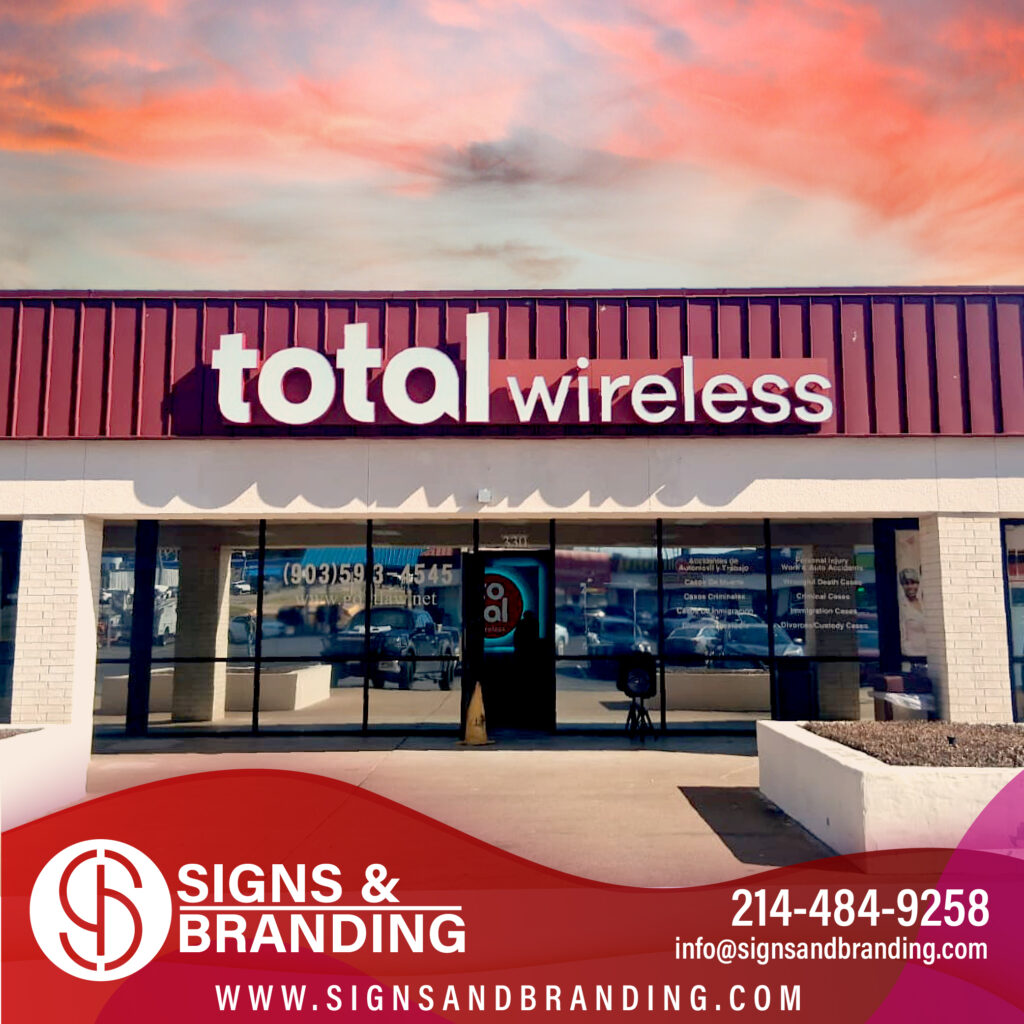
Typography consistency matters more than you’d think. If location one uses a modern sans-serif font and location two uses a serif font for the same business name, it subtly weakens brand recognition. Customers don’t consciously notice, but their brain registers “these don’t feel like the same brand.”
Lighting and dimensionality also vary. Some locations might have dimensional lettering that pops; others might have flat signs. A customer’s mental image of your brand becomes fragmented across experiences.
The breakdown accelerates with franchisees or location managers who make independent sign decisions. One manager decides to add a promotional banner without checking brand guidelines. Another orders a sign from a local vendor without consulting your standards. Within a year, you have no consistent visual identity across your portfolio.
Our approach starts with locked-in design standards that we apply across every location, accounting for local conditions but maintaining visual unity. We handle the design details so your location managers can focus on running their business.
Actionable takeaway: Create a one-page visual brand guideline document that specifies your primary and secondary colors (with hex codes and Pantone numbers), approved fonts, minimum sign sizes, and logo usage rules. Share it with every location manager or franchisee before any signage work begins.
Our Full-Service Approach to Multi-Location Sign Projects
We treat every multi-location project as a system, not as a collection of independent jobs. That distinction changes everything.
When you work with us, we conduct a comprehensive audit of your current portfolio. We visit or get detailed photos of existing locations, review lease agreements and property manager requirements, and document your current brand standards. This foundation gives us the clarity to design solutions that work, not solutions that look good in mockups but create problems on-site.
From there, we develop a master specification document that becomes the blueprint for every location. This document includes design standards, material specifications, installation guidelines, and timeline dependencies. Every location gets customized for its unique conditions, but everything connects back to that master specification.
From Design to Install, our team manages the entire flow. Our design team creates location-specific mockups that account for the building architecture, local lighting conditions, and sight lines. Our fabrication team uses those specs to manufacture each sign with precision. Our installation crew coordinates timing across all locations to minimize disruption to your business.
This integrated approach eliminates the gaps where things fall through. There’s no miscommunication between your designer and your fabrication shop because they’re the same team. There’s no delay between when a sign is ready to install and when we schedule the installation crew because we coordinate that internally. The timeline is predictable, and the budget doesn’t creep upward.
We also handle the permitting layer that most business owners dread. Different Dallas neighborhoods and shopping centers have different sign code requirements. We navigate that complexity so you don’t have to.
Actionable takeaway: Before engaging any multi-location sign partner, ask them to describe their process for coordinating design standards across locations, managing local permit variations, and synchronizing fabrication and installation timelines. Their answer tells you whether they think like a system or like a collection of separate jobs.
Design Standardization That Works Across Your Entire Portfolio
Standardization isn’t about making every sign identical. It’s about creating a visual system that scales while keeping your brand coherent.
The starting point is your core brand identity: your logo, primary colors, secondary colors, approved fonts, and key messaging elements. We take those elements and build a scalable system that works for different sign types, different locations, and different local requirements.
A multi-location retail business might have a primary monument sign at each location, a window decal, interior wayfinding signage, and a branded parking lot marker. Rather than designing each of these independently, we design them as a family. The monument sign establishes the primary visual identity. The window decal echoes the color palette and typography. The interior wayfinding uses the same color family but in a lighter application. The parking marker reinforces the logo without overwhelming the landscape.
This systematic approach means you can roll out new locations quickly. Once the system is locked, adding a sixth or seventh location is largely a matter of applying proven templates to the new site conditions. Design time shrinks dramatically.
Dallas graphic design services require understanding not just aesthetics but also how designs perform in the real world. A beautiful logo might be too detailed to read from 50 feet away at highway speeds. We stress-test every design for legibility, viewing distance, and real-world durability.
We also build in flexibility for local customization without breaking the system. Maybe one location needs a smaller monument sign because of property constraints. Maybe another location emphasizes a different service line. The design adapts, but the core identity stays consistent.
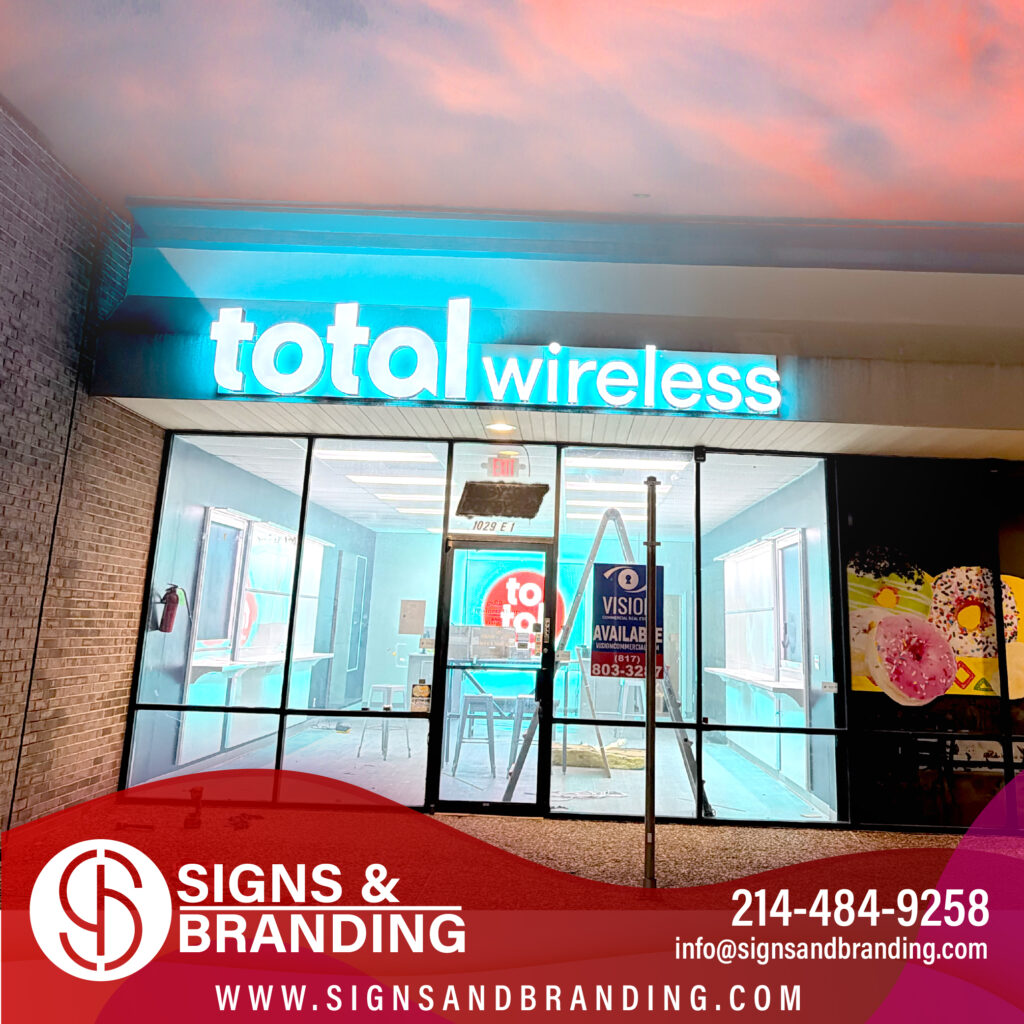
Actionable takeaway: Document your brand colors as hexadecimal codes (for digital mockups) and as Pantone spot color numbers (for physical sign fabrication). Provide these numbers to any sign designer before design work starts. Color matching is one of the easiest things to verify and one of the hardest things to fix after the fact.
Streamlined Permitting and Installation for Every Location
Permitting and installation are where multi-location projects often collapse. Different property managers, different sign codes, different contractor relationships all create friction.
We handle permitting as part of our service. Our team is familiar with Dallas sign codes, and we’ve worked with countless property managers and HOAs across the area. We know which jurisdictions move fast and which ones require extended review periods. We build those timelines into our project schedule upfront, so you’re not surprised by delays.
Each location gets a permit strategy tailored to its specific codes and property requirements. A downtown location might allow illuminated signs; a suburban shopping center might restrict them. A monument sign on your own property is straightforward; a sign on leased property requires landlord approval. We identify these variables early and plan accordingly.
Installation coordination is where we deliver the most visible value. Rather than three different crews coming to three locations on three different weeks, we coordinate a single installation sequence across your portfolio. This approach has several advantages.
First, it minimizes disruption to your business. We can schedule installations in a way that doesn’t collide with peak business hours. Second, it reduces overall labor costs because our team handles all locations rather than paying separate contractors for each site. Third, it ensures consistency. The same crew that installed your flagship sign installs your second and third location, which means every installation meets the same quality standard.
We also manage the logistics of material delivery. Instead of coordinating multiple shipments to multiple locations, we stage materials efficiently and move them as needed.
Actionable takeaway: Before you announce a multi-location sign project to your team, confirm the ideal installation window for each location with that location’s manager. This prevents the scenario where a sign arrives ready to install, but the location isn’t prepared to have the crew on-site.
How We Handle Manufacturing at Scale Without Sacrificing Quality
Scaling manufacturing introduces a common pitfall: the temptation to cut corners to maintain timelines. We don’t do that.
Our in-house fabrication facility is built for volume without compromising precision. We have multiple production lines that allow us to work on different projects simultaneously without creating bottlenecks. We use the same materials, the same processes, and the same quality standards for a single sign as we do for a ten-location rollout.
Each sign that comes off our production line goes through the same inspection protocol. We verify color accuracy using calibrated equipment. We test structural integrity. We check all finishing details. A sign destined for location one gets the same scrutiny as a sign for location ten.
Materials consistency matters more than most business owners realize. We source materials from the same suppliers for all your signs, which means the aluminum comes from the same batch, the paint comes from the same batch, the hardware comes from the same supplier. This approach eliminates the variable quality that occurs when different vendors source materials from different suppliers.
We also build in a quality buffer into our timelines. We don’t operate on a model where we finish a sign on day 28 and ship it on day 29. We finish on day 25, inspect thoroughly, make any minor adjustments, and ship on day 28. That buffer gives us room to catch issues before they reach your location.
Our 5-year quality warranty covers all our work. If a sign we fabricated or installed develops a defect within that period, we fix it. That commitment shapes how we approach every job because we stand behind the work.
Actionable takeaway: Ask your sign partner what quality control steps they perform before delivery. The answer should be specific (color verification with what equipment, structural testing methods, etc.), not vague. A partner that can’t articulate their QC process hasn’t thought through it.
Managing Timelines and Coordination Across Dallas Locations
Multi-location projects live or die by timeline management. A single delay can cascade across multiple locations and derail your entire plan.
We build realistic timelines that account for permit review, material lead times, fabrication sequencing, and installation scheduling. Permits in Dallas typically take 3-5 business days for standard signs, though more complex structures can take longer. We incorporate those timelines into our project plan upfront so you understand when signs will actually be installed, not when design work starts.
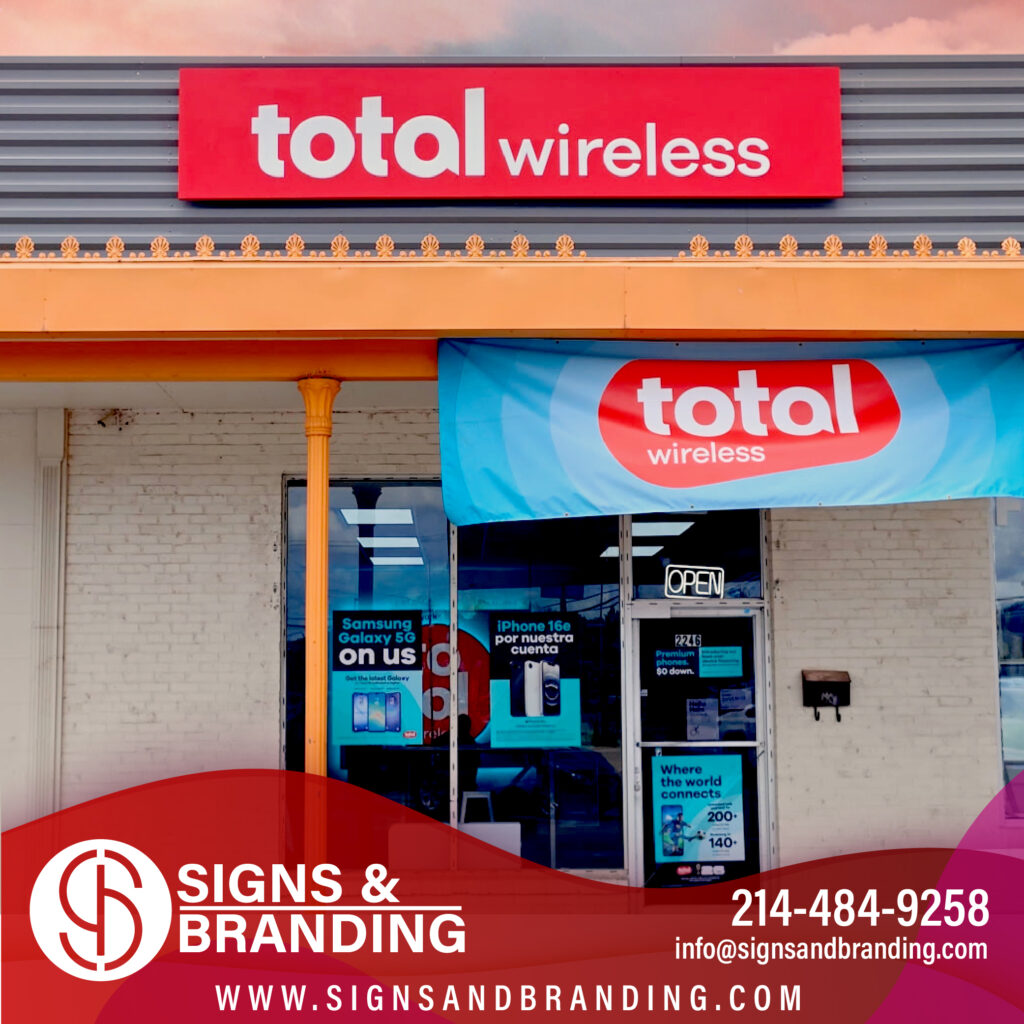
Our typical turnaround is 2-3 weeks from approved design to completed installation, which compresses what would take months if you were coordinating separate vendors. That speed comes from vertical integration; we don’t wait for a fabrication vendor to fit us into their schedule or for an installation crew to become available.
We also build dependency management into the timeline. If location one needs landlord approval before we can proceed to location two, we identify that upfront. We sequence the work so we’re not waiting on external dependencies that slow everything down.
Communication cadence prevents surprises. We provide weekly status updates, flag emerging issues immediately, and alert you the moment anything threatens the timeline. You always know where every location stands.
For very large portfolios, we can stagger installations strategically. Rather than trying to install 10 signs in a 2-week window, we might install 3 in week one, 4 in week two, and 3 in week three. This approach spreads the impact on your business and gives us better control over quality.
Actionable takeaway: Create a simple spreadsheet tracking each location’s status across design approval, permit submission, permit approval, fabrication start, fabrication completion, and installation date. Update it weekly and share it with relevant stakeholders. This single artifact prevents miscommunication about project status.
Quality Assurance and Warranty Coverage for All Your Signs
Quality assurance isn’t a checkpoint at the end; it’s embedded throughout our process.
Every design gets reviewed not just for aesthetics but for manufacturability. We think about how a design will be fabricated, where potential weak points might emerge, and how materials will perform in Dallas weather. A design that looks stunning in a mockup but is difficult to fabricate cleanly is a design we’ll refine before fabrication starts.
During fabrication, we monitor progress against specifications. Materials are inspected upon arrival. Work in progress is checked at key milestones. Finished signs are inspected before they leave our facility.
On-site installation includes a final inspection to confirm the sign is properly positioned, securely mounted, and performing as designed. We also photograph each installation so you have documentation for your records.
Our 5-year quality warranty covers materials and workmanship. If a sign fails structurally, if paint fades prematurely, if hardware corrodes, or if any other defect emerges within five years, we repair or replace it at no cost. This warranty applies to every sign we fabricate and install, regardless of location.
For multi-location portfolios, the warranty is particularly valuable. If an issue emerges at location two, we fix it immediately rather than your having to coordinate with a vendor who has no relationship with your other locations.
We’re also insured for all installation work. Your business is protected, and our crew is covered.
Actionable takeaway: Request a written copy of any sign partner’s warranty before committing to work. Confirm what’s covered, how long the coverage lasts, and what the claims process looks like. A warranty that sounds good in conversation but is vague in writing is a red flag.
Getting Started With Your Multi-Location Sign Strategy
If you’re managing signs across multiple locations or planning to expand soon, the time to think about coordination is now, not after you’ve already signed off on separate vendors at separate sites.
Start by documenting your current situation. List every location, note its lease or ownership status, identify the property manager or landlord contact, and note any existing sign restrictions you know about. Get copies of any sign rider or addendum in your leases. This information becomes the foundation for any future signage work.
Next, clarify your brand standards. If you don’t have a formal brand guideline document, create one. It doesn’t need to be elaborate; it just needs to lock down your colors, approved fonts, logo usage rules, and any messaging standards. This document becomes the reference point for every sign designer and fabrication team moving forward.
Then assess what you need across your portfolio. Are you replacing outdated signs at existing locations? Are you adding new locations that need signage? Are you standardizing signs that currently look inconsistent? Knowing what you’re trying to accomplish shapes the solution.
Finally, reach out to us. We’ll conduct a portfolio audit, understand your timeline and budget, and develop a comprehensive plan for coordinating your multi-location signage. We’ll handle the design, fabrication, permits, and installation so you can focus on running your business. The unified approach saves time, saves money, and delivers consistency that strengthens your brand across every location.
Actionable takeaway: Schedule a consultation with us to discuss your multi-location signage needs. Bring lease documents, brand guidelines if you have them, and a list of locations you want to address. That conversation will clarify exactly what’s possible and what timeline makes sense for your business.