

Table of Contents
- Why Storefront Visibility Determines Foot Traffic
- Common Reasons Illuminated Letters Fail to Stand Out
- Checklist for Letter Size, Height, and Placement
- Checklist for Brightness, Color, and LED Selection
- Checklist for Weather-Resistant Materials and Durability
- Checklist for Permits and City Compliance in Dallas
- How Our In-House Process Delivers Visibility Results
- Maintenance Steps to Keep Your Sign Visible Year-Round
- Frequently Asked Questions (FAQ)
Why Storefront Visibility Determines Foot Traffic
Most customers decide whether to walk into a store within a few seconds of seeing its exterior. In a busy corridor like Dallas’s Preston Road, Greenville Avenue, or Dallas Parkway, drivers and pedestrians are scanning dozens of businesses at once. If your sign does not register quickly, you lose the chance before anyone reads your hours or menu.
Illuminated letters work because they stay readable after dark, when many competitors go dim. A lit sign also signals that a business is open, established, and worth a visit. For a shop that depends on walk-in traffic, that signal often matters more than the wording itself.
What to do next: Walk to the spot where a customer would first notice your storefront, then time how long it takes to read your business name. If it takes more than a second or two, your sign needs work.
Common Reasons Illuminated Letters Fail to Stand Out
Many illuminated signs underperform for reasons that have nothing to do with the brand itself. The most common problems we see include:
- Letters that are too small for the distance from the street or parking lot.
- Low-contrast colors where the face color blends into the building facade.
- Uneven illumination caused by dim LEDs, dead modules, or poor spacing.
- Cluttered messaging with taglines and secondary text that compete with the name.
- Poor mounting height that places the sign below sight lines or behind trees, awnings, or vehicles.
- Aging hardware such as yellowed acrylic faces or flickering power supplies.
A sign can look fine in a daytime photo and still fail at night. Check it after sunset from the approach your customers actually use.
What to do next: Make a list of these six issues and mark which ones apply to your current sign. Fixing the top two or three usually produces the biggest gain.
Checklist for Letter Size, Height, and Placement
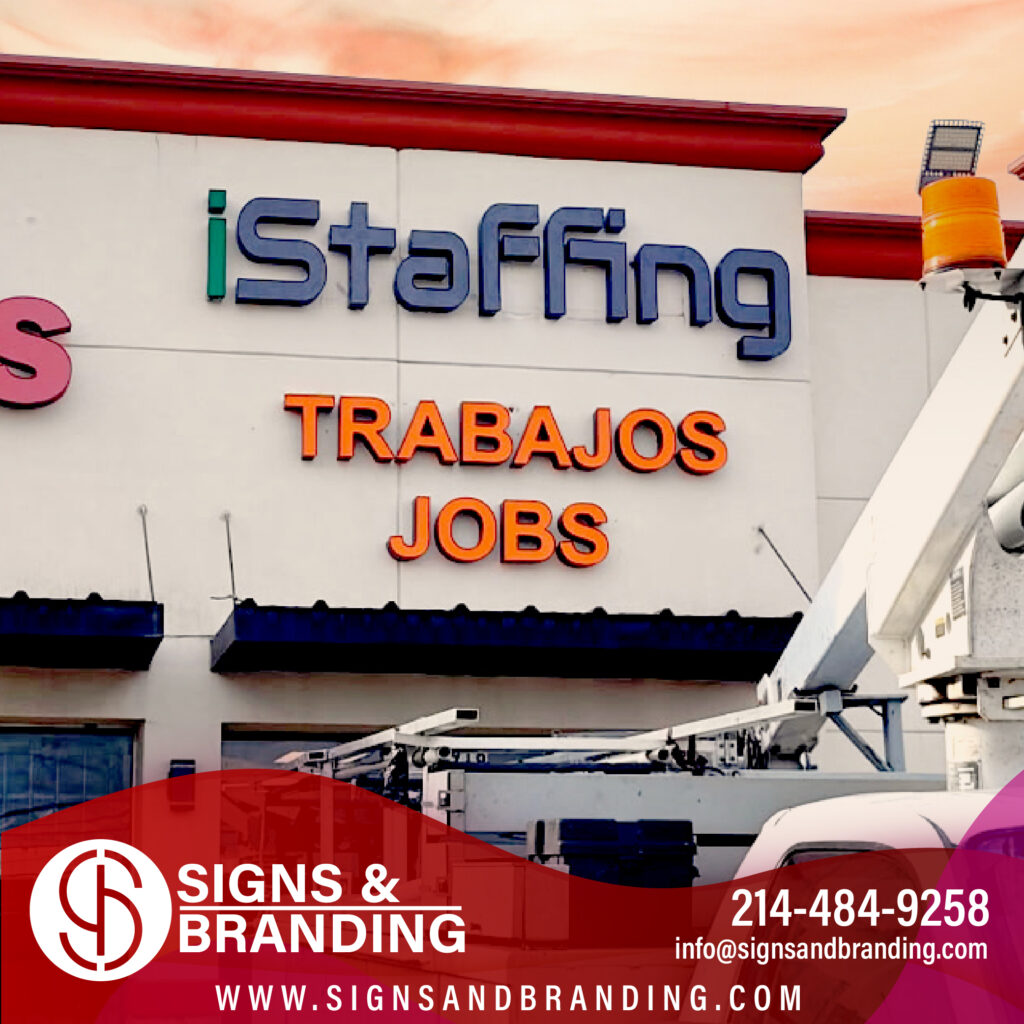
Size and placement determine whether people can read your sign from the distance where they make a decision. A common rule of thumb is that letter height should be about one inch for every 10 feet of viewing distance, though fonts, color, and surrounding clutter can change that number. Confirm the distance from the nearest traffic lane, not just from the sidewalk.
Use this checklist when planning your layout:
- Measure the viewing distance from the main road and from the parking area.
- Set letter height based on that distance, then add extra height for busy corridors.
- Keep the business name as the largest element on the sign.
- Mount the sign high enough to clear awnings, planters, and parked cars, but low enough to read easily from the sidewalk.
- Align the sign with the building’s architectural lines so it looks intentional.
- Leave adequate negative space around the letters so they do not blur together.
Mini-scenario: A boutique on a four-lane road moved its sign from a narrow fascia strip to a wider raceway with 18-inch letters. Foot traffic reports from its staff improved within the first month, mainly from drivers who had previously missed the storefront.
What to do next: Stand 100 feet from your storefront and check whether the name is legible without squinting. If not, increase letter height or move the sign.
Checklist for Brightness, Color, and LED Selection
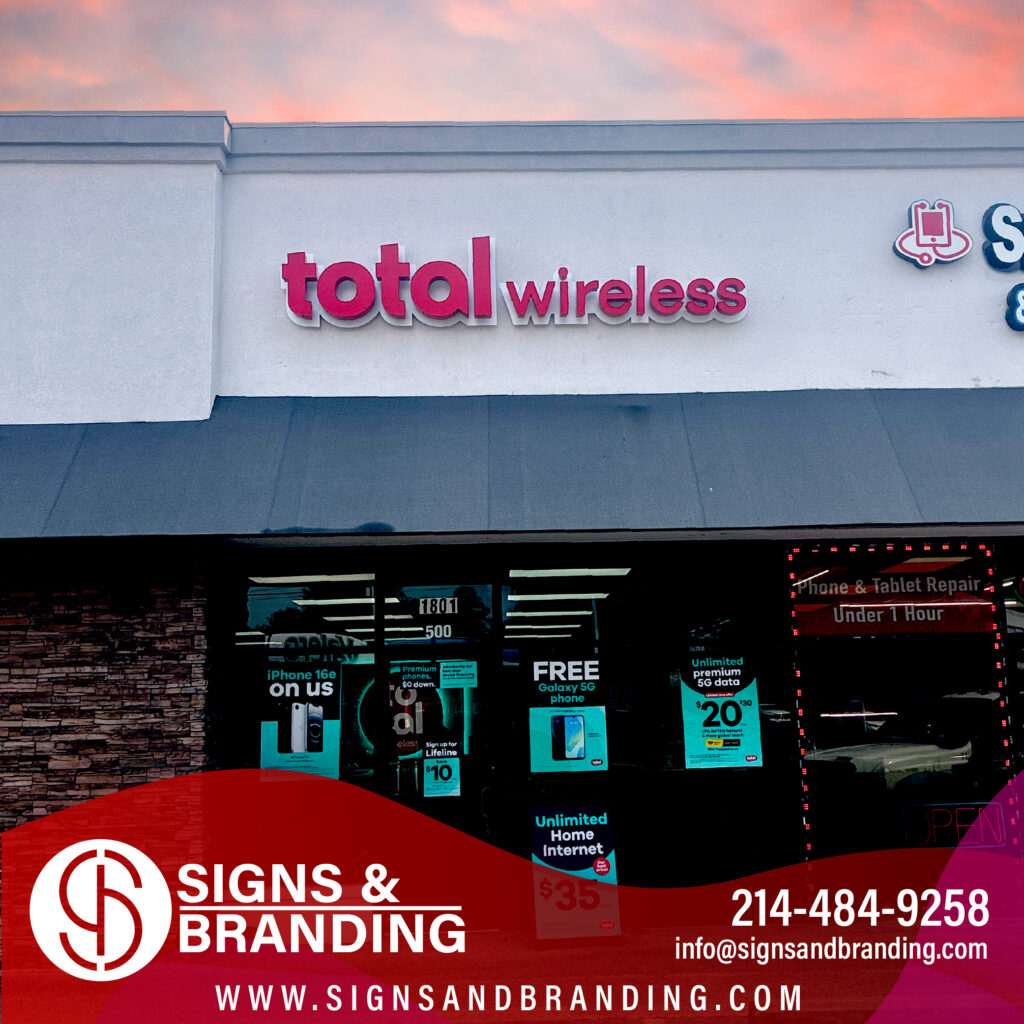
Brightness and color decide how well your letters compete with streetlights, headlights, and neighboring signs. Channel letters with LED illumination are the most common choice for storefronts because they produce strong, even light and last for years with low energy draw.
Consider these points when choosing your lighting:
- Brightness: Match your sign’s output to the surrounding ambient light. Downtown corridors need more intensity than quiet residential blocks.
- Color temperature: Warm white (around 3000K) reads as inviting, while cool white (around 5000K to 6500K) appears crisp and modern. Test samples at night before committing.
- Face and return colors: Choose high-contrast combinations, such as a dark face with bright illumination, so letters stand out from the wall.
- LED quality: Use modules from reliable manufacturers, with consistent color across all letters and a clear warranty.
- Dimming or scheduling: Some businesses use timers or dimmers to reduce glare in residential areas while keeping the sign visible at peak hours.
We supply commercial LEDs at wholesale pricing, which gives business owners and contractors access to professional-grade components without a retail markup.
What to do next: Request a nighttime mockup or sample from your sign provider. View it from the street at dusk and again after full dark before you approve the final lighting package.
Checklist for Weather-Resistant Materials and Durability
Dallas weather is hard on signage. Summer heat can exceed 100 degrees, sudden storms bring wind and hail, and humidity accelerates corrosion. Materials that look good on day one may fade or warp within a few years if they are not chosen for the climate.
Look for these durability features:
- Acrylic faces rated for UV exposure, so color stays vivid instead of yellowing.
- Aluminum returns and backs that resist rust and hold their shape.
- Sealed LED modules and wiring with weatherproof connectors and proper drainage.
- Stainless steel or powder-coated fasteners that will not corrode or stain the facade.
- Wind-rated mounting hardware designed for local wind loads and building type.
- Drain holes and vents that prevent condensation from collecting inside the letters.
Ask any provider what materials they use and whether they test for outdoor performance. A clear warranty on fabrication and finish is a useful sign of confidence in the build.
What to do next: Ask your sign vendor for the specific material specifications in writing. Compare the UV rating of the acrylic and the corrosion protection on the fasteners before you sign a contract.
Checklist for Permits and City Compliance in Dallas
Signs in Dallas must meet city regulations covering size, height, setback, electrical connections, and structural load. Requirements can differ by zoning district, and some projects also need review for historic or special-use areas. Skipping this step can lead to delays, fines, or forced removal after installation.
Work through this list before fabrication begins:
- Confirm the zoning district of your property and the sign standards that apply to it.
- Verify maximum allowable sign area and height for your frontage.
- Check whether illuminated signs require electrical permits and inspections.
- Prepare structural drawings if the sign is large or mounted on an unusual building type.
- Confirm that the installer is licensed and insured for work in the city.
- Keep copies of approved permits on site during installation.
Permit navigation is one of the most time-consuming parts of a sign project. We handle permit applications for our clients, which keeps the process moving and reduces the chance of rejected submittals.
What to do next: Call or visit the city’s permitting office with your sign dimensions, mounting location, and building address. Ask for a preliminary review before you commit to a design.
How Our In-House Process Delivers Visibility Results
Our team handles design, fabrication, and installation under one roof. That means the designer who plans your letter size and placement also oversees the build and the final lighting. Fewer hand-offs reduce errors and make it easier to hold the design you approved.
A typical project with us follows these steps:
- Site review: We measure your frontage, check sight lines, and note existing conditions.
- Design mockup: We produce a proposal showing daytime and nighttime views, so you can see how the sign will read.
- Permit navigation: We prepare and submit the required city paperwork.
- Fabrication: Our shop builds the letters, cabinets, and LED components with weather-resistant materials.
- Installation: Our licensed and insured crew mounts the sign and tests the lighting.
- Warranty support: We back our work with a 5-year quality warranty.
Most projects are completed in two to three weeks, depending on size and permit timing. Because we control production in-house, we can adjust details quickly if something does not look right at night.
What to do next: Contact us through our website with photos of your storefront and your preferred letter size. We will return a site-specific recommendation.
Maintenance Steps to Keep Your Sign Visible Year-Round

Even a well-built sign loses effectiveness without regular care. Dust, insects, and grime reduce light output, and a single dead module can leave a word looking broken. A simple maintenance routine keeps your storefront working as intended.
Build these habits into your schedule:
- Monthly: Check that every letter is lit and note any flickering or dim sections.
- Quarterly: Clean acrylic faces with a soft cloth and mild, non-abrasive cleaner.
- Twice a year: Inspect fasteners, seals, and wiring for corrosion or water intrusion.
- After major storms: Look for cracks, loose mounts, or displaced letters.
- Annually: Review the sign against your current signage needs and any changes in the surrounding area, such as new trees or buildings that block visibility.
Replace failing LED modules promptly so the sign looks uniform from every angle. Trimming nearby landscaping also helps keep the sign visible from the street.
What to do next: Set calendar reminders for the monthly light check and quarterly cleaning. If you notice any problems between visits, contact our team for service.
For further reading: nighttime sign visibility.
Contact us today for a FREE Estimate
Frequently Asked Questions (FAQ)
How far away should illuminated storefront letters be readable?
For most storefronts in the Dallas area, we recommend letters that are readable from at least 100 to 150 feet for a standard street-facing location. We size letters based on the viewing distance of the nearest approaching traffic, not just the width of the building. Our team measures sight lines during the design phase so the letters remain legible from the directions your customers actually approach.
How long does it take to produce and install a custom channel letter sign?
We typically complete fabrication in two to three weeks because our design, manufacturing, and finishing work happens in-house. Permit preparation can run alongside production, which helps keep the overall timeline predictable. Installation is handled by our licensed and insured crew once the sign is approved and ready.
Do you handle City of Dallas permits for illuminated signs?
Yes, we manage the permit process for illuminated signs from start to finish. Our team prepares the required drawings, submits the application, and coordinates any follow-up questions with the city. This removes the administrative work from your plate so you can focus on running your business.